Ch. 15 Sensory Pathways and the Somatic Nervous System
Martini - Fundamentals of Anatomy & Physiology 11th Edition
Martini, Nath, Bartholomew11th EditionFundamentals of Anatomy & PhysiologyISBN: 9780136874089당신이 사용하는 게 아니라요?교과서 변경
15장, 문제 1

The larger the receptive field, the
(a) Larger the stimulus needed to stimulate a sensory receptor
(b) Fewer sensory receptors there are
(c) Harder it is to locate the exact point of stimulation
(d) Larger the area of the somatosensory cortex in the brain that deals with the area
(e) Closer together the receptor cells

검증된 단계별 안내
1
Understand what a receptive field is: it is the specific physical area where a sensory receptor can detect stimuli.
Recognize that a larger receptive field means that one receptor covers a bigger area of the body surface or sensory space.
Consider how the size of the receptive field affects stimulus detection: a larger field means the receptor integrates signals over a wider area, so a stronger or larger stimulus is generally needed to activate it.
Think about spatial resolution: with larger receptive fields, it becomes more difficult to pinpoint the exact location of a stimulus because multiple points within the field activate the same receptor.
Relate the size of receptive fields to the density of receptors and cortical representation: larger receptive fields usually correspond to fewer receptors in that area and less cortical area dedicated to processing that input.

비슷한 문제에 대한 검증된 영상 답변:

이 영상 해법은 위 문제에 도움이 된다고 튜터들이 추천한 것입니다.

주요 개념

질문에 올바르게 답하기 위해 반드시 이해해야 하는 핵심 개념들은 다음과 같습니다.

Receptive Field Size

A receptive field is the specific area where a sensory receptor can detect stimuli. Larger receptive fields cover more surface area, meaning a stimulus must be bigger to activate the receptor. This affects how precisely the location of a stimulus can be identified.
추천 영상:
가이드 코스
03:45
3 Size Classes of Carbohydrates

Spatial Resolution and Localization

Spatial resolution refers to the ability to distinguish two separate stimuli close together. Smaller receptive fields allow for better localization of stimuli, while larger receptive fields reduce this precision, making it harder to pinpoint the exact stimulus location.
추천 영상:
가이드 코스
2:15
Step 2: Release of Inflammatory Mediators & Other Cytokines

Somatosensory Cortex Representation

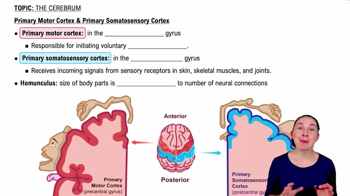
The somatosensory cortex processes sensory information from the body, with the size of its cortical area related to the density of receptors and the precision needed. Areas with smaller receptive fields and higher receptor density have larger cortical representation.
추천 영상:
4:31
Primary Motor Cortex & Primary Somatosensory Cortex