
Ch. 16 The Autonomic Nervous System and Higher-Order Functions
Martini - Fundamentals of Anatomy & Physiology 11th Edition
Martini, Nath, Bartholomew11th EditionFundamentals of Anatomy & PhysiologyISBN: 9780136874089당신이 사용하는 게 아니라요?교과서 변경
16장, 문제 24

Under which of the following circumstances would the diameter of peripheral blood vessels be greatest?
(a) Increased sympathetic stimulation
(b) Decreased sympathetic stimulation
(c) Increased parasympathetic stimulation
(d) Decreased parasympathetic stimulation
(e) Both increased parasympathetic and sympathetic stimulation

검증된 단계별 안내
1
Understand that the diameter of peripheral blood vessels is primarily controlled by the autonomic nervous system, specifically through sympathetic stimulation, which generally causes vasoconstriction (narrowing of blood vessels).
Recognize that increased sympathetic stimulation typically causes vasoconstriction, reducing the diameter of peripheral blood vessels, while decreased sympathetic stimulation leads to vasodilation (widening of blood vessels), increasing their diameter.
Note that parasympathetic stimulation has minimal direct effect on most peripheral blood vessels, so changes in parasympathetic activity usually do not significantly alter vessel diameter.
Evaluate each option by considering whether it would increase or decrease sympathetic or parasympathetic activity and how that would affect vessel diameter:
Conclude that the greatest diameter of peripheral blood vessels would occur under conditions of decreased sympathetic stimulation, as this reduces vasoconstriction and allows vessels to dilate.

비슷한 문제에 대한 검증된 영상 답변:

이 영상 해법은 위 문제에 도움이 된다고 튜터들이 추천한 것입니다.
도움이 되었나요?

주요 개념

질문에 올바르게 답하기 위해 반드시 이해해야 하는 핵심 개념들은 다음과 같습니다.

Sympathetic Nervous System and Vascular Tone

The sympathetic nervous system primarily controls the constriction of peripheral blood vessels through the release of norepinephrine, which binds to alpha-adrenergic receptors causing vasoconstriction. Increased sympathetic stimulation typically reduces vessel diameter, while decreased stimulation leads to vasodilation.
추천 영상:
1:21
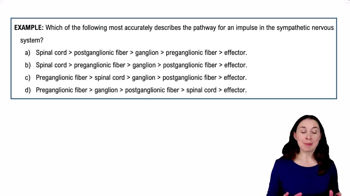
Sympathetic Nervous System Example 3

Parasympathetic Nervous System Influence on Blood Vessels

The parasympathetic nervous system generally has minimal direct effect on peripheral blood vessel diameter, as most vessels lack significant parasympathetic innervation. Its role is more prominent in regulating heart rate and glandular secretions rather than vascular tone.
추천 영상:
1:56
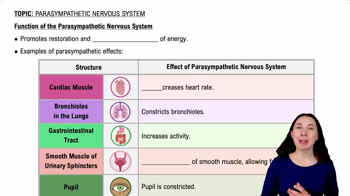
Function of the Parasympathetic Nervous System

Vasodilation and Vasoconstriction Mechanisms

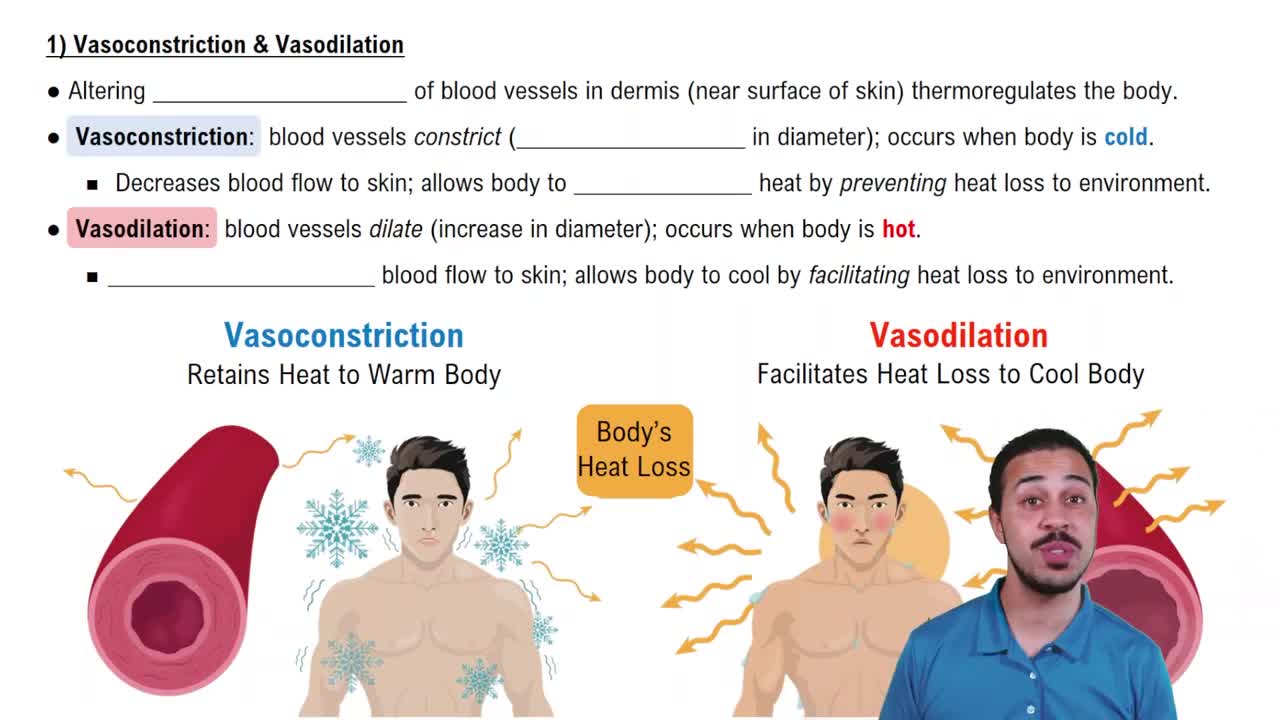
Vasodilation is the widening of blood vessels, often caused by decreased sympathetic activity or local chemical signals, increasing blood flow. Vasoconstriction is the narrowing of vessels, usually triggered by increased sympathetic stimulation, reducing blood flow. Understanding these mechanisms helps explain changes in vessel diameter.
추천 영상:
가이드 코스
05:07
Vasoconstriction & Vasodilation