What physiological activities distinguish non-REM sleep from REM sleep?
Ch. 16 The Autonomic Nervous System and Higher-Order Functions
Martini, Nath, Bartholomew11th EditionFundamentals of Anatomy & PhysiologyISBN: 9780136874089당신이 사용하는 게 아니라요?교과서 변경
모든 교과서
Martini, Nath, Bartholomew 11th Edition
Ch. 16 The Autonomic Nervous System and Higher-Order Functions
문제 7
Martini, Nath, Bartholomew 11th Edition
Ch. 16 The Autonomic Nervous System and Higher-Order Functions
문제 716장, 문제 7
Which four ganglia serve as origins for postganglionic fibers involved in control of visceral structures in the head?
검증된 단계별 안내1
Step 1: Understand the role of ganglia in the autonomic nervous system. Ganglia are clusters of neuron cell bodies where preganglionic fibers synapse with postganglionic neurons. In the head, specific ganglia serve as relay points for postganglionic fibers controlling visceral structures.
Step 2: Recall that the autonomic nervous system is divided into sympathetic and parasympathetic divisions, each with distinct ganglia. The question focuses on ganglia that give rise to postganglionic fibers controlling visceral structures in the head, which are primarily parasympathetic ganglia.
Step 3: Identify the four main parasympathetic ganglia in the head: the ciliary ganglion, pterygopalatine ganglion, submandibular ganglion, and otic ganglion. Each of these ganglia is associated with specific cranial nerves and target organs.
Step 4: Review the functions and connections of each ganglion: the ciliary ganglion controls the eye muscles; the pterygopalatine ganglion controls lacrimal glands and nasal mucosa; the submandibular ganglion controls salivary glands; and the otic ganglion controls the parotid salivary gland.
Step 5: Summarize that these four ganglia serve as origins for postganglionic fibers that innervate various visceral structures in the head, completing the pathway from preganglionic neurons to target tissues.

비슷한 문제에 대한 검증된 영상 답변:
이 영상 해법은 위 문제에 도움이 된다고 튜터들이 추천한 것입니다.
주요 개념
질문에 올바르게 답하기 위해 반드시 이해해야 하는 핵심 개념들은 다음과 같습니다.
Autonomic Nervous System (ANS) Ganglia
Ganglia in the ANS are clusters of nerve cell bodies where preganglionic neurons synapse with postganglionic neurons. These ganglia serve as relay points for transmitting nerve signals to target organs, especially in controlling involuntary functions like those of visceral structures.
추천 영상:
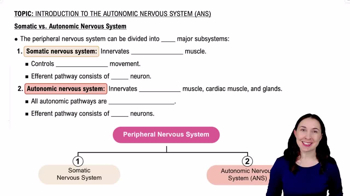
Somatic vs. Autonomic Nervous System
Postganglionic Fibers
Postganglionic fibers are nerve fibers that extend from autonomic ganglia to the target organs. They carry signals that regulate functions such as gland secretion, blood vessel constriction, and muscle control in visceral structures, particularly in the head region.
추천 영상:
Protein Fibers
Cranial Autonomic Ganglia in the Head
The four main cranial ganglia serving as origins for postganglionic fibers controlling head viscera are the ciliary, pterygopalatine, submandibular, and otic ganglia. Each is associated with specific cranial nerves and controls different visceral functions like pupil constriction, lacrimation, salivation, and blood flow.
추천 영상:
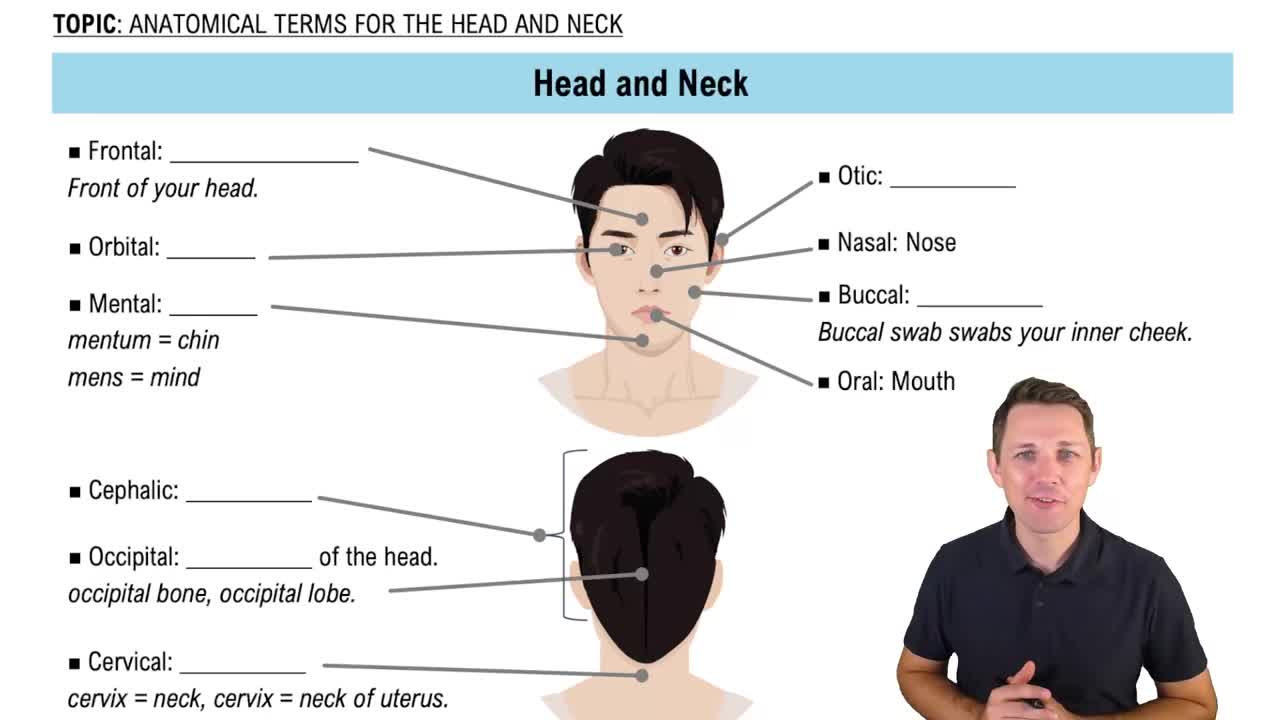
The Head and Neck
관련 실천
교과서 질문
689
views
교과서 질문
What are the components of a visceral reflex arc?
1086
views
교과서 질문
A progressive disorder characterized by the loss of higher-order cerebral functions is
(a) Parkinson's disease
(b) Parasomnia
(c) Huntington's disease
(d) Alzheimer's disease
868
views
교과서 질문
Effects produced by the parasympathetic branch of the ANS include
(a) Dilation of the pupils
(b) Increased secretion by digestive glands
(c) Dilation of respiratory passages
(d) Increased heart rate
(e) Increased breakdown of glycogen by the liver
715
views
교과서 질문
Starting in the spinal cord, trace an action potential through the sympathetic division of the ANS until it reaches a target organ in the abdominopelvic region.
743
views
교과서 질문
What cellular mechanisms identified in animal studies are thought to be involved in memory formation and storage?
759
views