
Ch. 17 The Special Senses
Martini - Fundamentals of Anatomy & Physiology 11th Edition
Martini, Nath, Bartholomew11th EditionFundamentals of Anatomy & PhysiologyISBN: 9780136874089당신이 사용하는 게 아니라요?교과서 변경
17장, 문제 28

Juan tells his physician that he has been feeling dizzy, especially when he closes his eyes. He is asked to stand with his feet together and arms extended forward. As long as he keeps his eyes open, he exhibits very little movement. But when he closes his eyes, his body begins to sway a great deal, and his arms tend to drift together toward the left side of his body. Why does this occur?

검증된 단계별 안내
1
Step 1: Understand the role of sensory inputs in maintaining balance. The body relies on three main systems to maintain posture and equilibrium: the visual system (eyes), the vestibular system (inner ear), and the proprioceptive system (sensory receptors in muscles and joints).
Step 2: Analyze the test described, known as the Romberg test, where a person stands with feet together and arms extended. This test assesses the integrity of proprioceptive and vestibular inputs by comparing balance with eyes open versus eyes closed.
Step 3: Recognize that when Juan's eyes are open, visual input helps compensate for any deficits in proprioception or vestibular function, allowing him to maintain balance with minimal sway.
Step 4: When Juan closes his eyes, visual input is removed, so he must rely more heavily on proprioceptive and vestibular information. The increased sway and drifting of his arms to one side suggest a problem with either proprioceptive feedback or vestibular function on that side.
Step 5: Conclude that Juan's symptoms indicate a dysfunction in the vestibular system or proprioceptive pathways, causing impaired balance when visual cues are absent, which explains the dizziness and sway when his eyes are closed.

비슷한 문제에 대한 검증된 영상 답변:

이 영상 해법은 위 문제에 도움이 된다고 튜터들이 추천한 것입니다.
도움이 되었나요?

주요 개념

질문에 올바르게 답하기 위해 반드시 이해해야 하는 핵심 개념들은 다음과 같습니다.

Role of Sensory Systems in Balance

Balance is maintained through the integration of visual, vestibular, and proprioceptive inputs. Visual cues help orient the body in space, while vestibular organs in the inner ear detect head movements, and proprioceptors provide information about limb position. When one input is removed or impaired, the others compensate to maintain stability.
추천 영상:
2:47
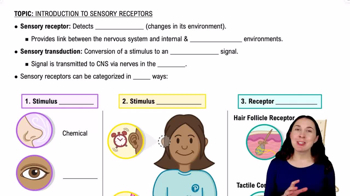
Sensory Receptors

Romberg Test and Its Clinical Significance

The Romberg test assesses proprioceptive and vestibular function by having a person stand with feet together and eyes closed. Increased sway or loss of balance upon closing the eyes indicates a deficit in proprioception or vestibular input, as visual input is no longer available to aid balance.
추천 영상:
2:53
The Gallbladder Example 1

Unilateral Vestibular Dysfunction

Damage or dysfunction in one vestibular apparatus causes imbalance and a tendency to lean or drift toward the affected side. This occurs because the brain receives asymmetric signals about head position and movement, leading to postural instability and directional drift when visual compensation is removed.
추천 영상:
3:26
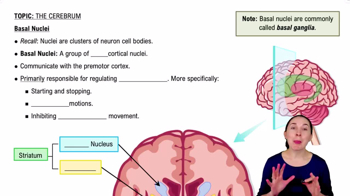
Basal Nuclei