Ch. 18 The Endocrine System
Martini - Fundamentals of Anatomy & Physiology 11th Edition
Martini, Nath, Bartholomew11th EditionFundamentals of Anatomy & PhysiologyISBN: 9780136874089당신이 사용하는 게 아니라요?교과서 변경
18장, 문제 22

A researcher observes that stimulation by a particular hormone induces a marked increase in the activity of G proteins in the target plasma membrane. The hormone being studied is probably:
(a) A steroid
(b) A peptide
(c) Testosterone
(d) Estrogen
(e) Aldosterone

검증된 단계별 안내
1
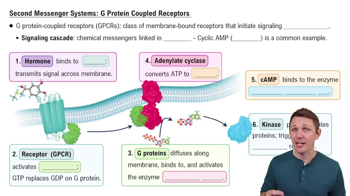
Step 1: Understand the role of G proteins in cell signaling. G proteins are intracellular proteins that act as molecular switches inside cells, and they are typically activated by cell surface receptors known as G protein-coupled receptors (GPCRs). These receptors respond to extracellular signals like hormones by activating G proteins.
Step 2: Identify which types of hormones commonly use G protein-coupled receptors for their signaling. Peptide hormones often bind to GPCRs on the plasma membrane, leading to activation of G proteins and subsequent intracellular signaling cascades.
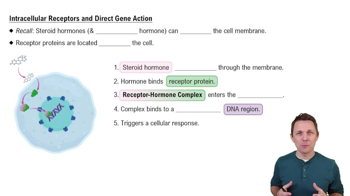
Step 3: Recognize that steroid hormones (such as testosterone, estrogen, and aldosterone) generally do not activate G proteins directly. Instead, they typically diffuse through the plasma membrane and bind to intracellular receptors that act as transcription factors to regulate gene expression.
Step 4: Compare the hormone options given: (a) steroid hormones (testosterone, estrogen, aldosterone) versus (b) peptide hormones. Since the question states that the hormone induces increased G protein activity at the plasma membrane, the hormone is more likely to be a peptide hormone.
Step 5: Conclude that the hormone stimulating G protein activity is probably a peptide hormone, as peptide hormones commonly use GPCRs and G proteins for signal transduction.

비슷한 문제에 대한 검증된 영상 답변:

이 영상 해법은 위 문제에 도움이 된다고 튜터들이 추천한 것입니다.
도움이 되었나요?

주요 개념

질문에 올바르게 답하기 위해 반드시 이해해야 하는 핵심 개념들은 다음과 같습니다.

G Protein-Coupled Receptors (GPCRs)

GPCRs are membrane receptors that activate G proteins upon binding to specific ligands like hormones. This activation triggers intracellular signaling cascades. Hormones that act through GPCRs typically include peptides and some amines, leading to rapid cellular responses.
추천 영상:
가이드 코스
9:36
G Protein-Coupled Receptors

Steroid Hormone Signaling

Steroid hormones, such as testosterone, estrogen, and aldosterone, usually pass through the plasma membrane and bind to intracellular receptors. Their signaling does not typically involve G proteins but rather direct regulation of gene transcription in the nucleus.
추천 영상:
가이드 코스
5:13
Actions of Steroid Hormones

Hormone Types and Their Mechanisms

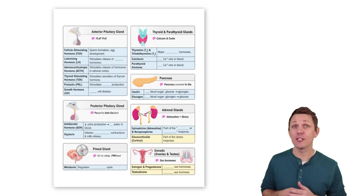
Hormones are classified by their chemical nature: peptides (water-soluble) often bind to surface receptors activating G proteins, while steroids (lipid-soluble) enter cells to modulate gene expression. Understanding these differences helps identify which hormone likely activates G proteins.
추천 영상:
가이드 코스
13:06
Review of Major Hormones