Ch. 19 Blood
Martini - Fundamentals of Anatomy & Physiology 11th Edition
Martini, Nath, Bartholomew11th EditionFundamentals of Anatomy & PhysiologyISBN: 9780136874089당신이 사용하는 게 아니라요?교과서 변경
19장, 문제 11

Name the three major types of plasma proteins and identify their functions.

검증된 단계별 안내
1
Identify the three major types of plasma proteins: albumins, globulins, and fibrinogen.
Explain that albumins primarily function to maintain osmotic pressure and transport substances such as hormones and fatty acids.
Describe globulins as proteins involved in immune responses (immunoglobulins or antibodies) and transport of lipids and metal ions.
Clarify that fibrinogen plays a crucial role in blood clotting by being converted into fibrin during the coagulation process.
Summarize the functions by linking each protein type to its role in maintaining blood volume, immunity, and hemostasis.

비슷한 문제에 대한 검증된 영상 답변:

이 영상 해법은 위 문제에 도움이 된다고 튜터들이 추천한 것입니다.
도움이 되었나요?

주요 개념

질문에 올바르게 답하기 위해 반드시 이해해야 하는 핵심 개념들은 다음과 같습니다.

Albumins

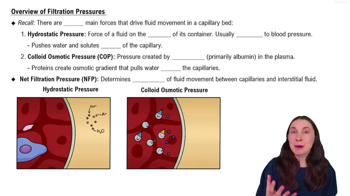
Albumins are the most abundant plasma proteins responsible for maintaining osmotic pressure, which helps regulate the exchange of water between blood and tissues. They also serve as carriers for hormones, vitamins, and drugs, ensuring their transport through the bloodstream.
추천 영상:
2:58
Overview of Filtration Pressures

Globulins

Globulins are a diverse group of plasma proteins that include antibodies (immunoglobulins) essential for immune defense. They also function as transport proteins for lipids, metal ions, and fat-soluble vitamins, playing a key role in protecting the body against pathogens.
추천 영상:
4:30
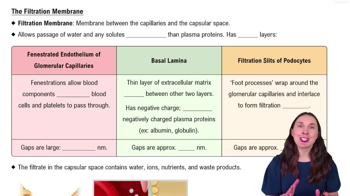
The Filtration Membane

Fibrinogen

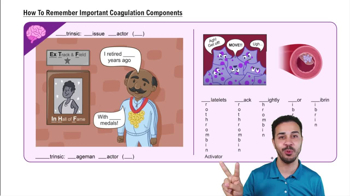
Fibrinogen is a plasma protein crucial for blood clotting. During injury, it is converted into fibrin, which forms a mesh that helps stop bleeding by stabilizing blood clots, thus preventing excessive blood loss and facilitating wound healing.
추천 영상:
3:40
How To Remember Important Coagulation Components