Ch. 21 Blood Vessels and Circulation
Martini - Fundamentals of Anatomy & Physiology 11th Edition
Martini, Nath, Bartholomew11th EditionFundamentals of Anatomy & PhysiologyISBN: 9780136874089당신이 사용하는 게 아니라요?교과서 변경
21장, 문제 1

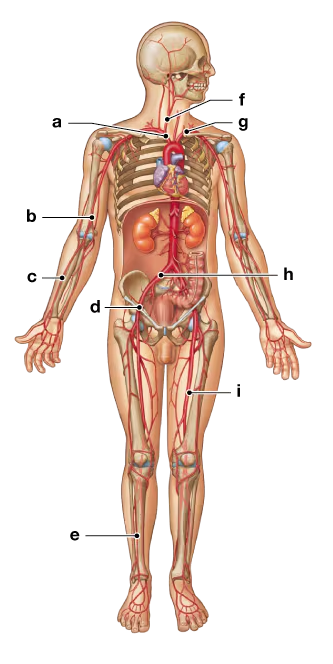
Identify the major arteries in the following diagram.
Front view illustration of the human arterial system with labeled major arteries from head to feet.
a. ___
b. ___
c. ___
d. ___
e. ___
f. ___
g. ___
h. ___
i. ___

검증된 단계별 안내
1
Step 1: Begin by examining the diagram carefully, focusing on the arteries labeled from a to i. Identify the general region of the body shown (e.g., head and neck, thorax, abdomen, limbs) to narrow down possible artery names.
Step 2: Recall the major arteries typically found in that region. For example, if the diagram shows the upper body, consider arteries like the aorta, carotid arteries, subclavian arteries, brachial artery, etc.
Step 3: Match each labeled artery (a to i) with its anatomical location and branching pattern. Use your knowledge of artery pathways and common landmarks to assign the correct artery name to each label.
Step 4: Verify your identifications by cross-referencing with a trusted anatomy atlas or textbook, ensuring that the artery names correspond to the positions and branching shown in the diagram.
Step 5: Write down the names of the arteries corresponding to each label (a through i) clearly, ensuring accuracy and consistency with anatomical terminology.

비슷한 문제에 대한 검증된 영상 답변:

이 영상 해법은 위 문제에 도움이 된다고 튜터들이 추천한 것입니다.
도움이 되었나요?

주요 개념

질문에 올바르게 답하기 위해 반드시 이해해야 하는 핵심 개념들은 다음과 같습니다.

Anatomy of Major Arteries

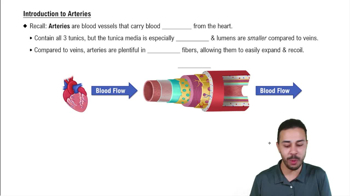
Understanding the structure and location of major arteries is essential for identifying them in diagrams. Major arteries are blood vessels that carry oxygenated blood from the heart to various parts of the body, such as the aorta, carotid, and femoral arteries.
추천 영상:
가이드 코스
3:23
Introduction to Arteries

Arterial System Organization

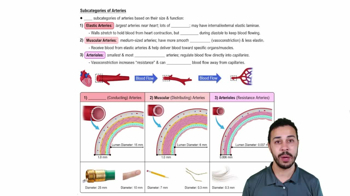
The arterial system is organized hierarchically, starting from the heart and branching into smaller arteries. Recognizing this branching pattern helps in tracing arteries in diagrams and distinguishing between primary and secondary arteries.
추천 영상:
가이드 코스
14:43
Subcategories of Arteries

Common Anatomical Landmarks

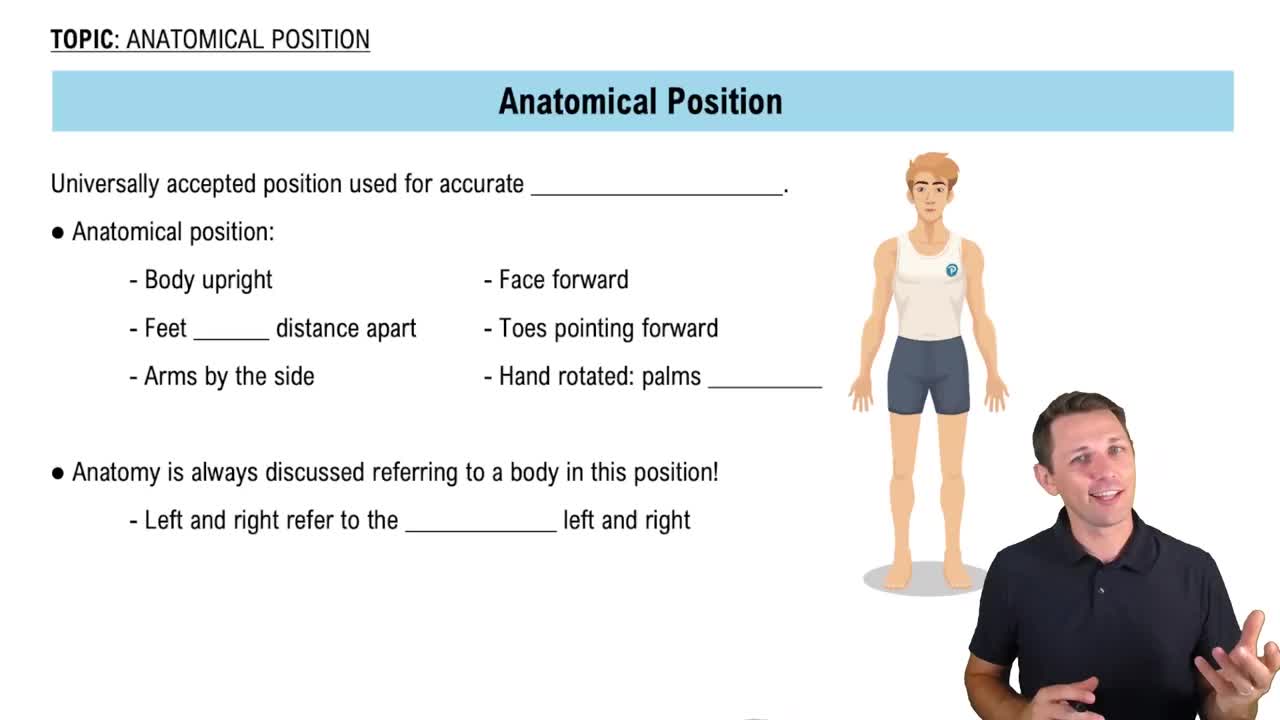
Familiarity with anatomical landmarks like the heart, neck, arms, and legs aids in locating arteries in diagrams. These landmarks serve as reference points to identify arteries such as the carotid in the neck or the femoral in the thigh.
추천 영상:
02:40
Anatomical Position