List the specific functions of each of the body's primary and secondary lymphoid tissues and organs.
Ch. 22 The Lymphatic System and Immunity
Martini, Nath, Bartholomew11th EditionFundamentals of Anatomy & PhysiologyISBN: 9780136874089당신이 사용하는 게 아니라요?교과서 변경
22장, 문제 13b
Give a function for each of the following:
(f) Stromal cells
(g) Epithelial reticular cells
(h) Interferons
(i) Pyrogens
(j) T cells
(k) B cells
검증된 단계별 안내1
Step 1: Define stromal cells and their function. Stromal cells are connective tissue cells that provide structural support in various organs. They play a role in maintaining the extracellular matrix and supporting the function of parenchymal cells.
Step 2: Explain epithelial reticular cells and their function. Epithelial reticular cells are specialized cells found in the thymus. They form a supportive framework for developing T cells and help regulate their maturation by producing thymic hormones.
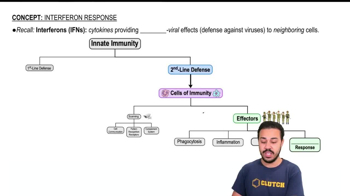
Step 3: Describe interferons and their function. Interferons are signaling proteins released by host cells in response to viral infections. They help inhibit viral replication and activate immune cells, such as natural killer cells and macrophages.
Step 4: Clarify pyrogens and their function. Pyrogens are substances, often produced by pathogens or immune cells, that induce fever by acting on the hypothalamus to increase the body's temperature set point.
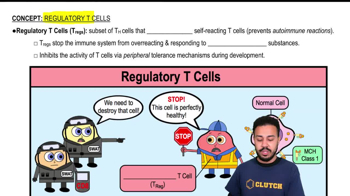
Step 5: Differentiate T cells and B cells and their functions. T cells are lymphocytes involved in cell-mediated immunity, responsible for directly attacking infected or cancerous cells. B cells are lymphocytes involved in humoral immunity, producing antibodies to neutralize pathogens.

비슷한 문제에 대한 검증된 영상 답변:
이 영상 해법은 위 문제에 도움이 된다고 튜터들이 추천한 것입니다.
도움이 되었나요?
주요 개념
질문에 올바르게 답하기 위해 반드시 이해해야 하는 핵심 개념들은 다음과 같습니다.
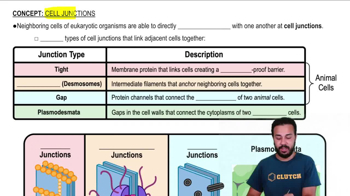
Stromal Cells
Stromal cells are the supportive tissue cells found in various organs, providing structural support and playing a crucial role in the immune response. They produce extracellular matrix components and secrete various cytokines that influence the behavior of immune cells. In the context of lymphoid organs, stromal cells help in the development and differentiation of lymphocytes.
추천 영상:
가이드 코스
Cell Junctions
Interferons
Interferons are a group of signaling proteins produced by host cells in response to viral infections and other stimuli. They play a vital role in the immune response by inhibiting viral replication, activating immune cells, and enhancing the recognition of infected cells. Interferons are classified into three main types: Type I (e.g., IFN-α and IFN-β), Type II (IFN-γ), and Type III (IFN-λ), each with distinct functions.
추천 영상:
가이드 코스
Interferons
T Cells and B Cells
T cells and B cells are two main types of lymphocytes that play critical roles in the adaptive immune response. T cells are involved in cell-mediated immunity, recognizing and destroying infected or cancerous cells, while B cells are responsible for humoral immunity, producing antibodies that neutralize pathogens. Both cell types originate from hematopoietic stem cells in the bone marrow and undergo maturation in different lymphoid organs.
추천 영상:
가이드 코스
Regulatory T Cells
관련 실천
교과서 질문
1022
views
교과서 질문
Give a function for each of the following:
(l) Interleukins
(m) Tumor necrosis factor
(n) Colony-stimulating factors
1073
views
교과서 질문
Compared with innate defenses, adaptive defenses
(a) Do not distinguish between one threat and another
(b) Are always present at birth
(c) Protect against threats on an individual basis
(d) Deny the entry of pathogens to the body
1095
views
교과서 질문
What seven defenses, present at birth, provide the body with the defensive capability known as innate (nonspecific) immunity?
1168
views
교과서 질문
Give a function for each of the following:
(a) Cytotoxic T cells
(b) Helper T cells
(c) Regulatory T cells
(d) Plasma cells
(e) NK cells
1085
views
교과서 질문
What are the three classes of lymphocytes, and where does each class originate?
1267
views