Ch. 4 The Tissue Level of Organization
Martini - Fundamentals of Anatomy & Physiology 11th Edition
Martini, Nath, Bartholomew11th EditionFundamentals of Anatomy & PhysiologyISBN: 9780136874089당신이 사용하는 게 아니라요?교과서 변경
4장, 문제 28

Why does damaged cartilage heal slowly?
(a) Chondrocytes cannot be replaced if killed, and other cell types must take their place.
(b) Cartilage is avascular, so nutrients and other molecules must diffuse to the site of injury.
(c) Damaged cartilage becomes calcified, thus blocking the movement of materials required for healing.
(d) Chondrocytes divide more slowly than other cell types, delaying the healing process.
(e) Damaged collagen cannot be quickly replaced, thereby slowing the healing process.

검증된 단계별 안내
1
Understand that cartilage is a type of connective tissue that provides support and cushioning in joints and other areas.
Recall that cartilage is avascular, meaning it lacks blood vessels, which limits the direct supply of nutrients and oxygen to the tissue.
Recognize that because of this avascularity, nutrients and waste products must move by diffusion through the matrix to reach chondrocytes, the cells responsible for maintaining cartilage.
Realize that diffusion is a slower process compared to direct blood supply, which slows down the delivery of essential molecules needed for repair and healing.
Conclude that the slow healing of damaged cartilage is primarily due to its avascular nature, making option (b) the correct explanation.

비슷한 문제에 대한 검증된 영상 답변:

이 영상 해법은 위 문제에 도움이 된다고 튜터들이 추천한 것입니다.
영상 길이:
4m
도움이 되었나요?

주요 개념

질문에 올바르게 답하기 위해 반드시 이해해야 하는 핵심 개념들은 다음과 같습니다.

Avascular Nature of Cartilage

Cartilage lacks blood vessels, meaning it does not receive direct blood supply. Nutrients and oxygen must diffuse through the dense extracellular matrix to reach chondrocytes, which slows down metabolic processes and delays healing after injury.
추천 영상:
03:34
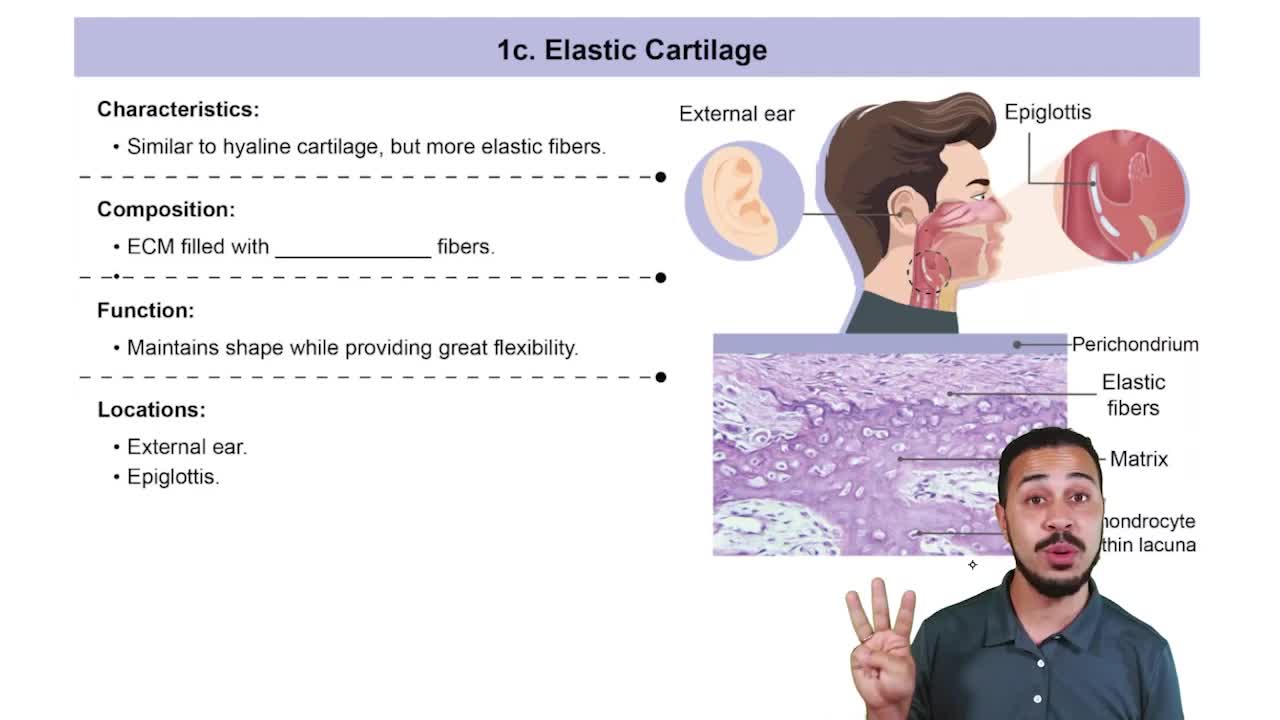
Elastic Cartilage

Role of Chondrocytes in Cartilage Repair

Chondrocytes are the specialized cells responsible for maintaining and repairing cartilage. Their limited ability to proliferate and replace damaged cells contributes to the slow healing process in cartilage tissue.
추천 영상:

Extracellular Matrix Composition and Repair

Cartilage's extracellular matrix, rich in collagen and proteoglycans, provides structural support but is slow to regenerate. Damage to collagen fibers impairs the matrix's integrity, and their slow replacement further delays cartilage repair.
추천 영상: