Ch. 6 Bones and Bone Structure
Martini - Fundamentals of Anatomy & Physiology 11th Edition
Martini, Nath, Bartholomew11th EditionFundamentals of Anatomy & PhysiologyISBN: 9780136874089당신이 사용하는 게 아니라요?교과서 변경
6장, 문제 8

The presence of an epiphyseal line indicates:
(a) Epiphyseal growth has ended
(b) Epiphyseal growth is just beginning
(c) Growth of bone diameter is just beginning
(d) The bone is fractured at the location
(e) No particular event

검증된 단계별 안내
1
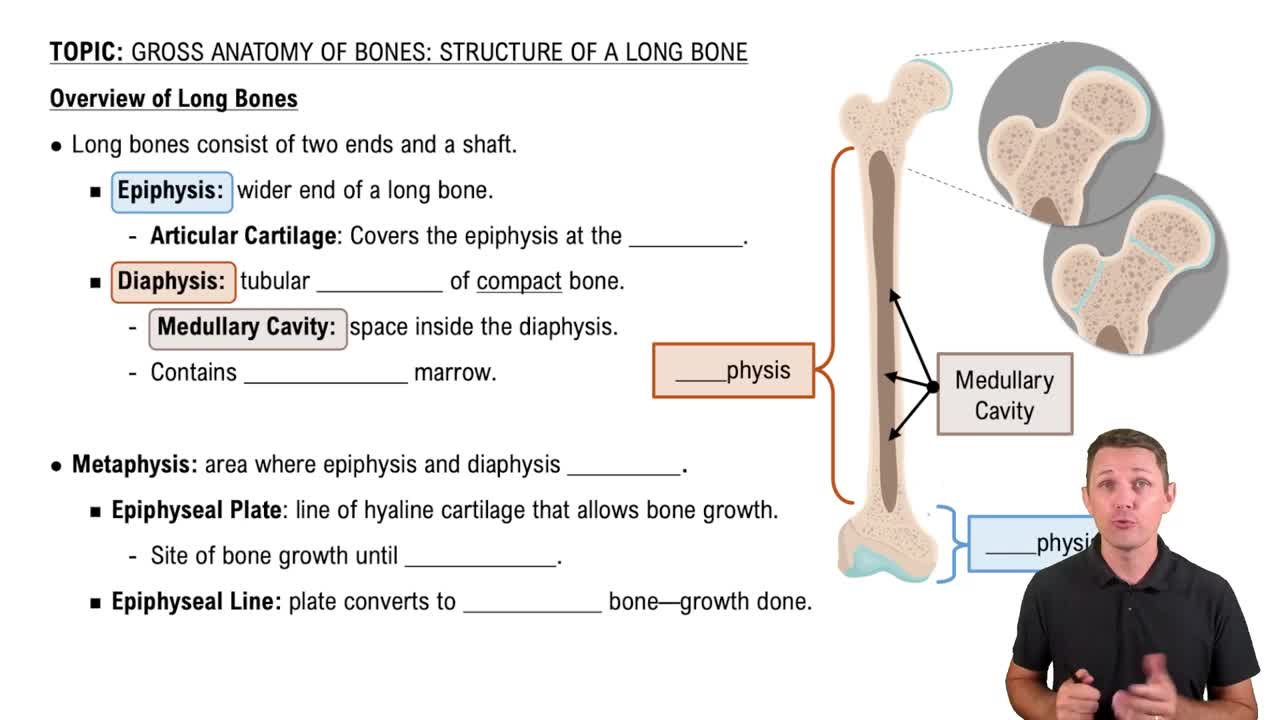
Understand that the epiphyseal line is a remnant of the epiphyseal plate, which is a region of cartilage found in growing bones.
Recall that the epiphyseal plate is responsible for longitudinal bone growth during childhood and adolescence.
Recognize that when the epiphyseal plate ossifies and becomes the epiphyseal line, it indicates that the bone has stopped growing in length.
Eliminate options that suggest growth is beginning or that the line indicates a fracture, as these do not align with the biological role of the epiphyseal line.
Conclude that the presence of an epiphyseal line means that epiphyseal growth has ended.

비슷한 문제에 대한 검증된 영상 답변:

이 영상 해법은 위 문제에 도움이 된다고 튜터들이 추천한 것입니다.
영상 길이:
3m
도움이 되었나요?

주요 개념

질문에 올바르게 답하기 위해 반드시 이해해야 하는 핵심 개념들은 다음과 같습니다.

Epiphyseal Plate and Line

The epiphyseal plate, or growth plate, is a layer of cartilage found in growing bones where new bone tissue forms, allowing lengthwise growth. When growth ceases, this cartilage is replaced by bone, forming the epiphyseal line, which indicates that the bone has reached its adult length.
추천 영상:
가이드 코스
1:56
First-Line Defenses

Bone Growth in Length vs. Diameter

Bone growth in length occurs at the epiphyseal plates through endochondral ossification, while growth in diameter (appositional growth) happens at the bone's surface. The epiphyseal line specifically relates to lengthwise growth cessation, not diameter growth.
추천 영상:
6:19
Overview of Long Bones

Bone Fractures and Anatomical Markers

A bone fracture is a break or crack in the bone, which is a pathological condition, not a normal anatomical feature. The epiphyseal line is a normal anatomical marker indicating growth completion, not a sign of fracture.
추천 영상:
02:40
Anatomical Position