Ch. 6 Bones and Bone Structure
Martini - Fundamentals of Anatomy & Physiology 11th Edition
Martini, Nath, Bartholomew11th EditionFundamentals of Anatomy & PhysiologyISBN: 9780136874089당신이 사용하는 게 아니라요?교과서 변경
6장, 문제 9

The primary reason that osteoporosis accelerates after menopause in women is:
(a) Reduced levels of circulating estrogens
(b) Reduced levels of vitamin C
(c) Diminished osteoclast activity
(d) Increased osteoblast activity

검증된 단계별 안내
1
Understand the role of estrogen in bone metabolism: Estrogen helps maintain a balance between bone resorption (breakdown) by osteoclasts and bone formation by osteoblasts.
Recognize that after menopause, estrogen levels drop significantly in women, which disrupts this balance.
Know that reduced estrogen leads to increased osteoclast activity, causing more bone resorption than formation.
Identify that this increased bone resorption results in a net loss of bone density, which accelerates osteoporosis.
Evaluate the answer choices by linking the physiological effect of estrogen reduction to the correct option, which involves reduced estrogen levels rather than vitamin C, osteoclast activity, or osteoblast activity.

비슷한 문제에 대한 검증된 영상 답변:

이 영상 해법은 위 문제에 도움이 된다고 튜터들이 추천한 것입니다.
영상 길이:
2m
도움이 되었나요?

주요 개념

질문에 올바르게 답하기 위해 반드시 이해해야 하는 핵심 개념들은 다음과 같습니다.

Role of Estrogens in Bone Metabolism

Estrogens are hormones that help maintain bone density by inhibiting bone resorption. After menopause, estrogen levels drop significantly, leading to increased activity of bone-resorbing cells and accelerated bone loss, which contributes to osteoporosis.
추천 영상:
가이드 코스
02:17
Introduction to Metabolism

Osteoclast and Osteoblast Activity

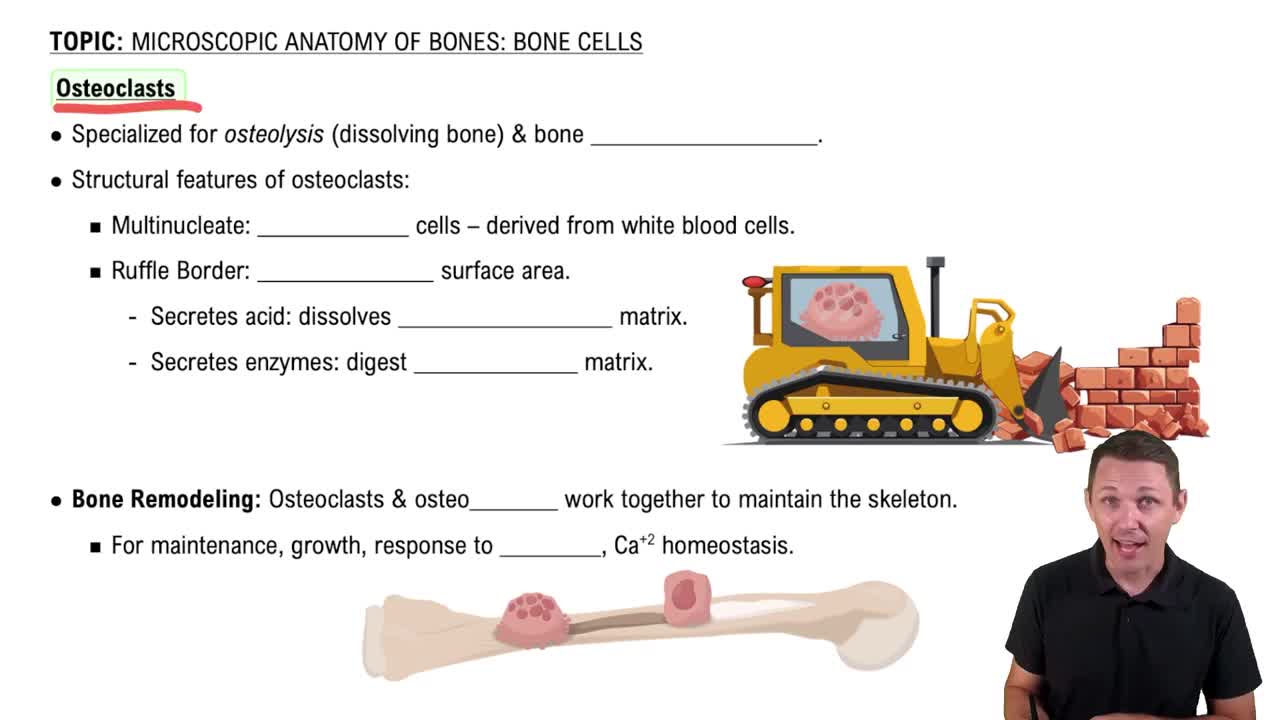
Osteoclasts break down bone tissue, while osteoblasts build new bone. A balance between these cells maintains healthy bone remodeling. In osteoporosis, increased osteoclast activity or decreased osteoblast activity disrupts this balance, causing bone weakening.
추천 영상:
4:34
Osteoclasts

Osteoporosis and Menopause

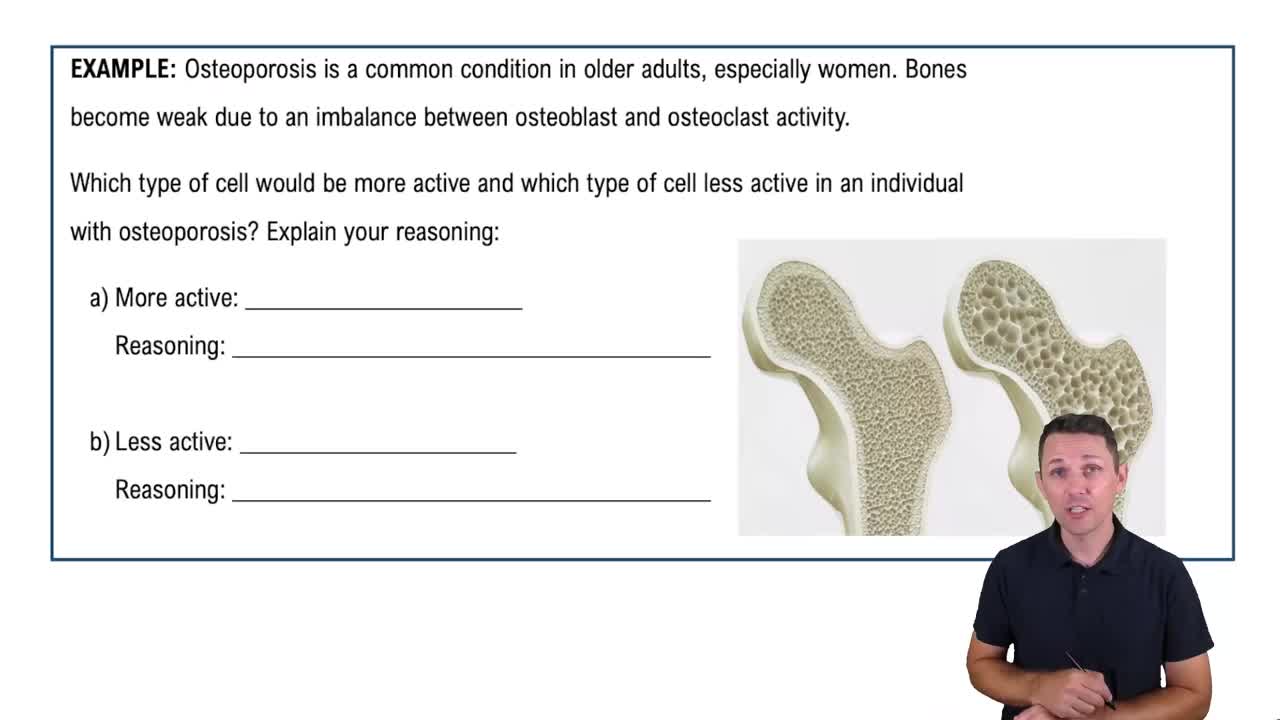
Osteoporosis is a condition characterized by reduced bone mass and increased fracture risk. It often accelerates after menopause due to hormonal changes, especially the decline in estrogen, which leads to increased bone resorption and decreased bone formation.
추천 영상:
1:57
Microscopic Anatomy of Bones - Bone Cells Example 2