Ch. 6 Bones and Bone Structure
Martini - Fundamentals of Anatomy & Physiology 11th Edition
Martini, Nath, Bartholomew11th EditionFundamentals of Anatomy & PhysiologyISBN: 9780136874089당신이 사용하는 게 아니라요?교과서 변경
6장, 문제 22

What are the functional relationships between the skeleton, on the one hand, and the digestive and urinary systems, on the other?

검증된 단계별 안내
1
Step 1: Understand the role of the skeleton as a structural framework that supports and protects various organs, including those involved in the digestive and urinary systems.
Step 2: Identify how the skeletal system provides protection to digestive organs such as the stomach, intestines, and liver by encasing them partially within the rib cage and pelvis.
Step 3: Explore the relationship between the skeleton and the urinary system, focusing on how bones like the pelvis protect the kidneys and bladder, and how the vertebral column supports the body to maintain proper organ positioning.
Step 4: Consider the role of bones as reservoirs for minerals like calcium and phosphate, which are essential for muscle contractions and enzymatic functions in both digestive and urinary processes.
Step 5: Recognize that the skeletal muscles attached to bones facilitate movements necessary for digestion (e.g., chewing, swallowing) and urination (e.g., controlling sphincters), highlighting an indirect but vital functional relationship.

비슷한 문제에 대한 검증된 영상 답변:

이 영상 해법은 위 문제에 도움이 된다고 튜터들이 추천한 것입니다.
영상 길이:
3m
도움이 되었나요?

주요 개념

질문에 올바르게 답하기 위해 반드시 이해해야 하는 핵심 개념들은 다음과 같습니다.

Structural Support and Protection by the Skeleton

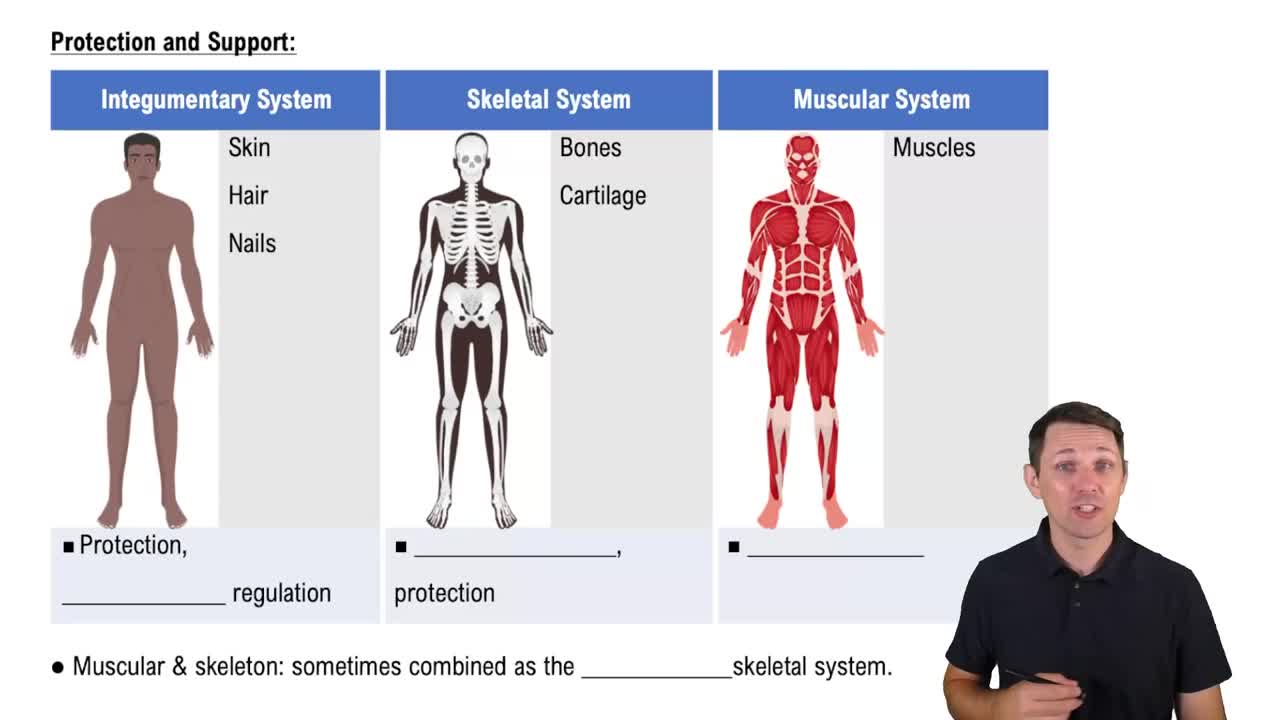
The skeleton provides a rigid framework that supports the body and protects vital organs. For the digestive system, bones like the rib cage shield organs such as the stomach and intestines, while the pelvis protects parts of the urinary system, including the bladder.
추천 영상:
가이드 코스
02:59
Protection and Support

Attachment Sites for Muscles Involved in Digestion and Urination

Bones serve as attachment points for muscles that facilitate digestive processes like swallowing and peristalsis, as well as muscles controlling urination. For example, the pelvic bones anchor muscles that regulate bladder function and waste elimination.
추천 영상:
가이드 코스
6:31
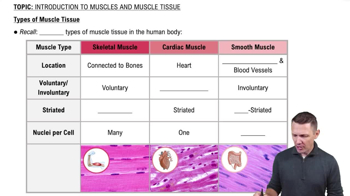
Types of Muscle Tissue

Mineral Storage and Homeostasis Affecting Organ Function

The skeleton stores minerals such as calcium and phosphorus, which are essential for muscle contraction and nerve signaling in both digestive and urinary systems. Proper mineral balance maintained by bones supports the physiological functions of these systems.
추천 영상:
가이드 코스
01:59
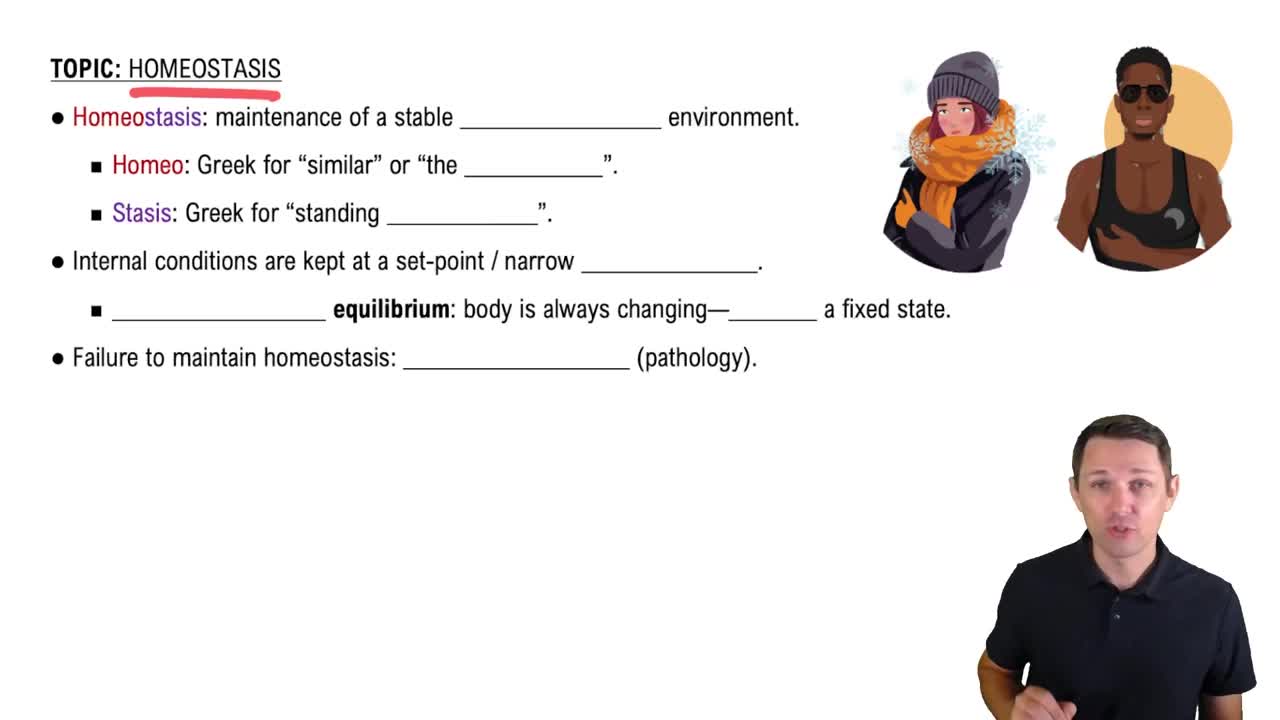
Introduction to Homeostasis