
Ch.1 Matter and Measurements
McMurry - Fundamentals of General, Organic, and Biological Chemistry 8th Edition
McMurry8th EditionFundamentals of General, Organic, and Biological ChemistryISBN: 9780134015187당신이 사용하는 게 아니라요?교과서 변경
1장, 문제 38

Name two changes of state and describe what causes each to occur.

검증된 단계별 안내
1
Identify the first change of state: Melting. Melting occurs when a solid changes into a liquid. This happens when the solid absorbs heat energy, causing the particles to vibrate more vigorously until they overcome the forces holding them in a fixed position. The temperature at which this occurs is called the melting point.
Identify the second change of state: Condensation. Condensation occurs when a gas changes into a liquid. This happens when the gas loses heat energy, causing the particles to slow down and come closer together, forming intermolecular attractions. This typically occurs at the dew point or when the gas comes into contact with a cooler surface.
Explain the role of energy in these changes: In melting, energy is absorbed by the substance, which increases the kinetic energy of the particles. In condensation, energy is released by the substance, which decreases the kinetic energy of the particles.
Discuss the importance of temperature: For melting, the temperature must reach the melting point of the substance. For condensation, the temperature must drop to or below the dew point for the gas to transition into a liquid.
Summarize the processes: Melting is an endothermic process (absorbs heat), while condensation is an exothermic process (releases heat). Both involve changes in the energy and arrangement of particles, leading to a change in the state of matter.

비슷한 문제에 대한 검증된 영상 답변:

이 영상 해법은 위 문제에 도움이 된다고 튜터들이 추천한 것입니다.
영상 길이:
1m
도움이 되었나요?

주요 개념

질문에 올바르게 답하기 위해 반드시 이해해야 하는 핵심 개념들은 다음과 같습니다.

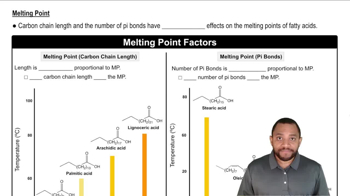
Melting

Melting is the process where a solid turns into a liquid when it absorbs heat. This occurs because the added thermal energy increases the kinetic energy of the particles in the solid, causing them to vibrate more vigorously until they overcome the forces holding them in a fixed position, resulting in a liquid state.
추천 영상:
가이드 코스
2:09
Physical Properties of Fatty Acids Concept 2

Condensation

Condensation is the change of state from a gas to a liquid, typically occurring when the gas cools down. As the temperature drops, the kinetic energy of the gas particles decreases, allowing intermolecular forces to pull the particles closer together, forming liquid droplets, as seen in dew formation on grass.
추천 영상:
가이드 코스
1:53
Condensed Formula Concept 1

Evaporation

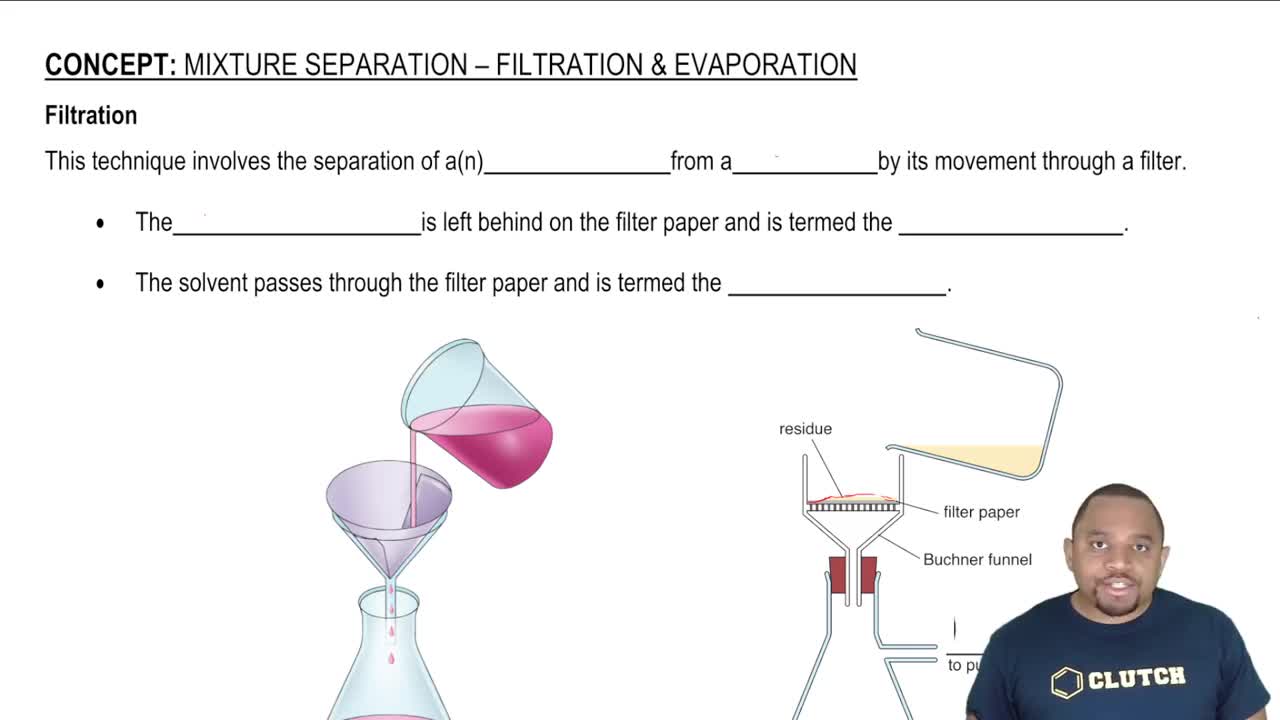
Evaporation is the process by which a liquid turns into a gas, occurring at the surface of the liquid when molecules gain enough energy to break free from the liquid's surface. This can happen at any temperature, but is accelerated by factors such as increased temperature, surface area, and decreased atmospheric pressure.
추천 영상:
가이드 코스
03:56
Filtration and Evaporation