Ch.2 Atoms and the Periodic Table
McMurry - Fundamentals of General, Organic, and Biological Chemistry 8th Edition
McMurry8th EditionFundamentals of General, Organic, and Biological ChemistryISBN: 9780134015187당신이 사용하는 게 아니라요?교과서 변경
2장, 문제 86

An unidentified element is found to have an electron configuration by shell of 2 8 18 8 2. To what group and period does this element belong? Is the element a metal or a nonmetal? How many protons does an atom of the element have? What is the name of the element? Write its electron-dot symbol.

검증된 단계별 안내
1
Step 1: Analyze the electron configuration provided: 2 8 18 8 2. This represents the distribution of electrons in the shells of the atom. The total number of electrons is the sum of these values: 2 + 8 + 18 + 8 + 2. This total gives the atomic number of the element, which also equals the number of protons in a neutral atom.
Step 2: Determine the period of the element. The number of electron shells (or energy levels) corresponds to the period of the element in the periodic table. In this case, there are 5 shells (2, 8, 18, 8, 2), so the element is in Period 5.
Step 3: Determine the group of the element. The number of electrons in the outermost shell (valence electrons) determines the group. Here, the outermost shell has 2 electrons, which places the element in Group 2 (alkaline earth metals).
Step 4: Identify whether the element is a metal or a nonmetal. Group 2 elements are metals, so this element is a metal.
Step 5: Use the atomic number (calculated in Step 1) to identify the element on the periodic table. Once identified, write its electron-dot symbol by placing the number of valence electrons (2) as dots around the element's symbol.

비슷한 문제에 대한 검증된 영상 답변:

이 영상 해법은 위 문제에 도움이 된다고 튜터들이 추천한 것입니다.
영상 길이:
9m
도움이 되었나요?

주요 개념

질문에 올바르게 답하기 위해 반드시 이해해야 하는 핵심 개념들은 다음과 같습니다.

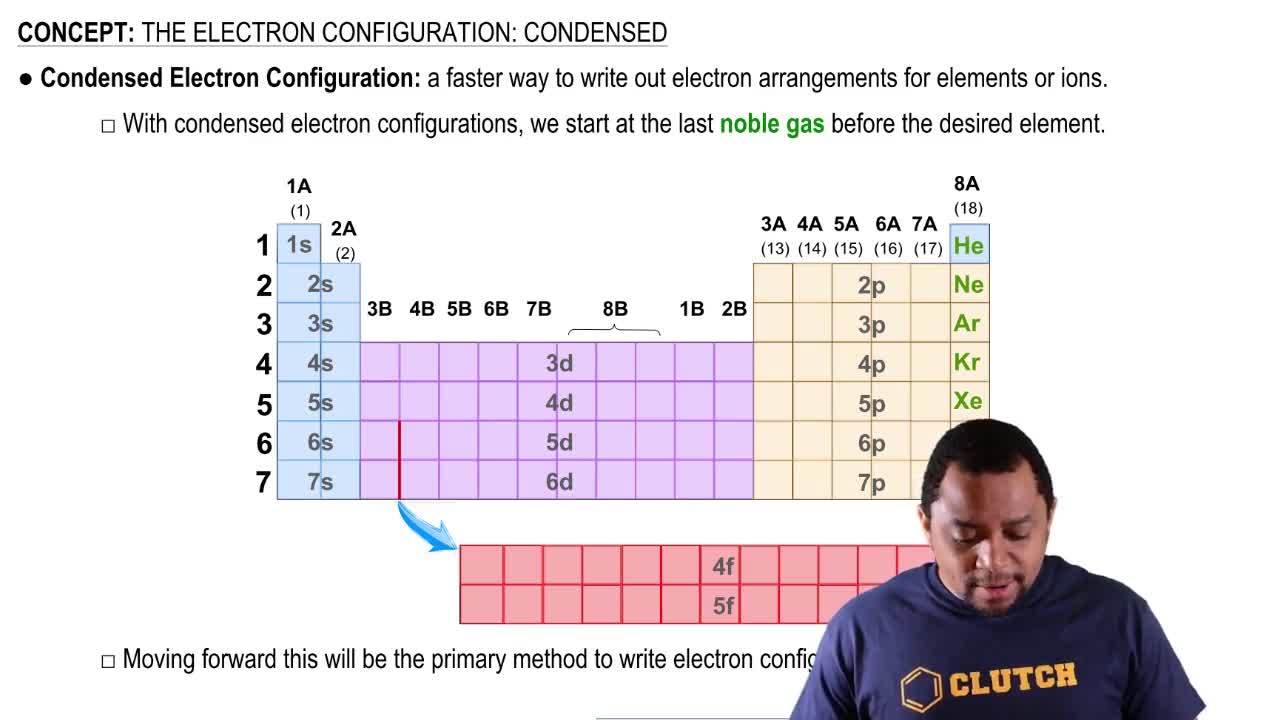
Electron Configuration

Electron configuration describes the distribution of electrons in an atom's shells and subshells. The notation '2 8 18 8 2' indicates the number of electrons in each shell, which helps determine the element's position in the periodic table. Understanding electron configuration is crucial for identifying an element's group, period, and chemical properties.
추천 영상:
가이드 코스
01:08
The Electron Configuration: Condensed

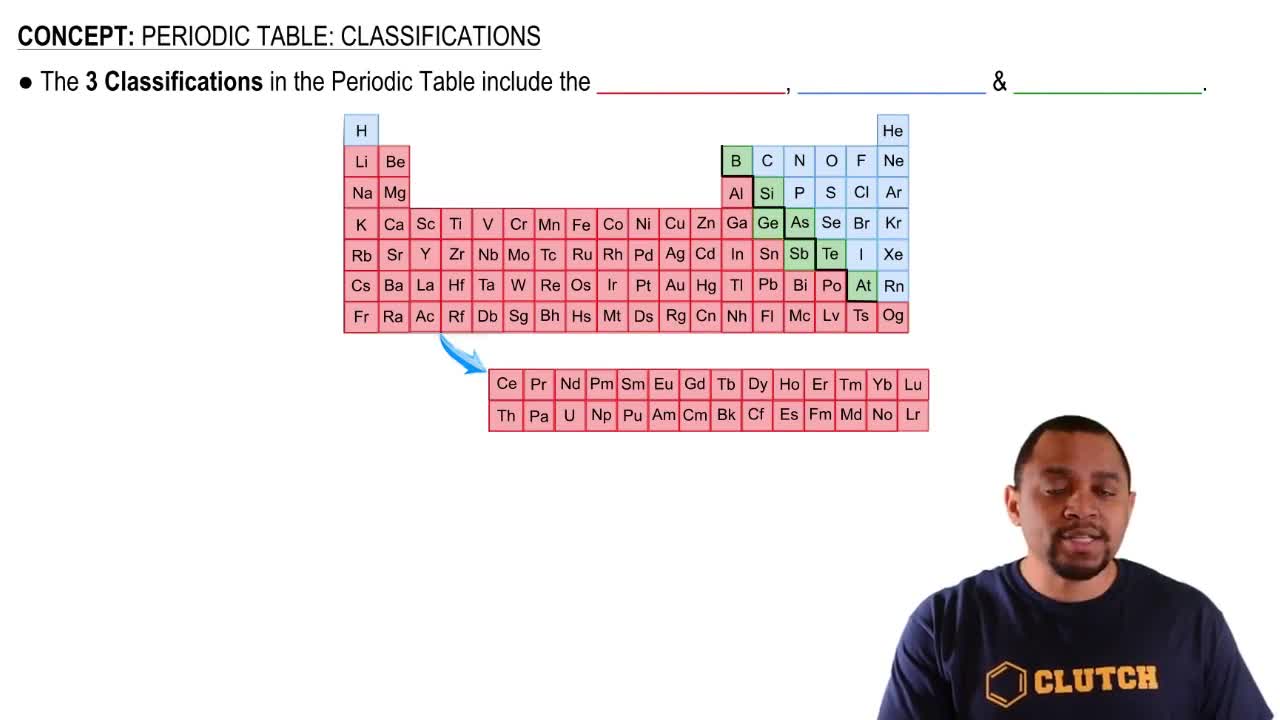
Periodic Table

The periodic table organizes elements based on their atomic number, electron configuration, and recurring chemical properties. Each row (period) corresponds to the number of electron shells, while each column (group) indicates elements with similar valence electron configurations. This structure allows for predicting an element's behavior, including whether it is a metal or nonmetal.
추천 영상:
가이드 코스
02:40
Periodic Table: Classifications

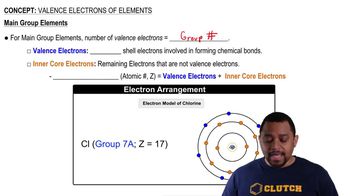
Valence Electrons

Valence electrons are the outermost electrons of an atom and play a key role in chemical bonding and reactivity. The number of valence electrons can be determined from the electron configuration and helps classify the element as a metal, nonmetal, or metalloid. For the given configuration, the valence electrons can be used to deduce the element's group and its likely chemical behavior.
추천 영상:
가이드 코스
01:55
Valence Electrons of Elements (Simplified) Concept 1