Ch.14 Some Compounds with Oxygen, Sulfur, or a Halogen
McMurry - Fundamentals of General, Organic, and Biological Chemistry 8th Edition
McMurry8th EditionFundamentals of General, Organic, and Biological ChemistryISBN: 9780134015187당신이 사용하는 게 아니라요?교과서 변경
14장, 문제 71

'Designer vinegars' have become very popular over the past decade. Vinegars made from champagne, merlot, and other wines are but a few of these. All wines contain ethanol, and these vinegars are simply wines containing microorganisms that have caused oxidation of the ethanol present. If vinegar is simply ethanol that has been oxidized, what is the structure of the acid formed?

검증된 단계별 안내
1
Step 1: Begin by understanding the chemical process described in the problem. Ethanol (C₂H₅OH) undergoes oxidation in the presence of microorganisms to form an acid. Oxidation involves the loss of electrons, typically resulting in the addition of oxygen or the removal of hydrogen.
Step 2: Recall the structure of ethanol. Ethanol is a two-carbon alcohol with the formula C₂H₅OH. The hydroxyl (-OH) group is attached to one of the carbons, making it a primary alcohol.
Step 3: Understand the oxidation of a primary alcohol. When a primary alcohol is oxidized, it first forms an aldehyde. In the case of ethanol, oxidation produces acetaldehyde (CH₃CHO).
Step 4: Continue the oxidation process. Acetaldehyde can undergo further oxidation to form a carboxylic acid. For ethanol, this results in the formation of acetic acid (CH₃COOH), which is the acid found in vinegar.
Step 5: Summarize the structure of the acid formed. The acid formed is acetic acid, which has the chemical formula CH₃COOH. Its structure consists of a methyl group (CH₃) attached to a carboxyl group (-COOH).

비슷한 문제에 대한 검증된 영상 답변:

이 영상 해법은 위 문제에 도움이 된다고 튜터들이 추천한 것입니다.
도움이 되었나요?

주요 개념

질문에 올바르게 답하기 위해 반드시 이해해야 하는 핵심 개념들은 다음과 같습니다.

Ethanol Oxidation

Ethanol oxidation is a chemical process where ethanol (C2H5OH) is converted into acetic acid (CH3COOH) through the action of microorganisms, typically acetic acid bacteria. This process involves the removal of hydrogen and the addition of oxygen, resulting in the transformation of the alcohol into an acid. Understanding this reaction is crucial for comprehending how vinegars are produced from wines.

Acetic Acid Structure

Acetic acid, the primary component of vinegar, has the chemical formula CH3COOH. Its structure consists of a methyl group (CH3) attached to a carboxyl group (COOH). This carboxylic acid functional group is responsible for the acidic properties of vinegar, making it an important concept when discussing the chemical nature of designer vinegars.
추천 영상:
가이드 코스
2:17
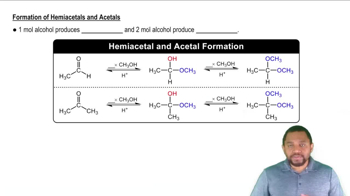
Formation of Hemiacetals and Acetals Concept 2

Microbial Fermentation

Microbial fermentation is a metabolic process where microorganisms, such as bacteria and yeast, convert sugars and other substrates into acids, gases, or alcohol. In the context of vinegar production, acetic acid bacteria play a key role in fermenting ethanol into acetic acid, highlighting the importance of microbial activity in the transformation of wine into vinegar.
추천 영상:
가이드 코스
2:22
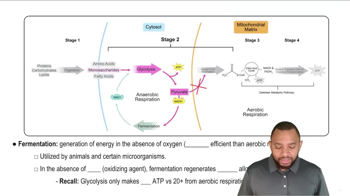
Anaerobic Respiration Concept 2