Ch.18 Amino Acids and Proteins
McMurry - Fundamentals of General, Organic, and Biological Chemistry 8th Edition
McMurry8th EditionFundamentals of General, Organic, and Biological ChemistryISBN: 9780134015187당신이 사용하는 게 아니라요?교과서 변경
18장, 문제 93c

Explain how a protein is denatured by the following:
c. Organic solvents

검증된 단계별 안내
1
Understand the concept of protein denaturation: Denaturation is the process in which a protein loses its native three-dimensional structure due to the disruption of non-covalent interactions, such as hydrogen bonds, ionic bonds, and hydrophobic interactions. This process does not break peptide bonds but alters the protein's functional shape.
Recognize the role of organic solvents: Organic solvents, such as ethanol or acetone, are capable of disrupting the hydrophobic interactions within a protein. These interactions are critical for maintaining the protein's tertiary structure, as hydrophobic side chains are typically buried in the interior of the protein to avoid contact with water.
Explain the mechanism of disruption: Organic solvents reduce the polarity of the surrounding environment, making it less favorable for hydrophobic side chains to remain buried. This causes the hydrophobic regions of the protein to unfold and become exposed to the solvent, leading to a loss of the protein's native structure.
Consider the impact on hydrogen bonding: Organic solvents can also interfere with hydrogen bonding by competing with water molecules or directly interacting with polar groups in the protein. This further destabilizes the protein's secondary and tertiary structures.
Summarize the result: The combined effects of disrupted hydrophobic interactions and hydrogen bonding lead to the unfolding of the protein, rendering it non-functional. This process is reversible or irreversible depending on the specific protein and conditions.

비슷한 문제에 대한 검증된 영상 답변:

이 영상 해법은 위 문제에 도움이 된다고 튜터들이 추천한 것입니다.
도움이 되었나요?

주요 개념

질문에 올바르게 답하기 위해 반드시 이해해야 하는 핵심 개념들은 다음과 같습니다.

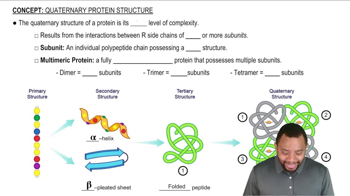
Protein Structure

Proteins are composed of long chains of amino acids that fold into specific three-dimensional structures. These structures are crucial for their function and are categorized into four levels: primary, secondary, tertiary, and quaternary. The stability of these structures is maintained by various interactions, including hydrogen bonds, ionic bonds, and hydrophobic interactions.
추천 영상:
가이드 코스
3:26
Quaternary Protein Structure Concept 1

Denaturation

Denaturation refers to the process where a protein loses its native structure due to external stressors, such as heat, pH changes, or chemical agents. This alteration disrupts the interactions that maintain the protein's shape, leading to a loss of function. Denatured proteins may aggregate or precipitate, rendering them biologically inactive.
추천 영상:
가이드 코스
1:17
Digestion of Proteins Example 1

Organic Solvents

Organic solvents, such as ethanol or acetone, can disrupt the hydrophobic interactions within proteins. These solvents can solvate nonpolar amino acid side chains, leading to the unfolding of the protein structure. The presence of organic solvents can also alter the protein's environment, further promoting denaturation and affecting its solubility and functionality.
추천 영상:
가이드 코스
2:26
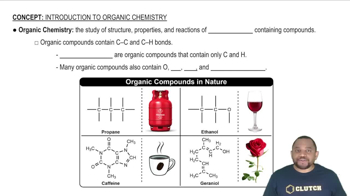
Introduction to Organic Chemistry Concept 1