Ch.19 Enzymes and Vitamins
McMurry - Fundamentals of General, Organic, and Biological Chemistry 8th Edition
McMurry8th EditionFundamentals of General, Organic, and Biological ChemistryISBN: 9780134015187당신이 사용하는 게 아니라요?교과서 변경
19장, 문제 29b

Explain how the following mechanisms regulate enzyme activity.
b. Genetic control

검증된 단계별 안내
1
Understand that genetic control refers to the regulation of enzyme activity at the level of gene expression, meaning the production of enzymes is controlled by turning genes on or off.
Recognize that genes encode the instructions for synthesizing enzymes, and their expression can be influenced by factors such as environmental signals, cellular needs, or developmental stages.
Explain that when a gene is 'turned on' (expressed), the cell produces messenger RNA (mRNA) through transcription, which is then translated into the enzyme protein. Conversely, when a gene is 'turned off,' no enzyme is produced.
Discuss how genetic control can be a long-term regulatory mechanism, as it affects the amount of enzyme available in the cell rather than modifying the activity of existing enzymes.
Provide examples, such as the regulation of enzymes involved in lactose metabolism in bacteria (e.g., the lac operon), where the presence or absence of lactose determines whether the genes for lactose-digesting enzymes are expressed.

비슷한 문제에 대한 검증된 영상 답변:

이 영상 해법은 위 문제에 도움이 된다고 튜터들이 추천한 것입니다.
영상 길이:
5m
도움이 되었나요?

주요 개념

질문에 올바르게 답하기 위해 반드시 이해해야 하는 핵심 개념들은 다음과 같습니다.

Enzyme Regulation

Enzyme regulation refers to the various mechanisms that control the activity of enzymes, ensuring that metabolic processes occur at the right time and in the right amounts. This regulation can occur through several means, including allosteric regulation, covalent modification, and genetic control, which collectively help maintain homeostasis within the cell.
추천 영상:
가이드 코스
2:14
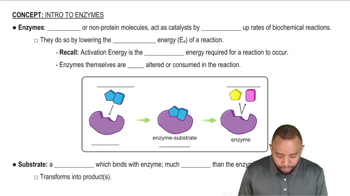
Intro to Enzymes Concept 1

Genetic Control

Genetic control of enzyme activity involves the regulation of gene expression that encodes enzymes. This means that the synthesis of enzymes can be increased or decreased based on the cell's needs, often in response to environmental changes or developmental signals, allowing for precise control over metabolic pathways.
추천 영상:
가이드 코스
03:25
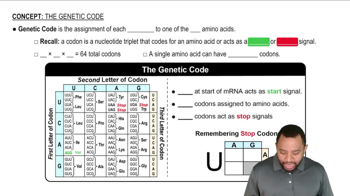
The Genetic Code Concept 1

Transcription and Translation

Transcription and translation are the two key processes through which genetic information is converted into functional proteins, including enzymes. Transcription involves copying DNA into messenger RNA (mRNA), while translation is the process where ribosomes synthesize proteins based on the sequence of the mRNA, ultimately determining the levels of enzyme activity in the cell.
추천 영상:
가이드 코스
6:37
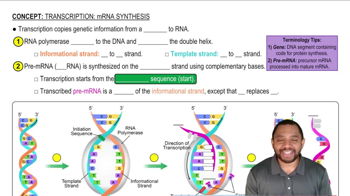
Transcription: mRNA Synthesis Concept 1