
교과서 질문
Consider the trisaccharide A, B, C shown in Problem 20.23.
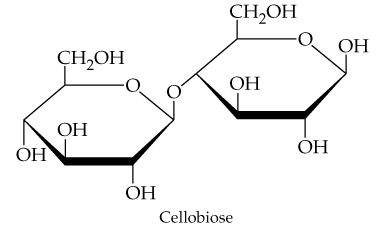
a. Identify the hemiacetal and acetal linkages.
1153
views

 검증된 단계별 안내
 1:44
1:44
 3:39
3:39Consider the trisaccharide A, B, C shown in Problem 20.23.
a. Identify the hemiacetal and acetal linkages.
Draw the structure of the α and β anomers that result from the reaction of methanol and ribose. Are these compounds acetals or hemiacetals?
L-Fucose is one of the naturally occurring L monosaccharides. It is present in the short chains of monosaccharides by which blood groups are classified. Compare the structure of L-fucose shown in the margin with the structures of α- and β-D-galactose and answer the following questions.
d. "Fucose” is a common name. Is 6-deoxy-L-galactose a correct name for fucose? Why or why not?
In the monosaccharide hemiacetal shown below number all the carbon atoms, identify the anomeric carbon atom, and identify it as the α or β anomer.
During the digestion of starch from potatoes, the enzyme α-amylase catalyzes the hydrolysis of starch into maltose. Subsequently, the enzyme maltase catalyzes the hydrolysis of maltose into two glucose units. Write an equation (in words) for the enzymatic conversion of starch to glucose. Classify each of the carbohydrates in the equation as a disaccharide, monosaccharide, or polysaccharide.
Identify the following as diastereomers, enantiomers, and/or anomers.
(a) β-D-fructose and β-D-fructose
(b) D-galactose and L-galactose
(c) L-allose and D-glucose (both aldohexoses)