Ch.25 Protein and Amino Acid Metabolism
McMurry - Fundamentals of General, Organic, and Biological Chemistry 8th Edition
McMurry8th EditionFundamentals of General, Organic, and Biological ChemistryISBN: 9780134015187당신이 사용하는 게 아니라요?교과서 변경
25장, 문제 33

From what two amino acids do the nitrogens in urea arise?
<IMAGE>

검증된 단계별 안내
1
Understand the context: Urea is a waste product formed in the liver during the urea cycle, which is a process that removes excess nitrogen from the body. The nitrogens in urea originate from specific amino acids during this cycle.
Recall the urea cycle: The urea cycle involves the conversion of ammonia (NH₃) and aspartate into urea. Ammonia is derived from the deamination of amino acids, while aspartate contributes its nitrogen directly to the urea molecule.
Identify the amino acids: The two amino acids that contribute nitrogen to urea are glutamate and aspartate. Glutamate provides nitrogen through the release of ammonia during oxidative deamination, and aspartate donates its nitrogen directly in the cycle.
Relate to Figure 25.3: If you refer to Figure 25.3 in your textbook, it likely illustrates the urea cycle and highlights the roles of glutamate and aspartate in nitrogen donation.
Summarize the answer: The nitrogens in urea arise from glutamate (via ammonia) and aspartate, as these are the key contributors of nitrogen in the urea cycle.

비슷한 문제에 대한 검증된 영상 답변:

이 영상 해법은 위 문제에 도움이 된다고 튜터들이 추천한 것입니다.
영상 길이:
3m

주요 개념

질문에 올바르게 답하기 위해 반드시 이해해야 하는 핵심 개념들은 다음과 같습니다.

Amino Acids

Amino acids are organic compounds that serve as the building blocks of proteins. They contain an amino group, a carboxyl group, and a unique side chain. In the context of urea synthesis, specific amino acids contribute their nitrogen atoms, which are crucial for the formation of urea in the liver during the urea cycle.
추천 영상:
가이드 코스
3:03
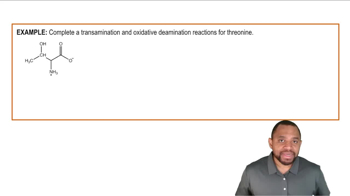
Amino Acid Catabolism: Amino Group Example 2

Urea Cycle

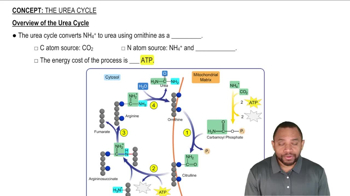
The urea cycle is a series of biochemical reactions that convert ammonia, a toxic byproduct of protein metabolism, into urea, which is excreted in urine. This cycle primarily occurs in the liver and involves several enzymes and intermediates. Understanding this cycle is essential for identifying the sources of nitrogen in urea, particularly from amino acids.
추천 영상:
가이드 코스
0:51
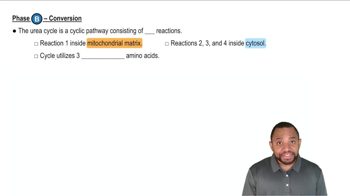
The Urea Cycle Concept 3

Nitrogen Sources in Urea

In the urea cycle, the nitrogens in urea primarily originate from the amino acids aspartate and glutamate. Aspartate donates one nitrogen atom, while the other nitrogen comes from ammonia, which is derived from the deamination of glutamate. Recognizing these specific amino acids is key to answering questions about nitrogen metabolism and urea formation.
추천 영상:
가이드 코스
2:43
The Urea Cycle Concept 1