교과서 질문
Using the given starting material, any necessary inorganic reagents, and any carbon-containing compounds with no more than two carbons, indicate how the following syntheses could be carried out:
b.
1034
views

 Bruice 8th EditionCh. 10 - Reactions of Alcohols, Ethers, Epoxides, Amines, and Sulfur-Containing Compounds문제 73a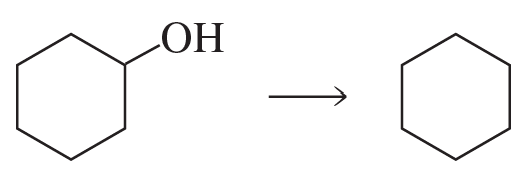
 검증된 단계별 안내
 1:16
1:16
 06:50
06:50 02:36
02:36Using the given starting material, any necessary inorganic reagents, and any carbon-containing compounds with no more than two carbons, indicate how the following syntheses could be carried out:
b.
What product would be formed if the four-membered ring alcohol in Problem 70 were heated with an equivalent amount of HBr rather than with a catalytic amount of H2SO4?
When 3-methyl-2-butanol is heated with concentrated HBr, a rearranged product is obtained. When 2-methyl-1-propanol reacts under the same conditions, a rearranged product is not obtained. Explain.
a. Draw the product or products that will be obtained from the reaction of cis-2-butene and trans-2-butene with each of the following reagents. If a product can exist as stereoisomers, show which stereoisomers are formed.
8. CH3OH + H2SO4
b. With which reagents do the two alkenes react to form different products?
When piperidine undergoes the series of reactions shown here, 1,4-pentadiene is obtained as the product. When the four different methyl-substituted piperidines undergo the same series of reactions, each forms a different diene: 1,5-hexadiene; 1,4-pentadiene; 2-methyl-1,4-pentadiene; and 3-methyl-1,4-pentadiene. Which methyl-substituted piperidine forms which diene?
Which of the following ethers would be obtained in greatest yield directly from alcohols?