Ch. 12 - Radicals
Bruice - Organic Chemistry 8th Edition
Bruice8th EditionOrganic ChemistryISBN: 9780135213711당신이 사용하는 게 아니라요?교과서 변경
12장, 문제 21d

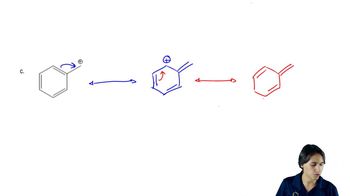
Draw the resonance contributors for the following radicals:
d.

검증된 단계별 안내
1
Identify the radical center in the given structure. A radical is typically represented by a single unpaired electron on an atom, often carbon.
Determine if there are any adjacent atoms with lone pairs or π bonds that can participate in resonance. These are typically atoms like oxygen, nitrogen, or carbon-carbon double bonds.
Draw the first resonance structure by moving electrons. Use curved arrows to show the movement of electrons: a single-headed arrow indicates the movement of a single electron.
Continue to draw additional resonance structures by moving electrons to different positions, ensuring that each structure adheres to the rules of valency and maintains the radical character.
Verify that all resonance structures are valid by checking that the total number of electrons remains constant and that each structure contributes to the overall hybrid by stabilizing the radical through delocalization.

비슷한 문제에 대한 검증된 영상 답변:

이 영상 해법은 위 문제에 도움이 된다고 튜터들이 추천한 것입니다.
영상 길이:
6m

주요 개념

질문에 올바르게 답하기 위해 반드시 이해해야 하는 핵심 개념들은 다음과 같습니다.

Resonance Structures

Resonance structures are different Lewis structures for the same molecule that depict the same arrangement of atoms but differ in the placement of electrons. These structures help illustrate the delocalization of electrons within a molecule, which can stabilize the overall structure. Understanding resonance is crucial for predicting the reactivity and stability of radicals, as it shows how electron density can be distributed across different atoms.
추천 영상:
03:04
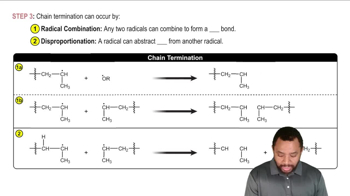
Drawing Resonance Structures

Radicals

Radicals are species that contain an unpaired electron, making them highly reactive. They can be formed through various processes, such as homolytic bond cleavage. In the context of resonance, radicals can have multiple resonance contributors, which can help stabilize the radical by delocalizing the unpaired electron across different atoms, thus lowering the overall energy of the molecule.
추천 영상:
가이드 코스
1:30
Radical Polymerization Concept 4

Electron Delocalization

Electron delocalization refers to the spreading of electron density across multiple atoms in a molecule, rather than being localized between two atoms. This phenomenon is a key feature of resonance and contributes to the stability of radicals and other reactive intermediates. By understanding how electrons can be shared among different atoms, one can better predict the behavior and reactivity of organic compounds.
추천 영상:
03:54
The 18 and 16 Electron Rule