Ch. 19 - More About Amines • Reactions of Heterocyclic Compounds
Bruice - Organic Chemistry 8th Edition
Bruice8th EditionOrganic ChemistryISBN: 9780135213711당신이 사용하는 게 아니라요?교과서 변경
19장, 문제 33b

b. At what position does pyridine-N-oxide undergo electrophilic aromatic substitution?

검증된 단계별 안내
1
Pyridine-N-oxide is a derivative of pyridine where an oxygen atom is bonded to the nitrogen atom, creating a positively charged nitrogen and a negatively charged oxygen. This alters the electronic distribution in the ring, making it different from regular pyridine.
In electrophilic aromatic substitution (EAS), the position of substitution is determined by the electronic effects of substituents. The oxygen in pyridine-N-oxide withdraws electron density from the nitrogen atom, which in turn affects the electron density at the various positions of the aromatic ring.
The resonance structures of pyridine-N-oxide show that the electron density is reduced at the ortho (positions 2 and 6) and para (position 4) positions relative to the nitrogen atom. However, the meta positions (positions 3 and 5) retain relatively higher electron density.
Since electrophiles are attracted to regions of higher electron density, the electrophilic aromatic substitution reaction will preferentially occur at the meta positions (positions 3 and 5) of pyridine-N-oxide.
To summarize, pyridine-N-oxide undergoes electrophilic aromatic substitution at the meta positions (positions 3 and 5) due to the electronic effects of the N-oxide group, which directs substitution to these positions.

비슷한 문제에 대한 검증된 영상 답변:

이 영상 해법은 위 문제에 도움이 된다고 튜터들이 추천한 것입니다.
영상 길이:
3m

주요 개념

질문에 올바르게 답하기 위해 반드시 이해해야 하는 핵심 개념들은 다음과 같습니다.

Electrophilic Aromatic Substitution (EAS)

Electrophilic Aromatic Substitution is a fundamental reaction in organic chemistry where an electrophile replaces a hydrogen atom on an aromatic ring. This process typically involves the formation of a sigma complex, where the aromaticity is temporarily lost, followed by deprotonation to restore aromaticity. Understanding EAS is crucial for predicting the reactivity of aromatic compounds, including heterocycles like pyridine.
추천 영상:
03:07
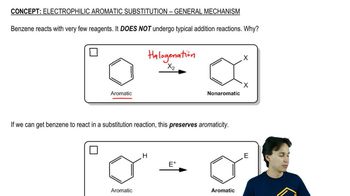
EAS Review

Pyridine and its Derivatives

Pyridine is a six-membered aromatic ring containing one nitrogen atom, which influences its reactivity compared to benzene. The nitrogen atom in pyridine is electron-withdrawing due to its electronegativity, which affects the positions where electrophilic substitution can occur. Recognizing the role of nitrogen in pyridine derivatives is essential for determining the regioselectivity of EAS reactions.
추천 영상:
02:49
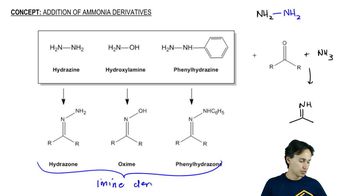
Ammonia Derivatives

Regioselectivity in Electrophilic Aromatic Substitution

Regioselectivity refers to the preference of an electrophile to attack specific positions on an aromatic ring during substitution reactions. In the case of pyridine-N-oxide, the presence of the nitrogen atom and the oxygen atom influences the electron density on the ring, making certain positions more favorable for electrophilic attack. Understanding regioselectivity helps predict the outcome of reactions involving substituted aromatic compounds.
추천 영상:
03:07
EAS Review