

Ch. 8 - Delocalized Electrons: Their Effect on Stability, pKa, and the Products of a Reaction • Aromaticity and Electronic Effects: An Introduction to the Reactions of Benzene
Bruice - Organic Chemistry 8th Edition
Bruice8th EditionOrganic ChemistryISBN: 9780135213711당신이 사용하는 게 아니라요?교과서 변경
8장, 문제 10

Which has the greater delocalization energy?
Two molecular structures with an oxygen atom, comparing delocalization energy, labeled "or."

검증된 단계별 안내
1
Step 1: Analyze the structures provided in the image. Both molecules contain conjugated systems with alternating double and single bonds, and an oxygen atom attached to the chain. The conjugation allows for delocalization of π-electrons across the system.
Step 2: Delocalization energy is influenced by the extent of conjugation. A longer conjugated system (more alternating double and single bonds) typically results in greater delocalization energy because the π-electrons can spread over a larger area.
Step 3: Compare the conjugated systems in the two molecules. Count the number of conjugated double bonds in each structure. The molecule with more conjugated double bonds will have greater delocalization energy.
Step 4: Consider the position of the oxygen atom. The oxygen atom can participate in resonance, potentially increasing the delocalization energy. Evaluate how the oxygen atom interacts with the conjugated system in each molecule.
Step 5: Based on the analysis of conjugation length and the role of the oxygen atom, determine which molecule has the greater delocalization energy. The molecule with the longer conjugated system and better resonance interaction with the oxygen atom will have higher delocalization energy.

비슷한 문제에 대한 검증된 영상 답변:

이 영상 해법은 위 문제에 도움이 된다고 튜터들이 추천한 것입니다.
영상 길이:
8m

주요 개념

질문에 올바르게 답하기 위해 반드시 이해해야 하는 핵심 개념들은 다음과 같습니다.

Delocalization Energy

Delocalization energy refers to the stabilization that occurs when electrons are spread out over multiple atoms rather than localized between two. This phenomenon is particularly significant in conjugated systems, where alternating single and double bonds allow for resonance. The greater the delocalization, the lower the energy of the system, leading to increased stability.
추천 영상:
08:30
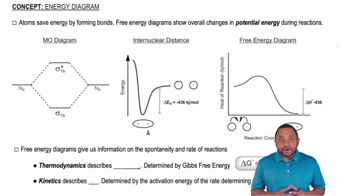
Introduction to free energy diagrams.

Conjugation

Conjugation is a structural feature in organic molecules where alternating single and double bonds create a system of overlapping p-orbitals. This arrangement allows for the delocalization of π electrons across the entire molecule, enhancing stability and influencing reactivity. Conjugated systems often exhibit unique optical and electronic properties due to this electron delocalization.
추천 영상:
03:27
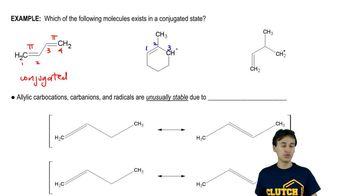
Conjugated states

Resonance Structures

Resonance structures are different Lewis structures that represent the same molecule, illustrating the delocalization of electrons. These structures help visualize how electrons are distributed across a molecule, contributing to its overall stability. The true structure of the molecule is a hybrid of these resonance forms, and the more resonance forms a molecule has, the greater its delocalization energy.
추천 영상:
03:04
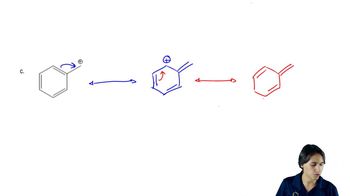
Drawing Resonance Structures