Ch.11 - Reactions of Alcohols
Wade - Organic Chemistry 9th Edition
Wade9th EditionOrganic ChemistryISBN: 9780135213728당신이 사용하는 게 아니라요?교과서 변경
11장, 문제 46a,b,c

Show how you would convert (S)-hexan-2-ol to
(a) (S)-2-chlorohexane.
(b) (R)-2-bromohexane.
(c) (R)-hexan-2-ol.

검증된 단계별 안내
1
Step 1: To convert (S)-hexan-2-ol to (S)-2-chlorohexane, perform a substitution reaction. First, protonate the alcohol group (-OH) using a strong acid like HCl to form a good leaving group (water). Then, the chloride ion (Cl⁻) from HCl will attack the carbon attached to the leaving group, resulting in (S)-2-chlorohexane. Ensure the stereochemistry is retained since the reaction proceeds via an SN2 mechanism.
Step 2: To convert (S)-hexan-2-ol to (R)-2-bromohexane, first convert the alcohol group (-OH) into a better leaving group by reacting it with PBr₃ (phosphorus tribromide). This reaction proceeds via an SN2 mechanism, which inverts the stereochemistry at the chiral center, yielding (R)-2-bromohexane.
Step 3: To convert (S)-hexan-2-ol to (R)-hexan-2-ol, perform a two-step process. First, oxidize (S)-hexan-2-ol to hexan-2-one using an oxidizing agent like PCC (pyridinium chlorochromate). This removes the stereochemistry by converting the alcohol to a ketone. Then, reduce hexan-2-one back to an alcohol using a chiral reducing agent like (R)-CBS catalyst to selectively produce (R)-hexan-2-ol.
Step 4: For each transformation, carefully monitor reaction conditions to ensure stereochemical control. For example, SN2 reactions invert stereochemistry, while chiral catalysts can selectively produce desired enantiomers.
Step 5: Verify the stereochemistry of the products using techniques like polarimetry or chiral chromatography to confirm the desired enantiomer has been obtained.

비슷한 문제에 대한 검증된 영상 답변:

이 영상 해법은 위 문제에 도움이 된다고 튜터들이 추천한 것입니다.
영상 길이:
12m
도움이 되었나요?

주요 개념

질문에 올바르게 답하기 위해 반드시 이해해야 하는 핵심 개념들은 다음과 같습니다.

Stereochemistry

Stereochemistry is the study of the spatial arrangement of atoms in molecules and how this affects their chemical behavior. In this question, understanding the stereochemistry of (S)-hexan-2-ol and its derivatives is crucial, as the conversion processes must preserve or invert the stereochemistry of the chiral center.
추천 영상:
가이드 코스
1:38
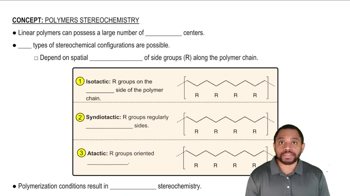
Polymer Stereochemistry Concept 1

Nucleophilic Substitution Reactions

Nucleophilic substitution reactions involve the replacement of a leaving group in a molecule by a nucleophile. In the context of converting (S)-hexan-2-ol to (S)-2-chlorohexane and (R)-2-bromohexane, recognizing whether to use an SN1 or SN2 mechanism is essential, as it influences the stereochemical outcome of the reaction.
추천 영상:
01:47
Nucleophiles and Electrophiles can react in Substitution Reactions.

Reagents and Reaction Conditions

Different reagents and reaction conditions can significantly affect the outcome of organic reactions. For example, using thionyl chloride (SOCl2) for chlorination or phosphorus tribromide (PBr3) for bromination can lead to different stereochemical products. Understanding how these reagents interact with (S)-hexan-2-ol is key to achieving the desired transformations.
추천 영상:
01:52
Reagents