뒤로
뒤로
문제 19a
Show how you would synthesize the following aromatic derivatives from benzene.
a. p-tert-butylnitrobenzene
문제 19b
Show how you would synthesize the following aromatic derivatives from benzene.
b. p-toluenesulfonic acid
문제 19c
Show how you would synthesize the following aromatic derivatives from benzene.
c. p-chlorotoluene
문제 20a
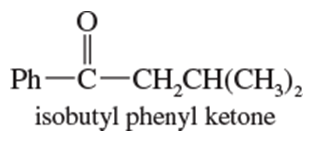
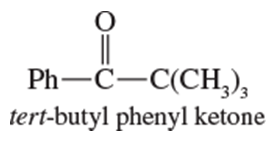
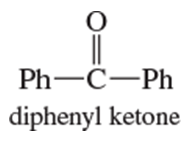
Show how you would use the Friedel–Crafts acylation, Clemmensen reduction, and/or Gatterman–Koch synthesis to prepare the following compounds:
a.
문제 20b
Show how you would use the Friedel–Crafts acylation, Clemmensen reduction, and/or Gatterman–Koch synthesis to prepare the following compounds:
b.
문제 20c
Show how you would use the Friedel–Crafts acylation, Clemmensen reduction, and/or Gatterman–Koch synthesis to prepare the following compounds:
c.
문제 20f
Show how you would use the Friedel–Crafts acylation, Clemmensen reduction, and/or Gatterman–Koch synthesis to prepare the following compounds:
f. 1-phenyl-2,2-dimethylpropane
문제 20g
Show how you would use the Friedel–Crafts acylation, Clemmensen reduction, and/or Gatterman–Koch synthesis to prepare the following compounds:
g. n-butylbenzene
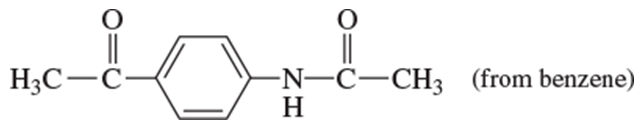
문제 20h
Show how you would use the Friedel–Crafts acylation, Clemmensen reduction, and/or Gatterman–Koch synthesis to prepare the following compounds:
h.
문제 22
Propose a mechanism that shows why p-chlorotoluene reacts with sodium hydroxide at 350 °C to give a mixture of p-cresol and m-cresol.
문제 23a,b
Propose mechanisms and show the expected products of the following reactions.
(a) 2,4-dinitrochlorobenzene + sodium methoxide (NaOCH3)
(b) 2,4-dimethylchlorobenzene + sodium hydroxide, 350 °C
문제 23c,d
Propose mechanisms and show the expected products of the following reactions.
(c) p-nitrobromobenzene + methylamine (CH3–NH2)
(d) 2,4-dinitrochlorobenzene + excess hydrazine (H2N–NH2)
문제 24
The highly reactive triple bond of benzyne is a powerful dienophile. Predict the product of the Diels–Alder reaction of benzyne (from chlorobenzene and NaOH, heated) with cyclopentadiene.
문제 25
What products would you expect from the following reactions?
(a)
(b)
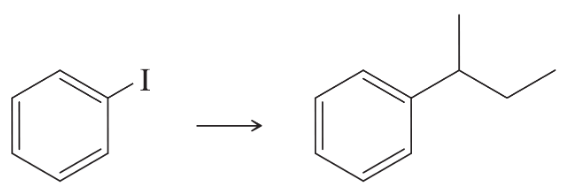
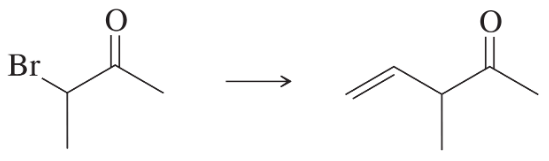
문제 26
What organocuprate reagent would you use for the following substitutions?
(a)
(b)
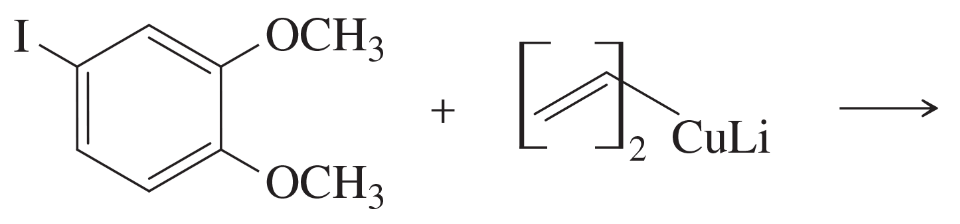
문제 27a
What products would you expect from the following reactions?
(a)
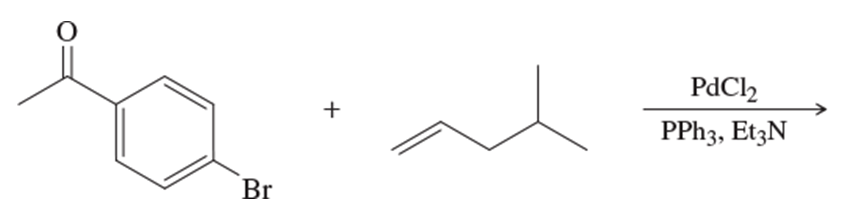
문제 27b
What products would you expect from the following reactions?
(b)
문제 28
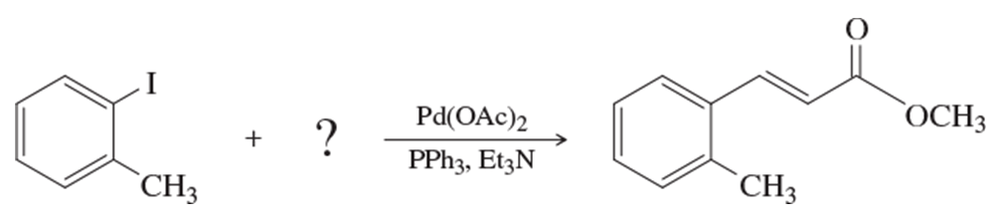
What substituted alkene would you use in the Heck reaction to make the following products?
(a)
(b)
문제 29a
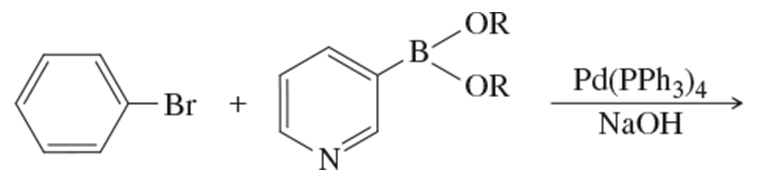
What products would you expect from the following Suzuki coupling reactions?
(a)
문제 29b
What products would you expect from the following Suzuki coupling reactions?
(b)
문제 30a
Show how you would use Suzuki reactions to synthesize these products from the indicated starting materials. You may use any additional reagents you need.
(a)
문제 30b
Show how you would use Suzuki reactions to synthesize these products from the indicated starting materials. You may use any additional reagents you need.
(b)
문제 31a
Propose mechanisms for the Birch reduction of benzoic acid. Show why the observed orientation of reduction is favored in each case.
문제 31b
Propose mechanisms for the Birch reduction of anisole. Show why the observed orientation of reduction is favored in each case.
문제 32a
Predict the major products of the following reactions.
(a) toluene + excess Cl2 (heat, pressure)
문제 32b
Predict the major products of the following reactions.
(b) benzamide (PhCONH2) + Na (liquid NH3, CH3CH2OH)
문제 32c
Predict the major products of the following reactions.
(c) o-xylene + H2 (1000 psi, 100 °C, Rh catalyst)
문제 32d,e
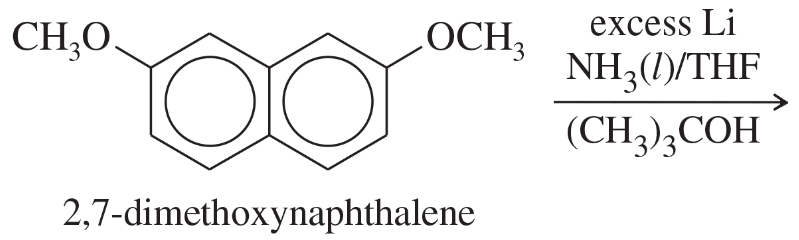
Predict the major products of the following reactions.
(d) p-xylene + Na (liquid NH3, CH3CH2OH)
(e)
문제 33
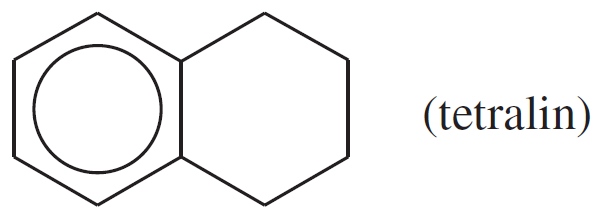
Predict the major products of treating the following compounds with hot, concentrated potassium permanganate, followed by acidification with dilute HCl.
(a) isopropylbenzene
(b) p-xylene
(c)
문제 34
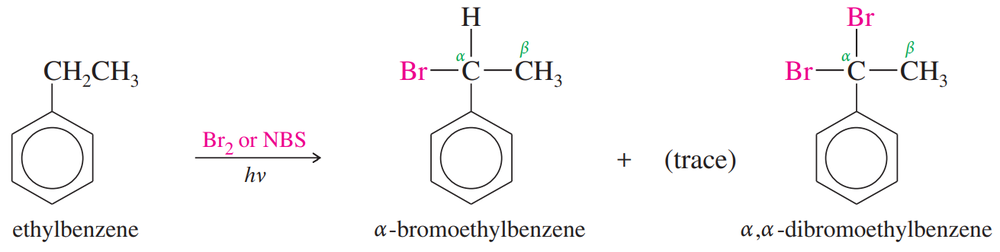
Propose a mechanism for the bromination of ethylbenzene shown below.