Ch. 21 - Carboxylic Acid Derivatives
Wade - Organic Chemistry 9th Edition
Wade9th EditionOrganic ChemistryISBN: 9780135213728당신이 사용하는 게 아니라요?교과서 변경
21장, 문제 24a

In which step(s) of the hydride reduction of an ester does the compound undergo reduction? (Hint: Count the bonds to oxygen.)

검증된 단계별 안내
1
Step 1: Understand the hydride reduction of an ester. This reaction typically involves the use of a reducing agent like lithium aluminum hydride (LiAlH₄) to convert the ester into an alcohol. The process occurs in multiple steps.
Step 2: Recall the definition of reduction in organic chemistry. Reduction involves a decrease in the number of bonds to oxygen or an increase in the number of bonds to hydrogen in a molecule.
Step 3: Analyze the first step of the reaction. The hydride ion (H⁻) from the reducing agent attacks the carbonyl carbon of the ester, breaking the π bond of the carbonyl group and forming a tetrahedral intermediate. At this stage, the carbonyl carbon gains a bond to hydrogen, which is a reduction step.
Step 4: Examine the second step of the reaction. The tetrahedral intermediate collapses, expelling the leaving group (usually an alkoxide ion, R'O⁻) and forming an aldehyde. This step does not involve a change in the number of bonds to oxygen for the carbonyl carbon, so it is not a reduction step.
Step 5: Consider the final step. The aldehyde undergoes a second hydride attack, forming a new tetrahedral intermediate that eventually becomes a primary alcohol. In this step, the carbonyl carbon again gains a bond to hydrogen, making it another reduction step.

비슷한 문제에 대한 검증된 영상 답변:

이 영상 해법은 위 문제에 도움이 된다고 튜터들이 추천한 것입니다.
영상 길이:
4m

주요 개념

질문에 올바르게 답하기 위해 반드시 이해해야 하는 핵심 개념들은 다음과 같습니다.

Hydride Reduction

Hydride reduction is a chemical reaction where a hydride ion (H-) is used to reduce a carbonyl compound, such as an ester, to an alcohol. This process typically involves the transfer of a hydride from a reducing agent, like lithium aluminum hydride (LiAlH4) or sodium borohydride (NaBH4), to the carbonyl carbon, resulting in the formation of an alcohol and the conversion of the carbonyl group.
추천 영상:
07:12
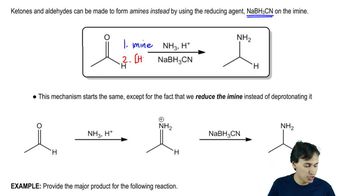
Reductive Amination

Ester Structure

Esters are organic compounds characterized by the functional group -COOR, where R is an alkyl or aryl group. In the context of reduction, understanding the structure of esters is crucial, as they contain a carbonyl group (C=O) and an alkoxy group (–O–R). The reduction process involves the conversion of the carbonyl group to an alcohol, which requires counting the bonds to oxygen to determine the extent of reduction.
추천 영상:
02:39
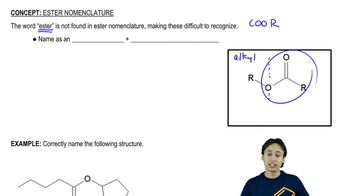
Ester Nomenclature

Bond Counting in Reduction

In organic chemistry, bond counting is a method used to assess the degree of reduction or oxidation of a compound. For esters undergoing hydride reduction, it is essential to count the bonds to oxygen before and after the reaction. The reduction of the carbonyl group (C=O) to an alcohol (C–OH) involves a change from one double bond to one single bond and the addition of a hydrogen atom, indicating a reduction in oxidation state.
추천 영상:
07:07
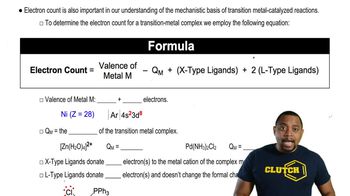
Electron Counting