뒤로
뒤로
문제 40i
Draw a structure for each compound (includes old and new names).
i. (3Z,6E)-1,3,6-octatriene
문제 41
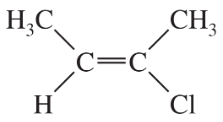
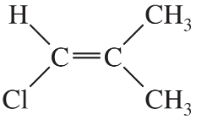
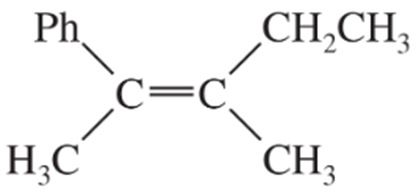
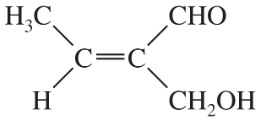
Label each structure as Z, E, or neither.
(a)
(b)
(c)
(d)
문제 42a,b
Determine which compounds show cis-trans isomerism. Draw and label the isomers, using both the cis-trans and E-Z nomenclatures where applicable.
a. pent-1-ene
b. pent-2-ene
문제 42c,d
Determine which compounds show cis-trans isomerism. Draw and label the isomers, using both the cis-trans and E-Z nomenclatures where applicable.
c. hex-3-ene
d. 1,1-dibromopropene
문제 43a,b
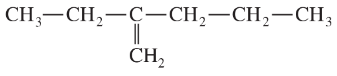
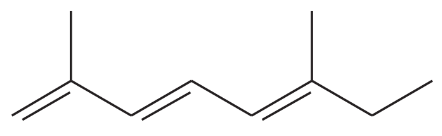
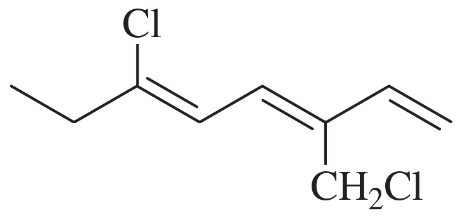
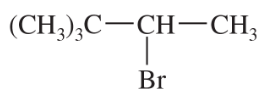
Give a correct name for each compound.
(a)
(b)
문제 43c,d
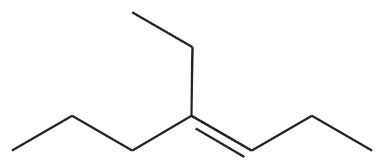
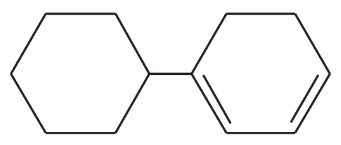
Give a correct name for each compound.
(c)
(d)
문제 43e,f
Give a correct name for each compound.
(e)
(f)
문제 44a
Draw and name all five isomers of formula C3H5F.
문제 44b
Draw all 12 acyclic (no rings) isomers of formula C4H7Br. Include stereoisomers.
문제 44c
Cholesterol, C27H46O, has only one pi bond. With no additional information, what else can you say about its structure?
문제 45a
Draw and name all stereoisomers of 3-chlorohepta-2,4-diene
a. using the cis-trans nomenclature.
문제 45b
Draw and name all stereoisomers of 3-chlorohepta-2,4-diene
b. using the E-Z nomenclature.
문제 46a
For each alkene, indicate the direction of the dipole moment. For each pair, determine which compound has the larger dipole moment.
a. cis-1,2-difluoroethene or trans-1,2-difluoroethene
문제 46b
For each alkene, indicate the direction of the dipole moment. For each pair, determine which compound has the larger dipole moment
b. cis-1,2-dibromoethene or trans-2,3-dibromobut-2-ene
문제 46c
For each alkene, indicate the direction of the dipole moment. For each pair, determine which compound has the larger dipole moment.
c. cis-1,2-dibromo-1,2-dichloroethene or cis-1,2-dichloroethene
문제 47
The energy difference between cis- and trans-but-2-ene is about 4 kJ/mol; however, the trans isomer of 4,4-dimethylpent-2-ene is nearly 16 kJ/mol more stable than the cis isomer. Explain this large difference.
문제 48
A double bond in a six-membered ring is usually more stable in an endocyclic position than in an exocyclic position. Hydrogenation data on two pairs of compounds follow. One pair suggests that the energy difference between endocyclic and exocyclic double bonds is about 9 kJ/mol. The other pair suggests an energy difference of about 5 kJ/mol. Which number do you trust as being more representative of the actual energy difference? Explain your answer.
문제 49a
Predict the products of E1 elimination of the following compounds. Label the major products.
(a)
문제 49c
Predict the products of E1 elimination of the following compounds. Label the major products.
(c)
문제 50a,b,c
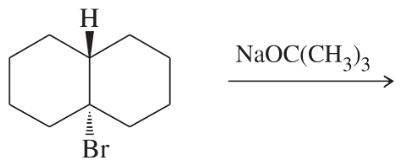
Predict the products formed by sodium hydroxide-promoted dehydrohalogenation of the following compounds. In each case, predict which will be the major product.
a. 1-bromobutane
b. 2-chlorobutane
c. 3-bromopentane
문제 50d
Predict the products formed by sodium hydroxide-promoted dehydrohalogenation of the following compounds. In each case, predict which will be the major product.
d. cis-1-bromo-2-methylcyclohexane
문제 50e
Predict the products formed by sodium hydroxide-promoted dehydrohalogenation of the following compounds. In each case, predict which will be the major product.
e. trans-1-bromo-2-methylcyclohexane
문제 51a,b,c
What halides would undergo E2 dehydrohalogenation to give the following pure alkenes?
a. hex-1-ene
b. isobutylene
c. pent-2-ene
문제 51d
What halides would undergo E2 dehydrohalogenation to give the following pure alkenes?
d. methylenecyclohexane
문제 51e
What halides would undergo E2 dehydrohalogenation to give the following pure alkenes?
e. 4-methylcyclohexene
문제 52a,b
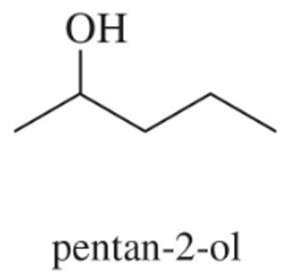
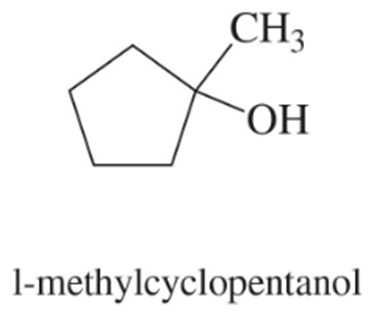
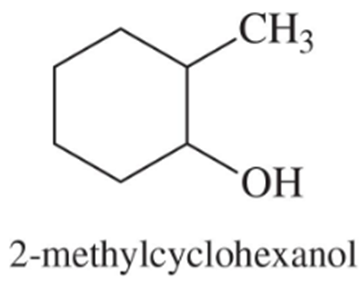
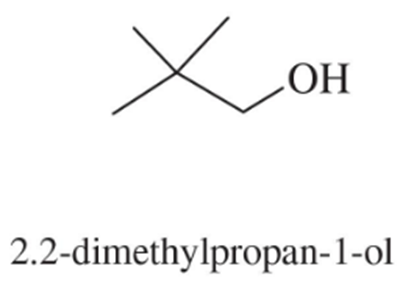
Predict the major products of acid-catalyzed dehydration of the following alcohols.
(a)
(b)
문제 52c,d
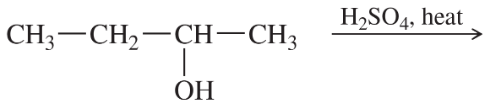
Predict the major products of acid-catalyzed dehydration of the following alcohols.
(c)
(d)
문제 53
Predict the products of the following reactions. When more than one product is expected, predict which will be the major product.
문제 54a
Write a balanced equation for each reaction, showing the major product you expect.
(a)
문제 54b
Write a balanced equation for each reaction, showing the major product you expect.
(b)