

Ch.8 - Reactions of Alkenes
Wade - Organic Chemistry 9th Edition
Wade9th EditionOrganic ChemistryISBN: 9780135213728당신이 사용하는 게 아니라요?교과서 변경
8장, 문제 51c

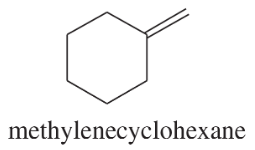
Show how you would synthesize each compound using methylenecyclohexane as your starting material.

(c)

검증된 단계별 안내
1
Step 1: Begin with methylenecyclohexane as the starting material. This compound contains a double bond, which can be used for electrophilic addition reactions.
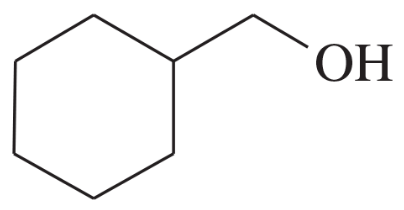
Step 2: Perform hydroboration-oxidation to convert the double bond into an alcohol. Use BH₃ (borane) in THF (tetrahydrofuran) for hydroboration, followed by oxidation with H₂O₂ (hydrogen peroxide) in a basic solution (NaOH). This reaction adds an -OH group to the less substituted carbon of the double bond, following anti-Markovnikov regioselectivity.
Step 3: The product of the hydroboration-oxidation will be cyclohexylmethanol, where the hydroxyl group (-OH) is attached to the carbon adjacent to the cyclohexane ring.
Step 4: Ensure stereochemistry is considered if the reaction produces stereoisomers. Hydroboration-oxidation typically results in syn addition, meaning the hydrogen and hydroxyl group are added to the same face of the double bond.
Step 5: Verify the structure of the final product to ensure it matches the target compound, cyclohexylmethanol, with the hydroxyl group attached to the correct carbon.

비슷한 문제에 대한 검증된 영상 답변:

이 영상 해법은 위 문제에 도움이 된다고 튜터들이 추천한 것입니다.
영상 길이:
1m
도움이 되었나요?

주요 개념

질문에 올바르게 답하기 위해 반드시 이해해야 하는 핵심 개념들은 다음과 같습니다.

Reactivity of Alkenes

Methylenecyclohexane contains a double bond, making it an alkene. Alkenes are reactive due to the presence of π bonds, which can undergo various reactions such as electrophilic addition, oxidation, and polymerization. Understanding these reactions is crucial for synthesizing compounds from methylenecyclohexane, as the double bond can be targeted for functional group transformations.
추천 영상:
가이드 코스
2:09
Alkene Metathesis Concept 1

Functional Group Transformations

In organic synthesis, functional group transformations involve converting one functional group into another. For example, the addition of a hydroxyl group (OH) to methylenecyclohexane can be achieved through hydration reactions. Recognizing how to manipulate functional groups is essential for designing synthetic pathways to create desired compounds from a given starting material.
추천 영상:
02:36
Identifying Functional Groups

Synthesis Pathways

Synthesis pathways outline the step-by-step reactions needed to convert a starting material into a target compound. This includes identifying intermediates, reagents, and conditions required for each transformation. A clear understanding of synthesis pathways is vital for effectively planning the synthesis of compounds from methylenecyclohexane, ensuring that each step is feasible and efficient.
추천 영상:
가이드 코스
2:13
Energy Production In Biochemical Pathways Concept 1