Ch.6 - Alkyl Halides; Nucleophilic Substitution
Wade - Organic Chemistry 9th Edition
Wade9th EditionOrganic ChemistryISBN: 9780135213728당신이 사용하는 게 아니라요?교과서 변경
6장, 문제 15a

When methylenecyclohexane is treated with a low concentration of bromine under irradiation by a sunlamp, two substitution products are formed.

a. Propose structures for these two products. (b) Propose a mechanism to account for their formation.

검증된 단계별 안내
1
Step 1: Recognize that the reaction involves methylenecyclohexane reacting with bromine (Br₂) under irradiation (hv). The presence of light indicates a radical substitution mechanism.
Step 2: Identify the reactive sites in methylenecyclohexane. The methylene group (CH₂=) is highly reactive due to the double bond, and the allylic position (the carbon adjacent to the double bond) is particularly susceptible to radical substitution.
Step 3: Propose the mechanism for the formation of the two substitution products. Under light, bromine undergoes homolytic cleavage to form two bromine radicals. These radicals abstract a hydrogen atom from the allylic position of methylenecyclohexane, forming an allylic radical.
Step 4: The allylic radical is stabilized by resonance, creating two possible resonance structures. Bromine radicals then react with these resonance structures, leading to the formation of two different allylic brominated products.
Step 5: Conclude that the two substitution products are allylic bromides, with bromine attached to the two possible allylic positions. Additionally, HBr is formed as a byproduct when bromine abstracts a hydrogen atom during the radical substitution process.

비슷한 문제에 대한 검증된 영상 답변:

이 영상 해법은 위 문제에 도움이 된다고 튜터들이 추천한 것입니다.
영상 길이:
7m

주요 개념

질문에 올바르게 답하기 위해 반드시 이해해야 하는 핵심 개념들은 다음과 같습니다.

Electrophilic Substitution Reactions

Electrophilic substitution reactions involve the replacement of a hydrogen atom in an organic molecule with an electrophile. In the case of methylenecyclohexane reacting with bromine, the bromine acts as an electrophile, attacking the double bond and leading to the formation of brominated products. Understanding this mechanism is crucial for predicting the structures of the substitution products.
추천 영상:
01:47
Nucleophiles and Electrophiles can react in Substitution Reactions.

Radical Mechanism

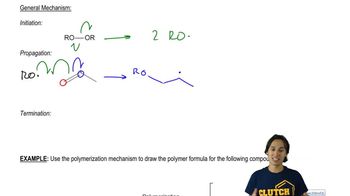
The reaction of methylenecyclohexane with bromine under irradiation suggests a radical mechanism, where light energy initiates the formation of bromine radicals. These radicals can abstract hydrogen atoms from the substrate, leading to the formation of stable products. Recognizing the role of radicals is essential for proposing the correct mechanism and understanding the reaction pathway.
추천 영상:
03:28
The mechanism of Radical Polymerization.

Product Distribution

In reactions involving substitution, the distribution of products can depend on factors such as sterics and stability of intermediates. In this case, the formation of two distinct substitution products indicates that different sites on the methylenecyclohexane are being attacked. Analyzing the stability of the resulting radicals or carbocations can help predict which products are favored in the reaction.
추천 영상:
11:07
Bridged-Products