Back

Atomic Structure quiz

Control buttons has been changed to "navigation" mode.
1/15
  • What is the basic unit of matter?

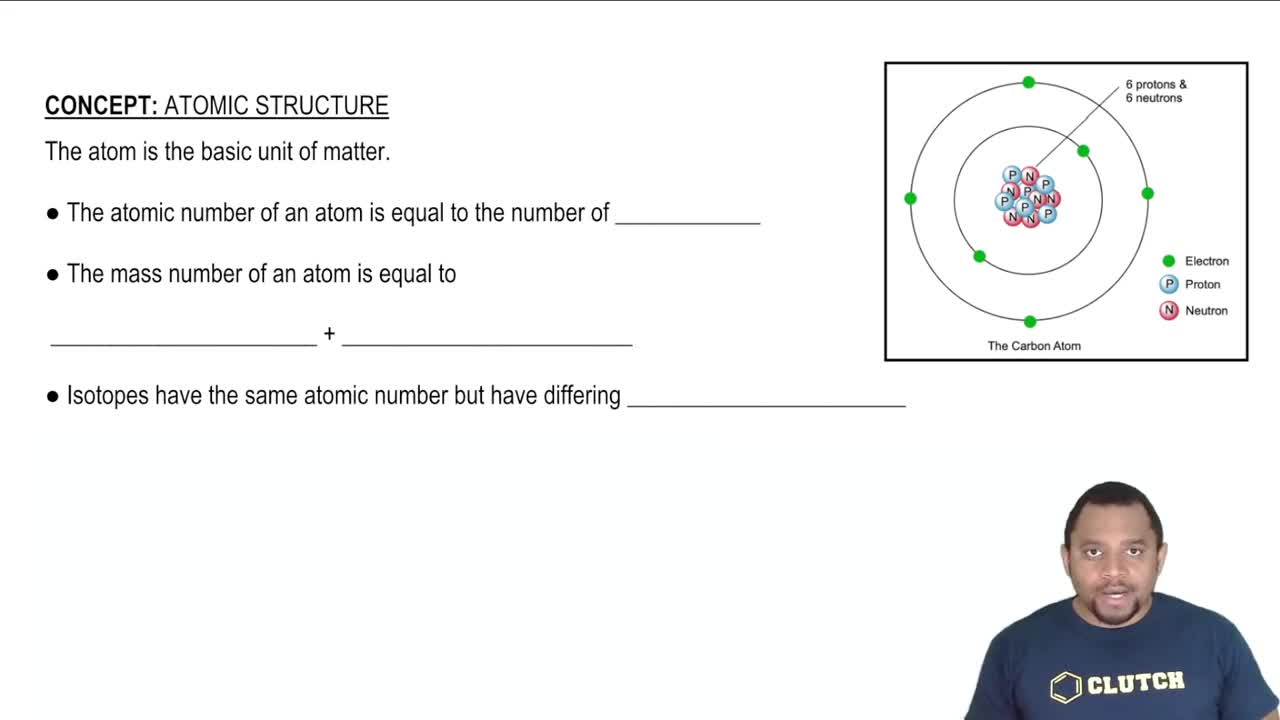
    The atom is the basic unit of matter.
  • Where are protons and neutrons located in an atom?

    Protons and neutrons are located in the nucleus at the center of the atom.
  • What does the atomic number of an atom represent?

    The atomic number equals the number of protons in an atom and is unique to each element.
  • How is the mass number of an atom calculated?

    The mass number is the sum of the number of protons and neutrons in the nucleus.
  • What are isotopes?

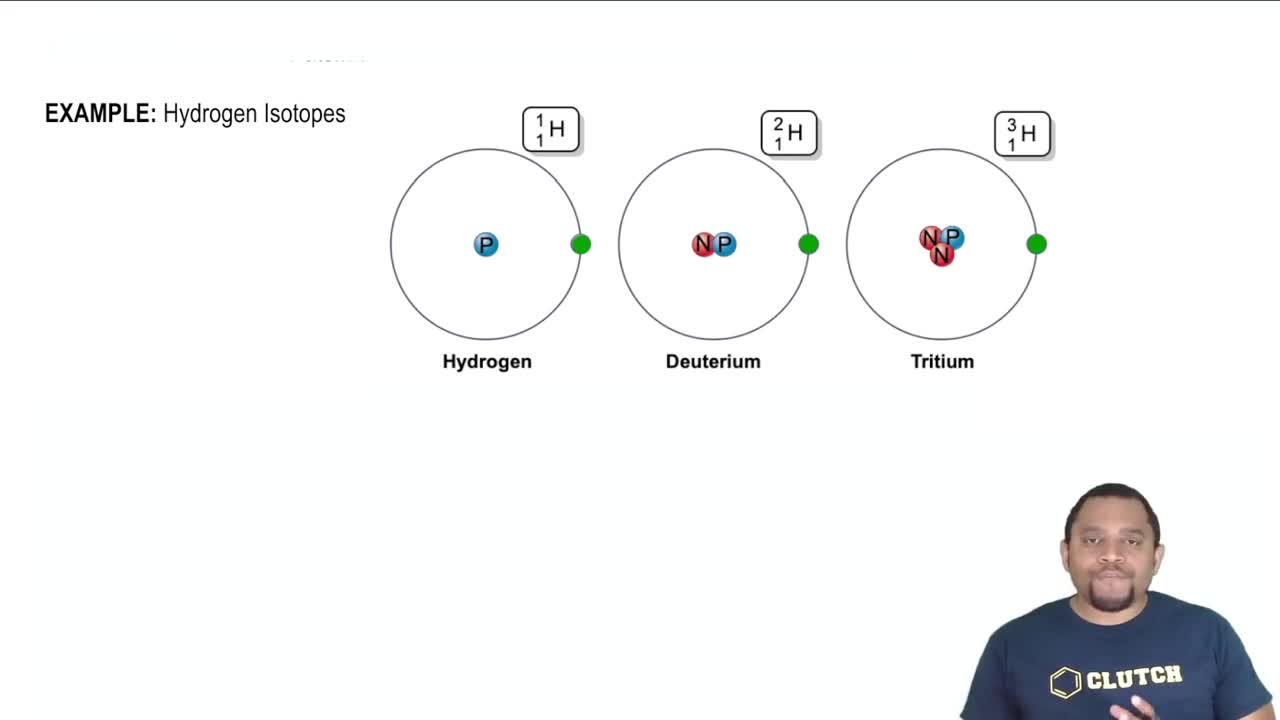
    Isotopes are atoms of the same element with the same number of protons but different numbers of neutrons.
  • What is the main difference between isotopes of the same element?

    Isotopes have different mass numbers due to varying numbers of neutrons.
  • Where are electrons found in an atom?

    Electrons are found in regions called shells that orbit the nucleus.
  • What is an orbital in atomic structure?

    An orbital is a region within a shell that can hold up to two electrons with opposite spins.
  • What is an ion?

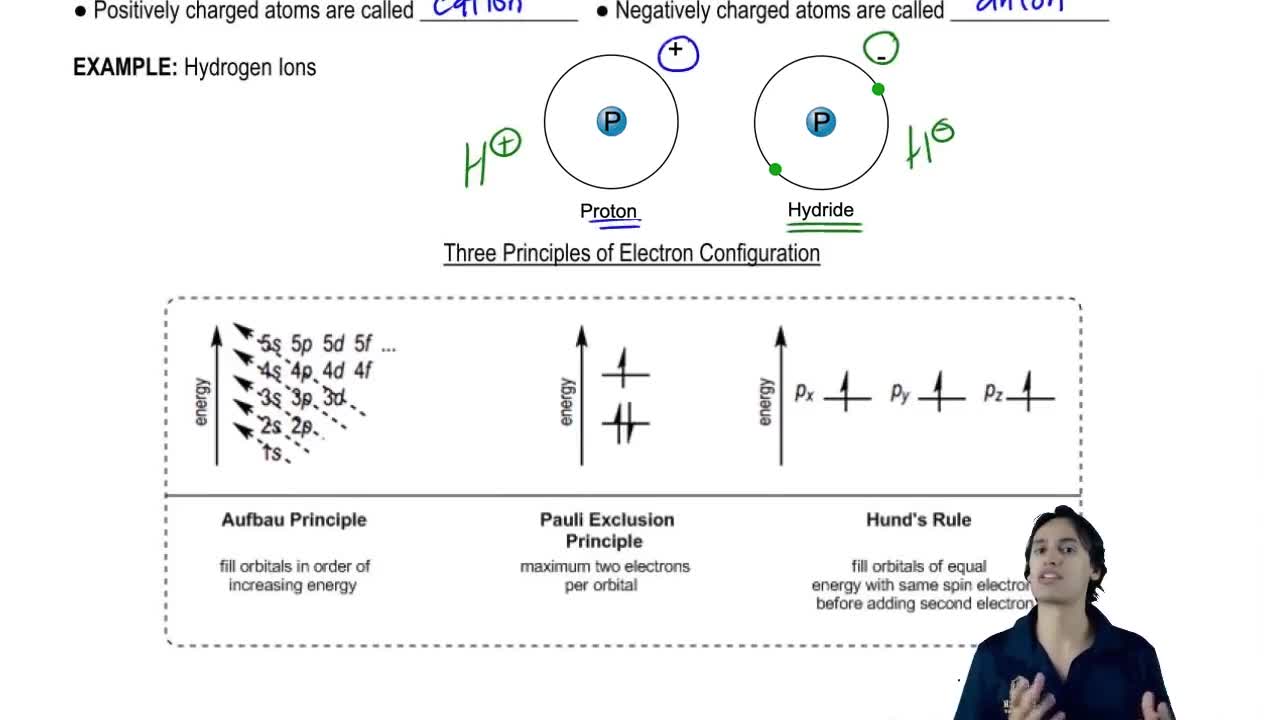
    An ion is an atom with an unequal number of protons and electrons, resulting in a net charge.
  • What is a cation?

    A cation is a positively charged ion, meaning it has more protons than electrons.
  • What is an anion?

    An anion is a negatively charged ion, meaning it has more electrons than protons.
  • What does the Aufbau principle state about electron configuration?

    The Aufbau principle states that electrons fill the lowest energy orbitals first.
  • What does the Pauli exclusion principle state?

    The Pauli exclusion principle states that only two electrons can occupy each orbital, and they must have opposite spins.
  • What does Hund's rule state about filling orbitals?

    Hund's rule states that electrons fill all orbitals of the same energy level singly before pairing up.
  • How does the number of electrons affect an atom's mass and charge?

    Changing the number of electrons does not significantly affect mass but does change the atom's charge.