Etiolation is a set of morphological adaptations for growing under what condition?
Etiolation occurs in plants growing in the absence of light, resulting in pale, elongated stems and undeveloped leaves.
What is the main role of the pigment molecules within the antenna or light-harvesting complex?
The main role is to capture light energy and transfer it to the reaction center of the photosystem.
Which of these is a carboxyl group? a) -OH b) -COOH c) -NH2 d) -SH
b) -COOH
Which nutrient class is not one of the six main classes of nutrients?
Fiber
What does a plant gain from having more than one pigment?
Having multiple pigments allows a plant to absorb a broader spectrum of light, enhancing photosynthesis.
Which gene is responsible for producing the protein that converts lactose to allolactose?
The lacZ gene in the lac operon is responsible for producing β-galactosidase, which converts lactose to allolactose.
What is the function of Taq polymerase?
Taq polymerase is used in PCR to amplify DNA sequences, as it is stable at high temperatures.
Which type of organic compound is the major component of a plant cell wall?
Cellulose, a carbohydrate, is the major component of a plant cell wall.
What is a key difference between viruses and bacteria regarding their living status and reproduction?
Viruses are non-living entities that require a host cell to replicate, while bacteria are living organisms that can reproduce independently.
What type of molecules are the A and B antigens?
Carbohydrates
What are endotoxins and what is their biological significance?
Endotoxins are components of the outer membrane of gram-negative bacteria that can cause strong immune responses.
Why is carbon essential to life?
Carbon's ability to form stable covalent bonds with many elements, including itself, allows for the diversity of organic molecules essential for life.
Which molecule among hemoglobin, insulin, amylase, and collagen is an enzyme?
Amylase
To which structure do tetracyclines bind?
b) Ribosomes
What do hydrophobic and hydrophilic mean?
Hydrophobic means 'water-repelling,' while hydrophilic means 'water-attracting.'
Why are photosynthetic organisms green?
Photosynthetic organisms are green because chlorophyll reflects green light.
What is the defining element found in organic compounds?
Carbon is the defining element found in organic compounds.
What goal does taxonomy accomplish?
Taxonomy classifies and names organisms, organizing them into a hierarchical structure based on evolutionary relationships.
How did Robert Whittaker change classification?
Robert Whittaker proposed a five-kingdom classification system, separating organisms into Monera, Protista, Fungi, Plantae, and Animalia.
What is one of the basic tastes to which the tongue responds?
a) Sweet
Which of the following is an organic compound: water, glucose, sodium chloride, or carbon dioxide?
b) Glucose
What is the difference between gram-positive and gram-negative bacteria?
Gram-positive bacteria have a thick peptidoglycan layer and no outer membrane, while gram-negative bacteria have a thin peptidoglycan layer and an outer membrane.
What causes the dark coloration of the moths?
The dark coloration of moths is caused by a genetic mutation that provides camouflage in polluted environments.
How do fungi obtain nutrition?
Fungi obtain nutrition by absorbing organic matter from their environment, often through the secretion of digestive enzymes.
Which macromolecule does not provide energy? a) Carbohydrates b) Proteins c) Nucleic acids d) Fats
c) Nucleic acids
Why are some organisms called producers?
Organisms are called producers because they can synthesize their own food through photosynthesis or chemosynthesis.
What is an accurate characteristic of bacterial cell walls?
Bacterial cell walls are composed of peptidoglycan, providing structural support and shape.
What is a stack of thylakoids called?
A stack of thylakoids is called a granum.
Why do fungal cell walls make a good target for some antifungals?
Fungal cell walls contain chitin, which is not found in human cells, making it a good target for antifungals.
Which molecule among water, carbon dioxide, methane, and sodium chloride is regarded as an organic molecule?
c) Methane
Members of which phylum produce a club-shaped structure that contains spores?
Members of the phylum Basidiomycota produce a club-shaped structure called a basidium that contains spores.
What is the hyperchromic effect?
The hyperchromic effect is the increase in UV absorbance of DNA as it denatures and the strands separate.
Which of these is the most diverse group of plants? a) Bryophytes b) Ferns c) Gymnosperms d) Angiosperms
d) Angiosperms
Which plant characteristic is not found in green algae?
c) Vascular tissue
What is a true statement about dietary fiber?
It helps regulate blood sugar levels.
Which component is not found in a virus?
Ribosome
What are enhancers in genetics?
They are DNA sequences that increase transcription.
Which statement correctly describes a methyl functional group?
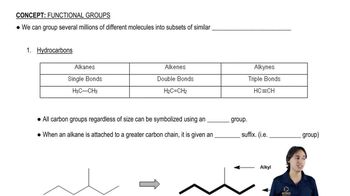
A methyl group is a functional group consisting of one carbon atom bonded to three hydrogen atoms (–CH3).
 Back
Back

 01:30
01:30