Skip to main content
Organic Chemistry
My Course
Learn
Exam Prep
AI Tutor
Study Guides
Textbook Solutions
Flashcards
Explore
Try the app
My Course
Learn
Exam Prep
AI Tutor
Study Guides
Textbook Solutions
Flashcards
Explore
Try the app
Back
Organic Chemistry Reactions quiz #5
You can tap to flip the card.
What happens at the end of the lytic cycle?
You can tap to flip the card.
👆
What happens at the end of the lytic cycle?
At the end of the lytic cycle, the host cell bursts, releasing new viral particles.
Track progress
Control buttons has been changed to "navigation" mode.
1/37
Related flashcards
Related practice
Recommended videos
Organic Chemistry Reactions quiz #1
Overview of Chemical Reactions
39 Terms
Organic Chemistry Reactions quiz #2
Overview of Chemical Reactions
38 Terms
Organic Chemistry Reactions quiz #3
Overview of Chemical Reactions
39 Terms
Organic Chemistry Reactions
3. Acids and Bases
1 problem
Topic
Reaction Mechanism
3. Acids and Bases
7 problems
Topic
Johnny
3. Acids and Bases - Part 1 of 2
4 topics
10 problems
Chapter
Laura
3. Acids and Bases - Part 2 of 2
3 topics
9 problems
Chapter
Johnny
01:34
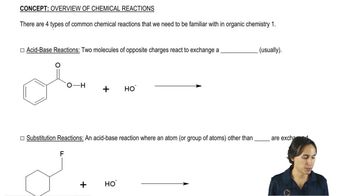
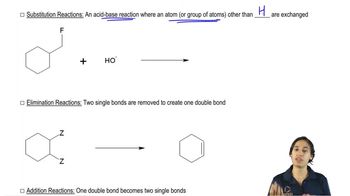
Recognizing Substitution Reactions.
4269
views
48
rank
5
comments
02:43
Recognizing Acid-Base Reactions.
5125
views
63
rank
9
comments
00:40
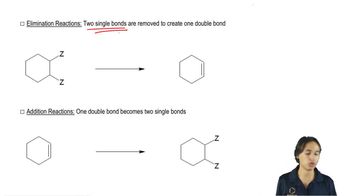
Recognizing Elimination Reactions.
3748
views
34
rank
2
comments
Terms in this set (37)
Hide definitions
What happens at the end of the lytic cycle?
At the end of the lytic cycle, the host cell bursts, releasing new viral particles.
How will you select and grow a resistant strain of E. coli in this experiment?
To select and grow a resistant strain of E. coli, expose the bacteria to an antibiotic and culture the surviving colonies.
What is an example of disinfection?
Using bleach to clean a surface is an example of disinfection.
Which best describes how the photosystems are used in the light-dependent reactions?
Photosystems I and II capture light energy to drive the electron transport chain and produce ATP and NADPH.
What happens in the process of fluorescence?
In fluorescence, a substance absorbs light at one wavelength and emits light at a longer wavelength.
What is the antidote for heparin?
Protamine sulfate is the antidote for heparin.
Which disease is not caused by prions?
Influenza is not caused by prions; it is caused by a virus.
What connects the two photosystems in the light reactions?
The electron transport chain connects the two photosystems in the light reactions.
What is a false statement about enzymes?
Enzymes are consumed in the reactions they catalyze is not true; they are not consumed.
Which antimicrobial drug is synthetic?
Ciprofloxacin is a synthetic antimicrobial drug.
Which drug is not a type of β-lactam antimicrobial?
Vancomycin is not a type of β-lactam antimicrobial.
Where do light-dependent reactions occur?
Light-dependent reactions occur in the thylakoid membranes of chloroplasts.
Which vitamin is mismatched with its deficiency?
Vitamin C is mismatched with rickets; rickets is caused by a deficiency in vitamin D.
What does a zone of inhibition around a chemical-saturated disc indicate?
A zone of inhibition indicates the effectiveness of the chemical in inhibiting microbial growth.
What is an example of bioremediation?
Using bacteria to clean up oil spills is an example of bioremediation.
What might be the result of not allowing a slide to air dry sufficiently prior to heat fixation?
Not allowing a slide to air dry sufficiently can cause cell lysis during heat fixation.
How does natural selection act to change allele frequencies?
Natural selection changes allele frequencies by favoring traits that enhance survival and reproduction.
What is the sequence of the temperatures of a typical PCR reaction?
The sequence is denaturation at 95°C, annealing at 50-65°C, and extension at 72°C.
What role do decomposers play in the phosphorus cycle?
Decomposers release phosphorus from organic matter back into the soil.
What is the purpose of phase 3 of the Calvin cycle?
The purpose of phase 3 is the regeneration of RuBP to continue the cycle.
A dihybrid cross (AaBb x AaBb) will result in what offspring ratio?
A dihybrid cross results in a 9:3:3:1 phenotypic ratio.
What is the reaction that connects monomers?
The reaction that connects monomers is a dehydration synthesis reaction.
What does induced fit describe in enzyme function?
Induced fit describes how an enzyme changes shape to better fit the substrate upon binding.
What does the Calvin cycle use to convert CO2 into glucose?
The Calvin cycle uses ATP and NADPH to convert CO2 into glucose.
What growth characteristics result from using differential media?
Differential media results in visible differences in colony appearance based on metabolic activity.
What could explain the curve in this population growth graph?
The curve could be explained by reaching the carrying capacity, leading to logistic growth.
What are the products of the light reactions of photosynthesis?
ATP, NADPH, and oxygen are produced by the light reactions of photosynthesis.
What do the denitrifying bacteria convert the nitrates and nitrites into?
Denitrifying bacteria convert nitrates and nitrites into nitrogen gas.
Which best describes chemical synthesis?
Chemical synthesis is the process of creating chemical compounds from simpler substances.
How does an inhibitor affect an enzyme?
An inhibitor works by binding to an enzyme and reducing its activity.
What is the purpose of PCR?
The purpose of PCR is to amplify a specific DNA sequence.
What happens to a population if its growth exceeds its carrying capacity?
If growth exceeds carrying capacity, the population may experience a decline due to resource depletion.
What is needed to complete a Kirby-Bauer test for antibiotic sensitivity?
A bacterial culture, antibiotic disks, and an agar plate are needed for a Kirby-Bauer test.
Which mode of natural selection is most likely to contribute to speciation?
Disruptive selection is most likely to contribute to speciation.
How is absolute dating used to determine the age of a fossil?
Absolute dating uses radiometric techniques to determine the age of a fossil.
Which are the reactants of photosynthesis?
The reactants of photosynthesis are carbon dioxide and water.
Which molecules can act as electron carriers?
NADH and FADH2 can act as electron carriers.
 BackBack

 01:34
01:34