


Building healthy New Year habits with your students

Amy Malloy
Amy Malloy
Students sat outside on grass studying and smiling
Reading time: 3 minutes

Balancing mindfulness and planning ahead

Here we find ourselves already in a new year. I wonder if, like me, many of you might be wondering how that has happened. January is a time of year traditionally associated with analyzing the past and making resolutions for the future.

In the classroom this might also involve looking forward to assessments and exams at the end of the school year. Maybe you’ve made New Year’s resolutions that have already fallen by the wayside. 

The focus of this blog is learning how to stay in the present moment. So let's take a practical look at how to manage this time of year with your students and with ourselves as teachers (and humans), while also effectively planning ahead for the future.

Building healthy New Year habits with your students
Play
Privacy and cookies

By watching, you agree Pearson can share your viewership data for marketing and analytics for one year, revocable by deleting your cookies.

1. Mindfulness of daily habits

Mindfulness can be a broader concept than just focusing on the breath. We can also extend awareness to our daily habits and look at what is making us feel good and what is draining us. This helps us ensure our daily routine is actively supporting our mental health. 

Here’s what you can do to help your students be more mindful of their daily habits.

  1. Invite your students to make two lists: one list of everything they do every day and another list of things that make them feel happy or relaxed. This can be a nice activity to try in English if you’d like to work on daily routine vocabulary and likes/dislikes. 
  2. Ask them to see how many of the activities they named in their happy lists are also on their everyday lists. 
  3. Then ask them to see if they can find a time in their schedules to include one of their happy list activities on a regular basis. For example, they could add listening to their favourite song on their way to school to their everyday list. 

This activity encourages children to be more understanding of what makes them feel happy or less happy on a daily basis. In this way, we gently teach them to be more aware of their emotions and how to take an active role in supporting their own mental health and self-care. Ultimately, we teach them that the choices we make day-to-day are as important as a resolution for the rest of the year.

As they learn more mindfulness activities in school, these might even start to appear on their everyday lists too. This will protect their minds against everyday stress and assessment pressure.

2. Planting an intention seed

New Year’s resolutions seem to play a large role in society, and it is interesting to notice how guilty we feel if we don’t stick to them. 

We traditionally make resolutions at the start of a new year, but this is completely arbitrary - and it hasn’t always been this way. In fact, the concept of setting an intention for the new year dates back to at least 4000BC. Back then, these resolutions were traditionally made in March, at the start of the farming season. But when Julius Caesar made the Roman calendar, he decided that each year would begin in January. 

The Romans felt it was more appropriate because the Roman god Janus represented new beginnings, endings, gateways and transitions. It’s strange to think this ancient decision now affects how we run and organize our lives and our personal energy all over the world. 

January is actually a time when nature is still in hibernation, with trees bare and seeds still under the ground (in the Northern Hemisphere, at least). This can make it feel difficult to commit to fresh starts and, for some, feel overwhelming to look ahead.

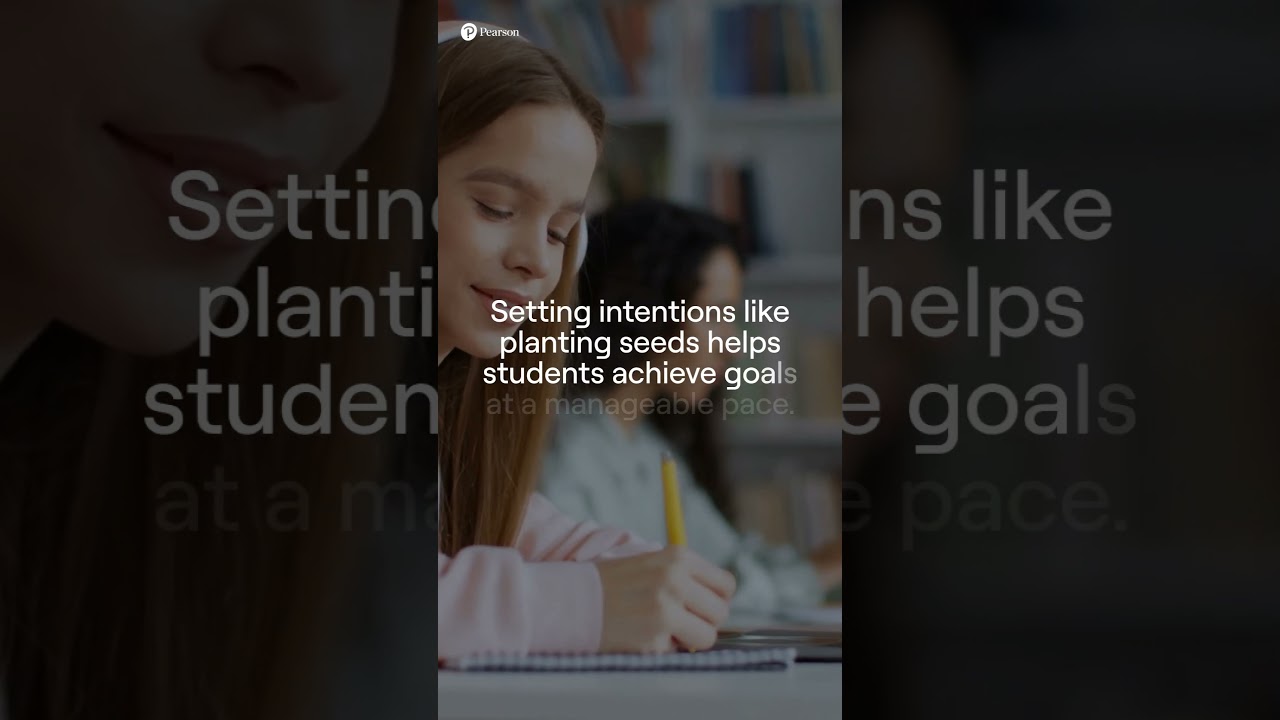
So instead of resolutions, try inviting your students to simply set an intention of what they’d like to feel or achieve over the course of the year. And rather than pushing for it or expecting it to happen straight away, invite them to treat it like a seed in a pot of soil which they are watering each day with one little step at a time. 

This might be a little bit of revision for a test every day, for example, or tidying their room once a week so it feels nice to play and do homework in. 

3. Mindful walking

A lovely way to get your students to connect with nature’s calendar is to take them outside for a mindfulness walk. You could link it in with a class plan to introduce nature or town vocabulary, or organize it during lunch or break time for multiple classes together.

  1. Take students outside*. Invite them to stand quietly looking at the ground. 
  2. Invite them to notice the contact of their feet with the ground. Tell them to start walking slowly, noticing the movement of each foot as it leaves and then meets the ground again. 
  3. Once they are in a gentle walking rhythm, invite them to start looking around them, noticing the world around them. They should keep a gentle focus on the rhythm of their feet moving along the floor. 
  4. Once back in the classroom, invite them to spend five minutes writing down or talking about what they noticed on their walk (in English)

*If outside simply isn’t an option for your school, you can try a mindful walk through the corridors.

This can be a really pleasant way to encourage students (and yourself) to notice what is going on around them in nature and to step outside of the timetable set for them as part of the school system. It helps their focus and perspective, reducing stress and reminding them how far they have progressed.

Staying present and planning ahead

I often have mindfulness students asking me how they can stay present while also effectively planning ahead. Hopefully, these three simple ideas demonstrate how we can actively use our focus on the present moment to improve and pace our future planning for exams and deadlines. 

By trusting in the process of calmly planting little seeds of intention and taking little steps to grow them, we can achieve just as much, if not more, than thinking six months into the future and panicking that we haven’t yet achieved what we want to have done by then. Good luck.

More blogs from Pearson

  • Children in a classroom with a teacher while they play with a toyhouse
    The importance of teaching values to young learners
    By Katharine Scott
    Reading time: 3 minutes

    Why teaching values matters in early education

    The years children spend in school are about far more than academic success. Alongside literacy, numeracy and subject knowledge, children develop the social and emotional skills needed to thrive in the world around them.

    From sharing ideas to resolving disagreements, these everyday interactions shape how children understand fairness, respect and responsibility. These are more than just learned skills – they are rooted in deeper values that guide behavior over time.

    Without clear guidance, children often learn behaviors simply by observing others. While this can be positive, it can also reinforce negative habits. That’s why schools play a critical role in explicitly teaching values, not just expecting them.

    Social skills vs. Social values

    Although closely related, social skills and values are not the same:

    • Social skills are behaviors (such as taking turns, listening, cooperating)
    • Social values are the principles behind those behaviors (such as fairness, respect, empathy)

    When children understand why something matters—not just what to do—they are more likely to apply those behaviors consistently.

    Core values every child should learn

    Defining values can be complex, but most education systems emphasize a shared set of foundational principles:

    • Respect for others and appreciation of diversity
    • Collaboration and community awareness
    • Environmental responsibility
    • Self-worth and confidence

    Even at a young age, children demonstrate a natural sense of fairness and honesty. With the right support, these instincts can be developed into strong moral foundations.

    Moving beyond “School Rules”

    Too often, values are reduced to simple instructions like:

    • “Don’t be late”
    • “Wait your turn”
    • “Be kind”

    While important, these rules can feel arbitrary if not explained. Without context, children may follow them only when supervised – or break them when they can.

    To truly teach values, educators need to:

    • Explain the reasoning behind rules
    • Encourage discussion and reflection
    • Connect actions to real-world impact

    This transforms rules into meaningful learning experiences.

    Effective school strategies for teaching values

    The most successful approaches to values education involve the entire school community – teachers, students, parents and staff.

    1. Environmental awareness programs

    Schools can foster responsibility through hands-on initiatives such as:

    • Recycling systems
    • School gardens
    • Renewable energy projects
    • Second-hand bookshops

    These activities help children understand their role in protecting the planet.

    2. Anti-bullying initiatives

    Strong anti-bullying programs go beyond policies and focus on prevention through:

    • Empathy-building exercises
    • Peer accountability activities
    • Confidence and self-esteem development

    Helping children recognize and respond to bullying is key to creating a safe environment.

    3. Anti-racism and inclusion programs

    Promoting inclusivity requires a proactive, school-wide approach:

    • Teaching diverse histories and cultures
    • Inviting guest speakers from different communities
    • Challenging stereotypes through discussion
    • Encouraging empathy for marginalized groups

    These efforts help children develop respect for diversity from an early age.

    The role of consistency

    Children learn as much from what adults do as from what they say. For values education to be effective:

    • Teachers must model positive behavior
    • School policies should reflect stated values
    • Parents should be involved where possible

    Consistency across all environments reinforces learning and builds trust.

    Putting values into practice

    Teaching values to young learners is not an “extra” part of education – it is foundational. When children understand respect, empathy and responsibility, they are better equipped to succeed academically, socially and emotionally.

    By embedding values into everyday learning and school culture, educators can help shape thoughtful, responsible individuals who contribute positively to society.

  • A woman and man working together on laptop in library
    AI in Language Education: What educators should use (and what to avoid)
    By Charlotte Guest
    Reading time: 5 minutes

    AI is changing language classrooms fast, but not every tool adds value. The best teachers use AI as a partner, supporting planning, feedback and differentiation, while keeping key moments of teaching human.

    Here’s what works, what to avoid, and how to use AI responsibly in ESL classrooms.

    How AI is transforming language teaching

    AI is transforming how teachers work, but it doesn't replace them.

    At its best, AI enhances three core areas:

    • Planning efficiency: Generate lesson outlines, activities and scaffolding in minutes
    • Differentiation at scale: Adapt materials for mixed-level classrooms instantly
    • Feedback loops: Provide faster, more frequent feedback on writing and practice tasks

    But the key shift is pedagogical. AI aligns naturally with:

    • Learner-centered methods: Students engage more actively with adaptive content
    • Teaching like a coach: Teachers guide, refine and personalize rather than deliver everything directly
    • Modern teaching methodology: Blended, flexible and responsive instruction

    When used effectively, AI allows teachers to concentrate on the most important aspects of language learning: interaction, communication and human connection.

  • A woman smiling working on a laptop
    Studying in the USA? A fast at-home English test is now an option
    By Abi Fordham
    Reading time: 2 minutes

    If you’re a student planning to study in the USA, life probably feels a bit like having too many tabs open at once. University sites. Visa info. Messages from friends already abroad. And a growing list of things that all feel important.

    Somewhere in the middle of that is your English test.

    A test people trust for good reason

    For years, students have chosen PTE because it’s built to be trusted, backed by real expertise, research and quality. That’s why it’s become a familiar name for students planning to study abroad, and why institutions trust it too. That foundation hasn’t changed. What has changed is how students live, learn, and prepare today.

    Same roots, for different routes

    PTE Express originates from the same principles. Same values. Same attention. It’s simply tailored for a different kind of test taker at a specific point in their journey. If you’re aiming to study in the USA and need a quick, at-home English test, PTE Express is made to fit into your life rather than forcing you to reshape everything around a test date. And let’s address test anxiety because it’s a real concern.

    Many students worry about English tests. Not because they don’t know English, but because test situations can make things feel harder than they should be. Speaking to an examiner face‑to‑face can feel intimidating. Worrying about being misunderstood because of your accent is a real concern. Travelling to a test centre adds pressure before you even start. Sitting in an unfamiliar room can make nerves worse.

    That’s not a lack of ability. That’s just being human. While PTE Academic already addresses lots of these worries, we have gone a step further with PTE Express.

    Why at‑home testing can feel different

    One of the quiet benefits of an at‑home test is how much calmer it can feel. You’re in a familiar space. You control your environment. There’s no examiner in front of you, just you and the screen. For many students, that makes it easier to focus and show their real English, without the extra stress that comes from unfamiliar settings or face‑to‑face pressure. PTE Express was designed with this in mind: calm, considered, and supportive, while still being secure and trusted by institutions.

    When the USA is the plan

    If you already know the USA is your destination, things can start to feel more time‑sensitive. Deadlines get closer. Decisions feel heavier. You’re no longer exploring, you’re preparing your next move. PTE Express fits naturally here. It’s a fast, at‑home option for US study, built on the foundations of Pearson that students already trust, and delivered in a way that works for when life is busy and timelines are tight.

    A choice that actually reduces pressure

    The good news is, you don’t have to overthink this. If you want to keep your options open across different countries, there’s a trusted path in PTE Academic that supports that. If you’re focused on studying in the USA and want something fast, familiar and at home, there’s now an option designed for exactly that. No trade‑offs. No feeling like you’re cutting corners. Just choices that match different moments.

    Focus on what really matters

    Studying in the USA is a big step. It’s about independence, growth and starting something new. Your English test should feel like something that supports you quietly in the background, not something that adds more stress to an already intense moment. With PTE Express now live in most countries, including India, students heading to the USA have a calm, trusted at‑home option, built on foundations that have been relied on for years. And sometimes, feeling calm and confident is exactly what helps you do your best.