How video games help language learning

Charlotte Guest
Charlotte Guest
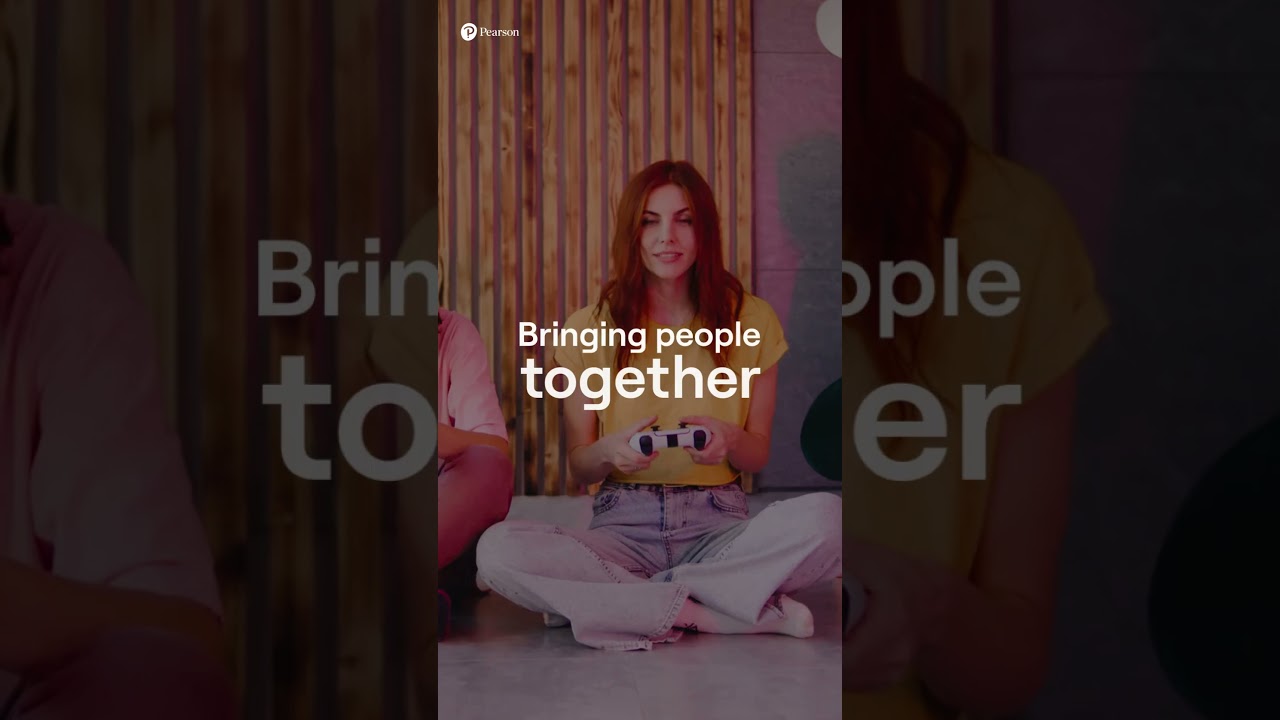
Two people playing video games on the sofa together
Reading time: 6 minutes

The evolution of video games and global connectivity

Video games have come a long way since their inception in the late 20th century. From the simple pixelated screens of 'Pong' and 'Space Invaders', we've entered an era where video games are complex, immersive and incredibly detailed. The evolution of video games has not only been technological but also cultural.

With the rise of the internet and online gaming, players from different corners of the world can now connect, collaborate and compete in real-time. This global connectivity has transformed video games into a social platform, where language barriers are often encountered and interestingly, overcome.

Language learning and video games
Play
Privacy and cookies

By watching, you agree Pearson can share your viewership data for marketing and analytics for one year, revocable by deleting your cookies.

The role of video games in language learning

The traditional methods of language learning—textbooks, classroom instruction and language labs—are being complemented by more interactive and engaging tools. Video games have emerged as a surprisingly effective medium for language acquisition. The immersive nature of video games, combined with their interactive elements, makes them an excellent tool for learning new languages. Here are a few ways in which video games facilitate language learning:

Contextual learning: Unlike traditional methods that often rely on rote memorization, video games provide contextual learning. Players are immersed in a virtual world where they must use language to navigate, solve problems and interact with other characters or players.

Motivation and engagement: The gamified nature of video games keeps players motivated and engaged. The desire to progress in the game encourages players to learn and understand the language used within the game.

Real-time communication: Many online multiplayer games require real-time communication with other players. This necessitates the use of language skills, often in a second language, to coordinate actions and strategies.

Increased outlets for multilingual communication

One of the most significant impacts of video games on global communication is the sheer number of outlets they provide for interacting with speakers of different languages. In the past, opportunities for language practice were often limited to classroom settings, travel, or pen-pal programs. Today, video games have dramatically expanded these opportunities, creating a vibrant, multilingual community where language learning can thrive.

Online multiplayer platforms

Online multiplayer platforms like Xbox Live, PlayStation Network and Steam host millions of players from around the world. These platforms facilitate communication through voice chat, text messaging and in-game interactions.

Games like Fortnite, Overwatch and League of Legends have massive international player bases, meaning that players are frequently paired with teammates or opponents who speak different languages. This constant exposure to diverse linguistic environments encourages players to practice and improve their language skills.

Social media integration

Many video games now integrate with social media platforms, allowing players to share their experiences, form communities and communicate outside of the game. Platforms like Discord, Reddit and various game-specific forums provide additional spaces for multilingual interaction.

These communities often include language-specific channels where players can seek help, share tips, or simply chat in their target language, further enhancing their learning experience.

Esports and streaming

The rise of esports and game streaming has also contributed to the multilingual communication landscape. Professional gamers and streamers often interact with a global audience, providing commentary, tutorials and live interactions in multiple languages. Platforms like Twitch and YouTube Gaming enable viewers to engage with content creators and fellow viewers in real-time.

An example of communication in team-based games

One example of language learning through video games is found in team-based games like 'Sea of Thieves'. This is a multiplayer pirate adventure game that relies heavily on teamwork and communication.

In 'Sea of Thieves' players take on the roles of pirates sailing the high seas, searching for treasure and battling other pirate crews. The game requires players to work together to sail their ship, manage supplies and engage in combat. Effective communication is crucial for success.

Imagine a scenario where a team of players from different linguistic backgrounds must work together to sail their ship. One player speaks Spanish, another speaks English and a third speaks French. To navigate effectively, they must communicate instructions such as "raise the anchor," "lower the sails," or "fire the cannons." This situation creates a natural and urgent need for language skills, pushing players to learn and use new vocabulary in real-time.

Another aspect is the potential for negotiation and diplomacy. When encountering another pirate ship, players may have the option to negotiate rather than engage in combat. This requires players to communicate clearly and effectively, often in a language that is not their first. Phrases like "Let's form an alliance," "We come in peace," or "Do you need supplies?" become essential tools for survival and success.

The benefits of language learning through video games

One of the most compelling reasons why language learning in video games can be more enjoyable and effective is the practical need to communicate clearly and efficiently. Unlike traditional learning environments where the practical application of language skills can sometimes feel abstract or distant, video games provide immediate, tangible reasons to use a new language.

In team-based games, clear communication often directly correlates with success. A well-coordinated team that can effectively communicate is more likely to win than a team that struggles with language barriers. This creates a strong incentive for players to learn and use the language of their teammates.

A team that can communicate clearly will be able to execute complex maneuvers, coordinate attacks and manage more effectively than a team that cannot. This practical, real-world application of language skills makes learning more engaging and rewarding. Players are not just learning for the sake of learning; they are learning to win, to achieve goals and to enjoy the game more fully.

The benefits of learning languages through video games extend beyond the virtual world. Here are a few key advantages:

Improved listening and speaking skills: Real-time communication in multiplayer games enhances listening and speaking skills, as players must quickly understand and respond to their teammates. Studies have found that MMORPGs (Massively Multiplayer Online Role-Playing Games) can significantly improve listening and speaking abilities in a second language.

Cultural awareness: Playing with individuals from different countries exposes players to various cultures and dialects, fostering a sense of global awareness and empathy. Online gaming environments can serve as rich sites for intercultural communication and learning.

Problem-solving and critical thinking: The need to solve problems and strategize in a foreign language enhances cognitive skills, making players more adept at thinking on their feet. Video games promote situated learning, where players develop problem-solving skills within meaningful contexts.

Increased vocabulary and grammar: Regular interaction in a second language helps players build their vocabulary and understand grammatical structures in a practical context. The interactive and immersive nature of video games provides an effective environment for vocabulary acquisition and grammatical development.

The future of language learning and video games

As video games continue to evolve and become even more integrated into our daily lives, their potential as tools for language learning will only grow. The interactive and immersive nature of video games makes them an ideal platform for acquiring new languages in a fun and engaging way.

Certain games demonstrate how real-time communication and teamwork can break down language barriers, fostering a sense of global connectivity and cooperation.

More blogs from Pearson

  • Teenage students looking at a phone together outside
    Six easy ways to learn English
    By Steffanie Zazulak
    Reading time: 3 minutes

    Learning English can open doors to better career opportunities, travel experiences and global communication. However, staying motivated while learning a new language can sometimes be challenging. The good news is that there are many easy ways to learn English that fit into your daily routine.

    Whether you're a beginner or looking to improve your fluency, these practical English learning tips will help you build confidence and develop your speaking, listening, reading and vocabulary skills faster.

    1. Play word games to build your English vocabulary

    One of the most enjoyable ways to learn English is through word games. Games like Scrabble, Words With Friends, crossword puzzles and word search apps can help you expand your English vocabulary while having fun.

    Word games encourage you to think in English, recognize spelling patterns and learn new words naturally. If you're studying with friends or classmates, make it a regular activity to practice together and challenge each other's vocabulary skills.

    Benefits:

    • Improves vocabulary retention
    • Enhances spelling skills
    • Makes learning English enjoyable
  • Students sat together looking at a paper
    CASAS STEPS reading practice level C (Future 3)
    By Louise Febles
    Reading time: 3 minutes

    Are your ESOL students preparing for the CASAS STEPS assessment? Based on your feedback, we’re pleased to introduce Adult Education Test Preparation (AETP)—a print-on-demand and online practice resource available through Pearson’s MyEnglishLab.

    AETP offers targeted preparation for all CASAS STEPS Reading and Listening levels. Each level includes:

    • Teacher guides for each content area with strategies and tips
    • Downloadable student worksheets for each content area
    • Three prompts per worksheet to practice the 3‑step process + two practice tasks that simulate CASAS STEPS questions
    • Downloadable audio files
    • Practice tests with answer keys and correlation charts

    Because content varies across levels, be sure to select materials aligned to your students’ needs. For guidance, refer to our test level correlation table.

    If you’re looking for structured, flexible, classroom‑ready CASAS support that easily integrates into your curriculum, this new toolkit is for you! It is designed to help your students build confidence and perform their best.

    Using the materials

    In this blog post and platform demo, we highlight Reading Test Level C (High Beginning–Low Intermediate ESL levels, NRS levels 3–4), focusing on its four content areas: Vocabulary, Main Idea, Details and Inference.

    Vocabulary

    Begin by downloading the Reading Level C Vocabulary materials, including the Student Worksheet and Teacher Guidance PDFs. Review the Teacher Guidance to familiarize yourself with instructional strategies, including the 3-step process and the accompanying answer key. This process helps students identify word type, locate contextual clues and determine meaning in vocabulary tasks.

    Next, provide each student with a copy of the vocabulary worksheet. It includes three guided prompts to practice the 3-step process and two CASAS STEPS–style tasks, with a clear format that supports organized note-taking and structured thinking.

    Details

    For the next lesson, download the Details materials. Review the Teacher Guidance and help students answer questions with information question words (What, Where, When, Who, Why and How). Distribute the Details Worksheet for students to practice. Since students now know the 3‑step process, they will move through the tasks more confidently.  

    Main idea

    Next, download the Main Idea materials, review the Teacher Guidance and use the student worksheet to complete the lesson. Practice answering the question “What is this about?”.

    Inference

    The final content area, Inference, will require students to perform their best detective work. The Teacher Guidance and Student Worksheet provides great insight to help students practice inference. It is important to remind students that inferences must be supported by key details (clues) that are in the text.

    Practice test

    Now that you and your students have mastered the 3-step process and completed all Reading Level C content areas, explore the CASAS STEPS Practice Test section within Adult Education Test Preparation. This blog focuses on Reading Test C.

    Like the official CASAS STEPS exam, Pearson’s Reading Practice Test C includes 36 questions. You can project the Student View test for whole-class instruction, review directions and reinforce the 3-step process before practice begins.

    This practice test can be used flexibly; you might assign a few at a time, incorporate them into daily warm-ups or exit tickets or have students work independently or in groups. You can also increase engagement by turning practice into interactive or game-based activities.

    Pro tip:

    Integrate Test Preparation materials with your existing textbook reading activities to reinforce CASAS STEPS skills. For example, if you use Pearson’s Future series, you are already reinforcing Reading content skills in your classroom. For example, Future 3, Unit 6 (Getting a Good Deal), Lesson 4 (Reading) includes activities targeting inference, main idea, details and vocabulary.

    Students can work on these textbook reading exercises in pairs or groups to compare notes and answer questions together, which encourages speaking practice and collaboration. You can make it into a game by having groups share their answers (A, B or C) with small dry-eraser boards.

  • Students sat at desks in a classroom listening t a student at front talking
    CASAS STEPS listening practice level C (Future 3)
    By Louise Febles
    Reading time: 3 minutes

    Are your ESOL students preparing for the CASAS STEPS? Many of you have asked for test support materials and we’re excited to introduce a new resource designed to help students succeed: Adult Education Test Preparation, a print‑on‑demand and online practice hub available through Pearson’s MyEnglishLab.

    This platform provides targeted preparation for every level of the CASAS STEPS Reading and Listening tests. Each level includes:

    • A teacher guide for each content area with tips and strategies.
    • Downloadable student worksheets for each content area.
    • Three prompts per worksheet to practice the 3‑step process and two practice tasks that simulate CASAS STEPS questions.
    • Downloadable audio files.
    • Practice tests with answer keys, answer sheets and correlation charts.

    Remember, since content areas vary across the five testing levels, select materials that match the level you teach. Unsure? Click here for a test level correlation table.

    In this blog post and platform demo, we highlight CASAS STEPS Listening Test Level C materials, which align with High Beginning (NRS 3) and Low Intermediate (NRS 4) ESL levels.

    We will explore the three Listening Test C content areas: Dialogue, main idea and details. We show you how to integrate these materials with your existing curriculum.

    Pro Tip: Think about teaching one content area per day or dedicating a full class session to all three. You can integrate small amounts of practice throughout the term or schedule intensive review sessions before post‑testing. Remember that Reading Test C includes four additional content areas, for a total of seven content areas to cover at Level C.

    Using the materials

    Dialogue

    Begin with the Dialogue Teacher Guidance, which includes teaching strategies, the 3‑step process, answer keys and audio scripts. Introduce the 3‑step process to your students and work with them to identify keywords and answer the question “What happens next?” before distributing the Dialogue Worksheet. Each worksheet includes three prompts and two practice tasks, making note‑taking simple and structured. Play the accompanying Dialogue Audio to complete the lesson.

    Details

    For the next lesson, download the Details materials. Review the Teacher Guidance and practice asking questions with information question words (What, Where, When, Who, Why and How). Distribute the Details Worksheet and play the audio. Since students now know the 3‑step process, they will move through the tasks more confidently.

    Main idea

    The final content area is Main Idea. Download the Main Idea materials, review the Teacher Guidance and practice answering the question “What is this about?” Use the worksheet and audio to complete the lesson.

    Practice tests

    Once students have practiced all three content areas, explore the Listening Practice Test C tab. Pearson’s practice test mirrors the CASAS STEPS with 39 questions. You can project questions for whole‑class practice, use one or two a day as warm‑ups or exit tickets, assign group work,or turn them into a game.

    Pro Tip: If you use Pearson’s Future series, you are already reinforcing Listening Test C skills. For example, Future 3, Unit 2 includes activities targeting main idea, details and dialogue; perfect for collaborative practice.