
Effective classroom management routines for very young learners

Jeanne Perrett
Jeanne Perrett
A teacher with young students sitting at a table looking at flashcards
Reading time: 4 minutes

For very young learners, children aged 3-6, being in a classroom might be a completely new experience. Most of them won’t know any English words at all and might have very little idea of what English is or why they are learning it. Some of them may not yet be completely fluent in their mother tongue. 

At the beginning of the school year, some of them may find it distressing to be separated from their parents and they also have to learn to get along with their new classmates. 

If we want to keep them comfortable and safe and provide a friendly and welcoming environment, we need to establish routines. 

7 ways you can build routines into your classes

Here are some areas where you can easily incorporate classroom management routines into your English language class.

1. Think about your target language

Our target language for each lesson may be one or two short phrases or a few new words. We should always keep the presentation and practice of this simple and clear. 

However, we can use English for all our greetings, praise, instructions and explanations. After a few days, the children will begin to expect it and they will gradually understand what you are saying. 

2. Coming into the class

Take time to greet each child by name when they enter the classroom and encourage them to learn and use each other’s names too. This will change how they perceive themselves and each other and encourage friendly communication. 

Notice the small things about each child. They might have a new T-shirt on or have done their hair specially. They may not tell you that they have made an effort to look nice for their lesson, but they will be pleased when you notice and will feel encouraged to continue. 

3. Circle time

Make circle time the start of every lesson. It gets the children sitting down together and this helps them to get to know each other and feel part of a comfortable group. 

It’s the time where you present the target language for the day. Use a puppet to help you do this. Make the puppet part of the routine by keeping it in a certain place and bringing it out from there every day. The children can call its name. 

The puppet can greet the children by name and the children can answer back. First, use picture cards or objects to present the language to the puppet. Then, the puppet can show that it understands or ask for repetition. 

Let the children call out responses as a group. As they build their confidence in English they will want to speak by themselves. 

Always accept approximations of words and phrases. Rather than correcting the children, continue to model the words and gradually the students will self-correct. Pass this tip on to parents too. 

4. Book time

Give students time to discover pages and images they like in the books they are using. Always leave time to help each child find the correct page and then help them to focus their attention on that page. 

In Circle time you have introduced the language and presented it with flashcards or objects. In Book time, children can look at these images – the content will be familiar and they will start to feel ownership of what they are learning. 

5. Songs, games and miming

Singing, playing games and miming are the main ways in which the students will start to freely use and show they understand the target language. 

In My Disney Stars and Friends each stage of every game is detailed, along with the language you and the students can use. Students might become so involved in the action of the game that they forget to speak in English! That’s okay – continue using the language and eventually they will start to use it too. 

When a game or a song involves physical activity, have drinks of water ready and let them rest and relax afterwards. Always have a ‘sitting down’ activity ready for them to move on to so that they do not become overexcited or tired.

6. Craft and stickers

For any craft work there are four stages: preparation, production, playing with the completed craft work and tidying up. If you're using My Disney Stars and Friends, there is a special Tidy Up song and all the craft projects are press-outs so there is no need for scissors. 

Children of 3 or 4 years old will need to learn how to unpeel and then re-stick a sticker. Allow time for this and encourage them to learn from each other once some of them have mastered this fine motor skill. 

7. Leaving the class

Time your lessons so that the students don’t have to leave in a rush. It takes them a while to collect up their things and find their bags and coats. 

If you want the parents to know something, make sure that the children know where they have put the note. One notebook for such messages is a simple way of doing this, and you can tell parents to check it after every lesson. 

Just as you greeted each child by name when they came in, say goodbye to them individually as they leave. 

Incorporating effective classroom management routines makes young learners feel more comfortable as they know what to expect from their language classes. Familiarity is welcome for children, so exploit these times for more language learning opportunities. 

Find more ideas on effective classroom management routines in Jeanne Perrett’s webinar, where she focuses on practical ideas and teaching tips for how we can organise and manage a class of young learners.

Routines and classroom management for very young learners I Pearson English Disney Day
Play
Privacy and cookies

By watching, you agree Pearson can share your viewership data for marketing and analytics for one year, revocable by deleting your cookies.

Want to learn more about teaching young learners? Read our post 'Young learners of English deserve more'.

More blogs from Pearson

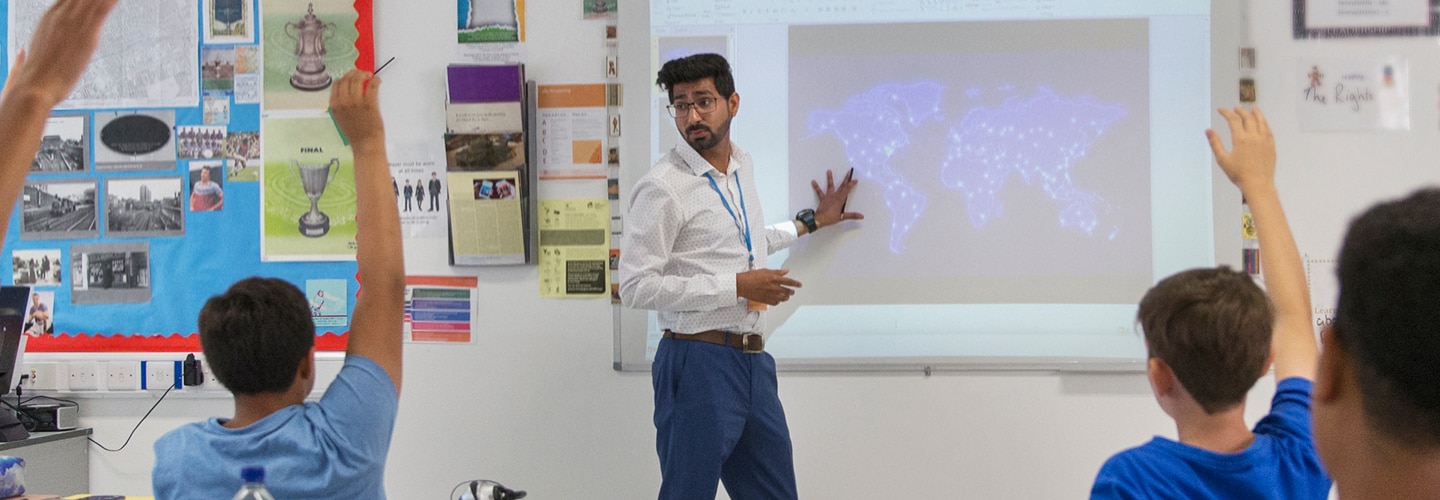
  • A teacher working on a interactive whiteboard and students raising their hands
    Universal Design for Learning (UDL) in language education
    By Charlotte Guest
    Reading time: 5 minutes

    Language classrooms are naturally diverse. Some students are confident speakers but struggle with writing. Others may be multilingual learners, students with learning differences or learners who simply need more time and support. Universal Design for Learning (UDL) offers a practical framework for meeting these varied needs without creating separate lessons for every student.

    UDL was developed by CAST, a nonprofit organization focused on education research and development, and is based on the idea that barriers to learning often exist in the design of instruction rather than in the learners themselves. Instead of expecting all students to learn in the same way, UDL encourages teachers to provide flexible pathways that help everyone access and engage with learning. According to CAST's overview of UDL , UDL aims to improve learning for all students through flexible goals, methods, materials and assessments.

    The three core principles of UDL

    At the heart of UDL are three principles that help teachers design more inclusive learning experiences.

    1. Multiple means of engagement

    This principle focuses on motivation and participation. Students are more likely to learn when they see value in what they are doing and have some choice in how they learn.

    In a language classroom, this might include:

    • Allowing students to choose discussion topics related to their interests
    • Using authentic materials such as podcasts, songs, news articles or social media posts
    • Offering different levels of challenge within the same activity

    When students feel connected to the content, they are more willing to take risks and use the target language. The CAST UDL Guidelines provide detailed recommendations for increasing learner engagement and motivation.

    2. Multiple means of representation

    Students do not all process information in the same way. UDL encourages teachers to present information through different formats so that learners have several ways to understand new content.

    For language teachers, this could mean:

    • Combining written text with audio recordings
    • Using images, diagrams, gestures and videos to support comprehension
    • Pre-teaching key vocabulary before introducing a complex reading task
    • Providing transcripts for listening activities

    These supports are not only beneficial for students with identified learning needs; they often improve comprehension for the entire class. CAST's guidance on representation highlights how varied formats can support learner understanding.

    3. Multiple means of action and expression

    Students should have different opportunities to demonstrate what they know. Traditional language assessments often favor a narrow set of skills, but learners may show understanding in many ways.

    Examples include:

    • Recording an oral presentation instead of delivering it live.
    • Creating a video, podcast or digital story.
    • Participating in an interview or conversation.
    • Producing written work using supportive technologies.

    The learning objective remains the same, but students have more than one way to demonstrate achievement. The educational resource Understood.org explains this principle in its guide to UDL.

    Why UDL matters in language education

    Language learning involves reading, writing, listening, speaking, vocabulary development and cultural understanding. Because so many skills are involved, barriers can emerge in different places for different learners. UDL helps teachers anticipate these differences and design lessons that provide access from the start rather than adding accommodations later.

    Research from CAST suggests that designing for learner variability benefits all students, not just those with identified educational needs. This is particularly relevant in language classrooms, where students often have diverse linguistic backgrounds, proficiency levels and learning preferences.

    Importantly, UDL is not about creating separate lessons for every learner. Instead, it is about building flexibility into lesson design so that a wider range of students can participate successfully.

    UDL strategies for language teachers

    If you are new to UDL, start small. Consider adding one or two flexible options to your existing lessons.

    Here are a few simple ideas:

    • Provide both written and spoken instructions.
    • Use captions on videos whenever possible.
    • Offer vocabulary lists with visuals and examples.
    • Allow students to choose between speaking or writing for some tasks.
    • Include collaborative and independent learning opportunities.
    • Use digital tools that support translation, text-to-speech or speech-to-text functions.
    • Clearly communicate learning goals before each lesson.

    For additional classroom examples, CAST's UDL Guidelines website contains guidance that teachers can adapt across different age groups and language-learning contexts.

  • Friends stood by a camper van with food by the sea socialising
    How to maintain language skills over summer break
    By Charlotte Guest
    Reading time: 3 minutes

    Summer break is a welcome chance to relax, but it can also be a challenging time for students. Without regular classes over the summer, many students notice that their vocabulary, grammar and speaking confidence begin to fade: this is often called the "summer slide".. The good news is that maintaining language skills over summer break does not require hours of study each day. Small, consistent habits can help you retain what you have learned and return to your studies with confidence.

    Why language learners forget so much during summer break

    When we stop using a language regularly, our brains begin to forget information that is not being reinforced. Vocabulary becomes harder to recall, grammar rules feel less familiar and speaking confidence can decrease.

    Fortunately, language retention does not require intensive study. The key is maintaining regular contact with the language, even for just a few minutes a day.

  • Students sat together talking
    Mindfulness in the classroom: Autopilot and paying attention
    By Amy Malloy
    Reading time: 4 minutes

    In today's digital world, students face constant distractions that can make it difficult to stay focused during lessons. From social media notifications to endless online content, maintaining attention has become one of the biggest challenges in modern education.

    This is where mindfulness in the classroom can make a significant difference. By helping students become more aware of the present moment, mindfulness can strengthen concentration, improve learning outcomes, and support overall wellbeing.

    What is "Autopilot" thinking?

    Have you ever reached the end of a page in a book and realized you can't remember what you just read?

    This experience occurs when the brain slips into a semi-conscious state, often referred to as "autopilot" mode. During autopilot, we continue carrying out tasks while our thoughts drift elsewhere, planning future events, worrying about problems or replaying past experiences.

    While this automatic mode helps us complete routine tasks efficiently, it can also reduce our awareness of what's happening right now. As a result, students may appear present in class while their attention is elsewhere.

    For educators, understanding this tendency is essential because sustained attention is critical for learning, memory formation and academic success.

    Why mindfulness matters in education

    According to mindfulness expert Jon Kabat-Zinn, mindfulness means:

    "Paying attention in a particular way: on purpose, in the present moment and non-judgmentally."

    The key phrase is "on purpose".

    Mindfulness trains students to deliberately focus their attention rather than allowing their minds to wander automatically. Like any skill, attention becomes stronger with practice. Repeated mindfulness exercises help create neural pathways that support concentration and self-awareness.

    For younger children, this is especially important because the brain develops rapidly during the primary school years. Building healthy attention habits early can have lasting benefits throughout education and beyond.

    Benefits of mindfulness in the classroom

    Implementing mindfulness activities in schools can offer several advantages:

    Improved attention span

    Regular mindfulness practice helps students sustain focus for longer periods, making it easier to engage with lessons, reading tasks and independent study.

    Better learning outcomes

    When students pay closer attention, they absorb and retain information more effectively, leading to stronger academic performance.

    Reduced stress and anxiety

    Mindfulness techniques can help students manage exam pressure, classroom stress and emotional challenges by encouraging calm, focused awareness.

    Stronger emotional regulation

    Students become more aware of their thoughts and feelings, helping them respond thoughtfully rather than react impulsively.

    Enhanced digital wellbeing

    Mindfulness can help counteract the constant distractions created by smartphones, social media and digital devices.

    Why attention skills are more important than ever

    Many educators are concerned about the impact of technology on student concentration. While researchers continue to debate whether overall attention spans are shrinking, there is broad agreement that attention is shaped by habit.

    The brain becomes better at whatever it repeatedly practices.

    If students frequently switch between apps, notifications and multiple streams of information, sustained focus can become more difficult. Conversely, practicing mindful attention strengthens the brain's ability to concentrate on a single task.

    This is particularly important for teenagers. During adolescence, the brain undergoes significant restructuring, strengthening frequently used neural pathways while reducing those that are rarely activated.

    The message is simple: attention is a skill that improves through use.

    Three mindfulness activities for students

    Teachers can introduce mindfulness through simple exercises that fit naturally into the school day.

    1. Mindful technology use

    Help students develop awareness around screen time by encouraging intentional device use.

    Steps:

    1. Pause before using a device.
    2. Notice how you feel.
    3. Decide on a single task to complete.
    4. Visualize the steps required.
    5. Complete the task without distractions.
    6. Put the device away once finished.
    7. Reflect on any urge to continue scrolling.

    2. Mindful eating exercise

    This activity encourages students to engage all their senses and become fully present.

    Ask students to:

    • Observe five things they can see about their snack.
    • Notice five things they can feel.
    • Identify five scents.
    • Slowly taste the food and recognize subtle flavors.
    • Reflect on the experience.

    This exercise develops sensory awareness and helps students practice sustained attention.

    3. Breath counting for focus

    One of the simplest and most effective mindfulness exercises for students.

    Instructions:

    1. Sit comfortably.
    2. Close your eyes or soften your gaze.
    3. Focus on your breathing.
    4. Count each breath from one to ten.
    5. If your mind wanders, gently return attention to the breath.
    6. Repeat as needed.

    Over time, students often find it easier to maintain concentration and remain present.

    How teachers can introduce mindfulness successfully

    Teachers do not need extensive training to begin incorporating mindfulness into lessons. Small, consistent practices often produce the greatest benefits.

    Consider:

    • Starting lessons with a one-minute breathing exercise.
    • Using mindfulness before tests or presentations.
    • Encouraging reflection at the end of lessons.
    • Incorporating mindful listening activities during discussions.
    • Promoting conscious technology use in digital learning environments.

    Consistency is more important than duration. Even a few minutes each day can help students develop stronger focus and self-awareness.

    By helping students move away from autopilot thinking and engage more fully with the present moment, mindfulness supports both academic success and emotional well-being.

    Whether through mindful breathing, mindful eating or conscious technology use, small daily practices can have a lasting impact on how students learn, focus and thrive.