Ch. 13 The Peripheral Nervous System and Reflex Activity
Marieb - Human Anatomy & Physiology 11th Edition
Marieb, Hoehn11th EditionHuman Anatomy & PhysiologyISBN: 9780136874034Not the one you use?Change textbook
Chapter 13, Problem 19

Explain why damage to peripheral nerve fibers is often reversible, whereas damage to CNS fibers rarely is.

Verified step by step guidance
1
Understand the difference between the peripheral nervous system (PNS) and the central nervous system (CNS) in terms of their structure and regenerative capacity.
Recognize that peripheral nerve fibers are surrounded by Schwann cells, which play a crucial role in nerve regeneration by forming a regeneration tube and releasing growth factors.
Note that in the CNS, nerve fibers are surrounded by oligodendrocytes, which do not support regeneration and instead produce inhibitory molecules that prevent axon regrowth.
Consider the environment of the injury site: the PNS has a more permissive environment for repair, including macrophage activity that clears debris, whereas the CNS environment is less conducive to regeneration due to factors like glial scar formation.
Summarize that the combination of supportive Schwann cells, a permissive environment, and effective debris clearance in the PNS allows for often reversible damage, while the inhibitory environment and lack of supportive cells in the CNS make damage rarely reversible.

Key Concepts

Here are the essential concepts you must grasp in order to answer the question correctly.

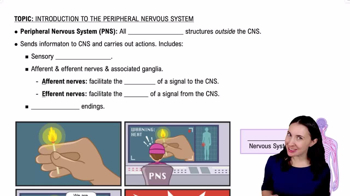
Peripheral Nervous System (PNS) Regeneration

Peripheral nerve fibers have a greater capacity for regeneration due to the presence of Schwann cells, which promote axonal growth and guide repair. These cells clear debris and secrete growth factors, facilitating the regrowth of damaged nerves in the PNS.
Recommended video:
3:33
Peripheral Nervous System

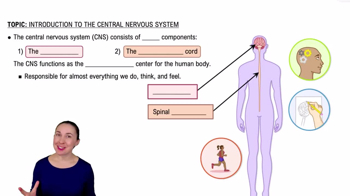
Central Nervous System (CNS) Inhibitory Environment

In the CNS, regeneration is limited because oligodendrocytes produce inhibitory molecules that prevent axonal growth. Additionally, the formation of glial scars after injury creates a physical and chemical barrier, hindering nerve fiber repair.
Recommended video:
1:32
The Central Nervous System

Differences in Cellular and Molecular Responses to Injury

The cellular response to injury differs between PNS and CNS; PNS neurons activate intrinsic growth programs and benefit from supportive glial cells, while CNS neurons have limited intrinsic growth capacity and face an environment that suppresses regeneration, leading to poor recovery.
Recommended video:
2:38
Step 1: Tissue Damage & Infection