Ch. 18 The Cardiovascular System II: The Blood Vessels
Chapter 18, Problem 18

Which of the following is not a common pulse point?
a. Femoral artery
b. Subclavian artery
c. Common carotid artery
d. Brachial artery

Verified step by step guidance
1
Step 1: Understand the concept of pulse points. Pulse points are locations on the body where an artery is close to the surface and can be compressed against a bone to feel the pulse.
Step 2: Review the common pulse points in the human body. These include the radial artery (wrist), brachial artery (arm), carotid artery (neck), femoral artery (groin), popliteal artery (behind the knee), dorsalis pedis artery (top of the foot), and posterior tibial artery (ankle).
Step 3: Analyze the options provided in the question. Identify which arteries are commonly used as pulse points based on their accessibility and proximity to the surface of the body.
Step 4: Consider the subclavian artery. This artery is located deep beneath the clavicle (collarbone) and is not easily accessible for checking a pulse, making it an uncommon pulse point.
Step 5: Conclude that the subclavian artery is the correct answer as it is not a common pulse point compared to the other options provided.

Verified video answer for a similar problem:

This video solution was recommended by our tutors as helpful for the problem above.
Was this helpful?

Key Concepts

Here are the essential concepts you must grasp in order to answer the question correctly.

Pulse Points

Pulse points are specific locations on the body where arteries are close to the skin's surface, allowing for the detection of the heartbeat. Common pulse points include the radial artery at the wrist, the carotid artery in the neck, and the femoral artery in the groin. Understanding these points is essential for assessing heart rate and circulatory health.
Recommended video:
Guided course
03:00
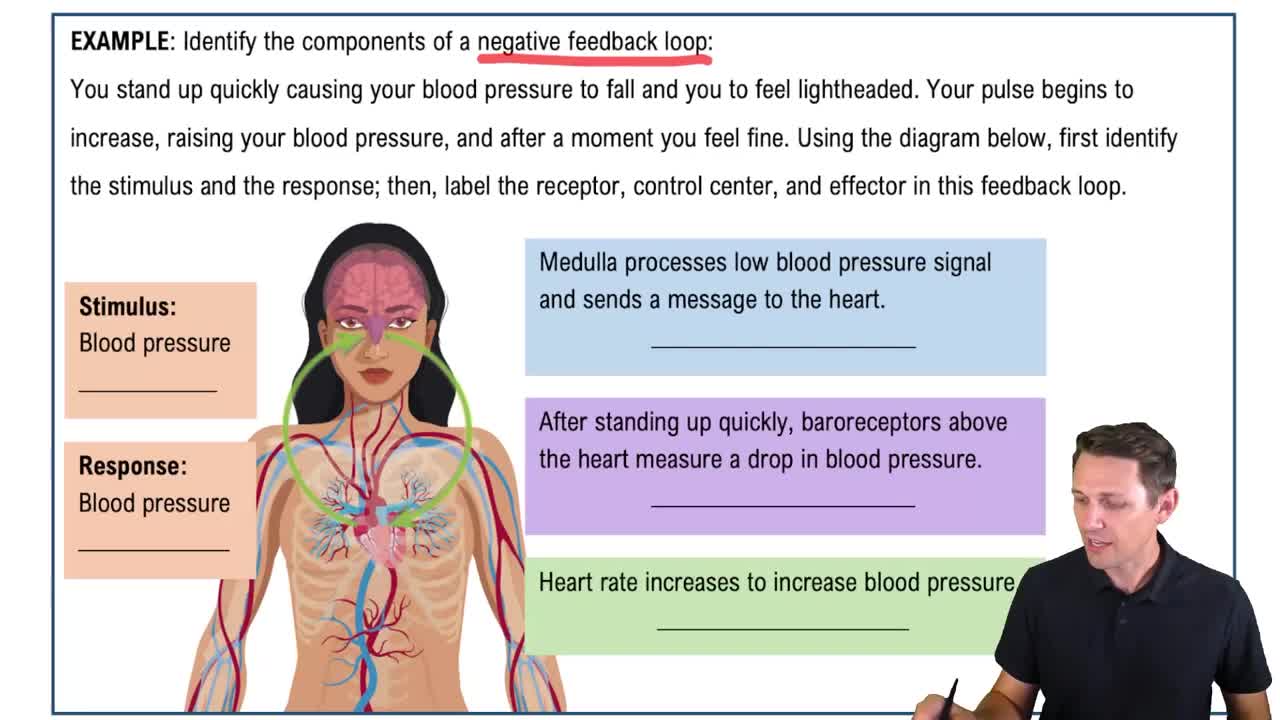
Feedback Loops: Negative Feedback Example 1

Arterial Locations

Different arteries serve various regions of the body, and their locations determine their accessibility for pulse checks. For instance, the femoral artery is located in the thigh, while the common carotid artery runs along the neck. Recognizing these locations helps in identifying which arteries are typically used for pulse assessment.
Recommended video:
14:43
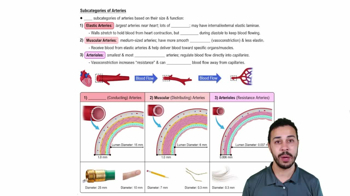
Subcategories of Arteries

Clinical Relevance of Pulse Points

Identifying pulse points is crucial in clinical settings for monitoring vital signs and diagnosing conditions. Certain arteries, like the subclavian artery, are less commonly used for pulse checks compared to others. Understanding which arteries are standard pulse points aids healthcare professionals in effective patient assessment.
Recommended video:
3:35
Review of Relevant Brain Anatomy
Related Practice
Textbook Question

Mark the following statements as true or false. If a statement is false, correct it to make a true statement.

The sympathetic nervous system causes vasodilation in the skin when body temperature decreases.

621
views
Textbook Question

The hydrostatic pressure gradient drives water _____ capillaries, and the colloid osmotic pressure draws water ____ capillaries.

a. out of; out of

b. out of; into

c. into; out of

d. into; into

487
views
Textbook Question

Match the following arteries with the correct description. 

__Radial artery      

__Celiac trunk      

__Basilar artery       

__Superior mesenteric artery      

__Dorsalis pedis artery      

__Femoral artery      

__Internal iliac artery      

__Renal artery      

__Internal carotid artery      

__Subclavian artery

a. Supplies the small intestine and most of the large intestine 

b. Supplies the pelvis 

c. Supplies the upper limb 

d. Located in the lateral forearm 

e. Provides the blood supply to the lower limb 

f. Supplies the brain via the anterior and middle cerebral arteries 

g. Large single branch off the aorta that supplies the liver, stomach, duodenum, and spleen 

h. Supplies the foot and ankle 

i. Supplies the kidney 

j. Forms from the fusion of the two vertebral arteries 

552
views
Textbook Question

Which of the following vessels does not drain into the hepatic portal vein?

a. Splenic vein

b. Inferior mesenteric vein

c. Gastric vein

d. Renal vein

e. Superior mesenteric vein

595
views
1
rank
Textbook Question

Match the following veins with the correct description. 

__Cephalic vein      

__Great saphenous vein      

__Dural sinus      

__Azygos vein      

__Hepatic portal vein      

__Splenic vein      

__Internal jugular vein      

__Brachiocephalic veins       

__Brachial vein      

__Inferior mesenteric vein

a. Drains the posterior abdominal and thoracic walls

b. Two veins merge to form the superior vena cava

c. Receives blood from the spleen and digestive organs

d. Superficial vein in the medial leg

e. Drains the brain and face

f. Drains part of the large intestine

g. Superficial vein in the lateral upper limb

h. Deep vein of the arm

i. Drains the spleen

j. Drain the brain capillaries and cerebrospinal fluid

397
views