
Pearson+ LogoPearson+ Logo
Ch. 34 The Biosphere: An Introduction to Earth's Diverse Environments
Taylor - Campbell Biology: Concepts & Connections 10th Edition
Taylor, Simon, Dickey, Hogan10th EditionCampbell Biology: Concepts & ConnectionsISBN: 9780136538783Not the one you use?Change textbook
Chapter 34, Problem 21

In 1954, workers at Michigan State University began spraying the elm trees on campus annually with DDT to kill disease-carrying bark beetles. In the spring of 1955, large numbers of dead robins were found on the campus. Observers thought perhaps the robins died after eating earthworms contaminated by DDT the previous spring. Suggest how scientists could have investigated the scientific validity of this idea.

Verified step by step guidance
1
Formulate a hypothesis: Scientists could hypothesize that the robins died due to consuming earthworms contaminated with DDT sprayed on elm trees the previous year.
Design an experiment: Collect earthworms from the campus and test them for DDT levels using chemical analysis techniques. Compare these levels to earthworms from areas where DDT was not sprayed.
Analyze robin tissue samples: Obtain tissue samples from the dead robins and test for the presence of DDT or its metabolites using chemical assays. This would help establish whether DDT was present in their bodies.
Conduct controlled feeding experiments: In a controlled environment, feed robins earthworms exposed to DDT and observe their health outcomes. Compare these results to robins fed uncontaminated earthworms.
Evaluate alternative explanations: Investigate other potential causes of robin deaths, such as diseases, environmental factors, or other toxins, to ensure the conclusion is specific to DDT contamination.

Verified video answer for a similar problem:

This video solution was recommended by our tutors as helpful for the problem above.
Video duration:
3m
Was this helpful?

Key Concepts

Here are the essential concepts you must grasp in order to answer the question correctly.

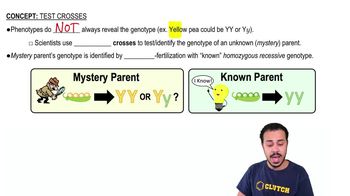
Hypothesis Testing

Hypothesis testing is a fundamental aspect of scientific inquiry where researchers formulate a testable statement based on observations. In this case, scientists would propose that the robins died due to DDT-contaminated earthworms. They would then design experiments to collect data that either supports or refutes this hypothesis, allowing for a systematic investigation of the cause of the robins' deaths.
Recommended video:

Ecological Impact of Pesticides

Understanding the ecological impact of pesticides like DDT is crucial for assessing their effects on wildlife. DDT is known to bioaccumulate in the food chain, meaning that organisms at higher trophic levels, such as robins, can suffer from toxic effects after consuming contaminated prey. This concept helps frame the investigation into how DDT might affect not just individual species, but entire ecosystems.
Recommended video:
Guided course
03:35
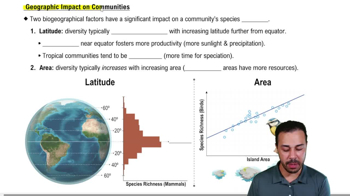
Geographic Impact on Communities

Data Collection and Analysis

Data collection and analysis are essential for validating scientific hypotheses. In this scenario, scientists could gather data on robin mortality rates, analyze the presence of DDT in earthworms, and assess the health of the local ecosystem. Statistical methods would be employed to determine if there is a significant correlation between DDT exposure and robin deaths, providing a clearer understanding of the situation.
Recommended video:
Guided course
04:08
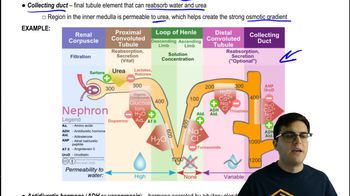
Distal Tubule and Collecting Duct