Pearson+ LogoPearson+ Logo
Ch. 34 The Biosphere: An Introduction to Earth's Diverse Environments
Taylor - Campbell Biology: Concepts & Connections 10th Edition
Taylor, Simon, Dickey, Hogan10th EditionCampbell Biology: Concepts & ConnectionsISBN: 9780136538783Not the one you use?Change textbook
Chapter 34, Problem 16

What biome do you live in? Describe your climate and the factors that have produced that climate. What plants and animals are typical of this biome? If you live in an urban or agricultural area, how have human interventions changed the natural biome?

Verified step by step guidance
1
Identify the biome you live in based on geographical location, climate, and natural vegetation. Common biomes include tropical rainforests, deserts, tundras, and temperate forests.
Describe the climate of your biome, including typical temperature ranges, precipitation patterns, and any seasonal variations that are characteristic of the area.
Discuss the natural factors that influence the climate of your biome. This could include latitude, elevation, nearby bodies of water, ocean currents, and prevailing winds.
List typical plants and animals that are native to your biome. Mention any adaptations they have that enable them to survive and thrive in the environmental conditions of the biome.
Examine human impacts on your biome, such as urban development, agriculture, or deforestation. Discuss how these interventions have altered the natural landscape, climate, and biodiversity of the region.

Verified video answer for a similar problem:

This video solution was recommended by our tutors as helpful for the problem above.
Video duration:
1m
Was this helpful?

Key Concepts

Here are the essential concepts you must grasp in order to answer the question correctly.

Biome

A biome is a large ecological area on the Earth's surface, characterized by specific climate conditions, flora, and fauna. Biomes are classified based on factors such as temperature, precipitation, and the types of organisms that thrive in those environments. Examples include deserts, forests, grasslands, and tundras, each supporting distinct ecosystems and biodiversity.
Recommended video:
Guided course
01:38
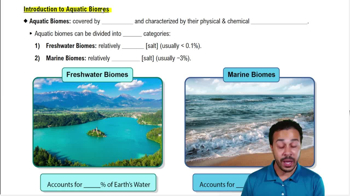
Introduction to Aquatic Biomes

Climate Factors

Climate factors include temperature, humidity, precipitation, and wind patterns that define the weather conditions of a region over time. These factors influence the types of vegetation and animal life that can survive in a biome. For instance, a biome with high rainfall and warm temperatures typically supports dense forests, while arid conditions lead to desert ecosystems.
Recommended video:
Guided course
01:41
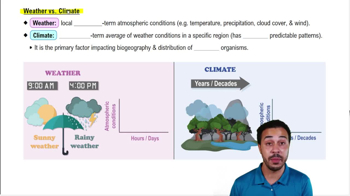
Weather vs. Climate

Human Impact on Biomes

Human activities, such as urbanization, agriculture, and deforestation, significantly alter natural biomes. These interventions can lead to habitat destruction, changes in species composition, and the introduction of invasive species. Understanding these impacts is crucial for conservation efforts and for maintaining biodiversity within affected biomes.
Recommended video:
Guided course
03:35
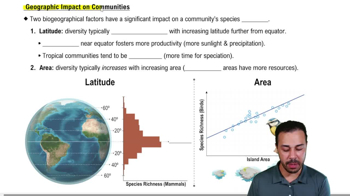
Geographic Impact on Communities
Related Practice
Textbook Question

Phytoplankton are the major photosynthesizers in

a. The benthic realm of the ocean

b. The ocean photic zone

c. The intertidal zone

d. The aphotic zone of a lake

1750
views
Textbook Question
An ecologist monitoring the number of gorillas in a wildlife ­refuge over a five-year period is studying ecology at which level?a. organismb. populationc. communityd. ecosystem
651
views
Textbook Question
Tropical rain forests are the most diverse biomes. What factors contribute to this diversity?
2308
views
Textbook Question

Use Figures 34.5C and 34.18 to predict how global warming (rapid increase in Earth's average temperature; see Module 7.14) might affect the water cycle.

<IMAGE>

1147
views
Textbook Question

Aquatic biomes differ in levels of light, nutrients, oxygen, and water movement. These abiotic factors influence the productivity and diversity of freshwater ecosystems.

a. Productivity, roughly defined as photosynthetic output, is high in estuaries, coral reefs, and shallow ponds. Describe the abiotic factors that contribute to high productivity in these ecosystems.

b. How does extra input of nitrogen and phosphorus (for instance, by fertilizer runoff) affect the productivity of lakes and ponds? Is this nutrient input beneficial for the ecosystem? Explain.

1341
views
Textbook Question

In the climograph below, biomes are plotted by their range of annual mean temperature and annual mean precipitation. Identify the following biomes:

Arctic tundra

Coniferous forest

Desert, grassland

Temperate forest,

Tropical forest.

Explain why there are areas in which biomes overlap on this graph.

3432
views