
Pearson+ LogoPearson+ Logo
Ch. 12 DNA Technology and Genomics
Taylor - Campbell Biology: Concepts & Connections 10th Edition
Taylor, Simon, Dickey, Hogan10th EditionCampbell Biology: Concepts & ConnectionsISBN: 9780136538783Not the one you use?Change textbook
Chapter 12, Problem 13

Today, it is fairly easy to make transgenic plants and animals. What are some important safety and ethical issues raised by this use of recombinant DNA technology? What are some of the possible dangers of introducing genetically engineered organisms into the environment? What are some reasons for and against leaving decisions in these areas to scientists? To business owners and executives? What are some reasons for and against more public involvement? How might these decisions affect you? How do you think these decisions should be made?

Verified step by step guidance
1
Identify and discuss the potential risks of creating transgenic organisms, such as ecological imbalance, where introduced species might outcompete native species, leading to reduced biodiversity.
Evaluate the ethical concerns associated with recombinant DNA technology, including the manipulation of genetic material, potential animal welfare issues, and the long-term impacts on natural evolution.
Consider the implications of allowing scientists to make decisions in this field, focusing on their expertise and understanding of genetic manipulation, balanced against the potential for bias towards scientific advancement over ecological or ethical considerations.
Discuss the role of business owners and executives in these decisions, emphasizing the potential conflicts between profit motives and safety or ethical considerations, and the importance of regulatory oversight to ensure responsible practices.
Explore the importance of public involvement in decisions about genetic engineering, considering how increased transparency and public discourse can lead to more democratically accountable decision-making processes, and potentially more ethically and ecologically sound outcomes.

Verified video answer for a similar problem:

This video solution was recommended by our tutors as helpful for the problem above.
Video duration:
39s
Was this helpful?

Key Concepts

Here are the essential concepts you must grasp in order to answer the question correctly.

Recombinant DNA Technology

Recombinant DNA technology involves combining DNA from different organisms to create genetically modified organisms (GMOs). This process allows scientists to introduce specific traits, such as pest resistance or enhanced nutritional value, into plants and animals. Understanding this technology is crucial for evaluating its applications, benefits, and potential risks in agriculture and medicine.
Recommended video:
Guided course
03:12
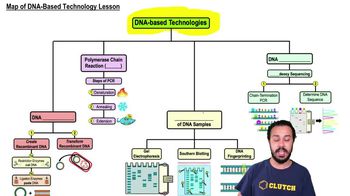
Map of DNA-Based Technology Lesson

Ethical Considerations

The ethical considerations surrounding genetic engineering include concerns about animal welfare, environmental impact, and the long-term effects on biodiversity. Ethical debates often focus on the moral implications of altering life forms and the potential consequences for ecosystems and human health. These discussions are essential for guiding policy decisions and public acceptance of GMOs.

Public Involvement in Decision-Making

Public involvement in decisions regarding genetic engineering is important for democratic governance and ensuring that diverse perspectives are considered. Advocates argue that the public should have a say in how biotechnology is used, while opponents may contend that scientific expertise is necessary for informed decision-making. Balancing these viewpoints is critical for developing policies that reflect societal values and priorities.
Recommended video:
Guided course
07:47
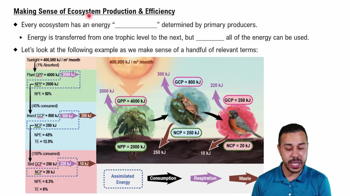
Making Sense of Ecosystem Production & Efficiency
Related Practice
Textbook Question

A biologist isolated a gene from a human cell, inserted it into a plasmid, and inserted the plasmid into a bacterium. The bacterium made a new protein, but it was nothing like the protein normally produced in a human cell. Why? (Explain your answer.)

a. The bacterium had undergone transformation.

b. The gene did not have sticky ends.

c. The human gene contained introns.

d. The gene was not synthesized from scratch.

1055
views
Textbook Question

Explain how you might engineer E. coli to produce human growth hormone (HGH) using the following: E. coli containing a plasmid, DNA carrying the gene for HGH, DNA ligase, a restriction enzyme, equipment for manipulating and growing bacteria, a method for extracting and purifying the hormone, and an appropriate DNA probe. (Assume that the human HGH gene lacks introns.)

1768
views
Textbook Question
What is left for genetic researchers to do now that the Human Genome Project has determined nearly complete nucleotide sequences for all of the human chromosomes? Explain.
794
views
Textbook Question
In the not-too-distant future, gene therapy may be an option for the treatment and cure of some inherited disorders. What do you think are the most serious ethical issues that must be dealt with before human gene therapy is used on a large scale? Why do you think these issues are important?
921
views
Textbook Question

The possibility of extensive genetic testing raises questions about how personal genetic information should be used. For example, should employers or potential employers have access to such information?

874
views
Textbook Question

The possibility of extensive genetic testing raises questions about how personal genetic information should be used. Should the information be available to insurance companies? Why or why not?

817
views