Pearson+ LogoPearson+ Logo
Ch. 1 Biology: The Study of Scientific Life
Taylor - Campbell Biology: Concepts & Connections 10th Edition
Taylor, Simon, Dickey, Hogan10th EditionCampbell Biology: Concepts & ConnectionsISBN: 9780136538783Not the one you use?Change textbook
Chapter 1, Problem 3

Which of these is not a property of all living organisms?
a. Capable of reproduction
b. Uses energy
c. Composed of multiple cells
d. Responds to the environment

Verified step by step guidance
1
Step 1: Begin by understanding the question. It asks which of the listed options is NOT a property of all living organisms. This means we need to identify the characteristic that is not universally true for all living organisms.
Step 2: Review the fundamental properties of life. These include: (a) the ability to reproduce, (b) the ability to use energy (metabolism), (c) being composed of one or more cells, (d) the ability to respond to environmental stimuli, and others such as growth, homeostasis, and adaptation.
Step 3: Analyze each option: (a) 'capable of reproduction' is a universal property of life, as all living organisms reproduce to pass on genetic material. (b) 'uses energy' is also universal, as all living organisms require energy to maintain their biological processes. (c) 'composed of multiple cells' is not universal, as some organisms, like bacteria and archaea, are unicellular. (d) 'responds to the environment' is universal, as all living organisms interact with and respond to their surroundings.
Step 4: Identify the option that does not apply to all living organisms. Based on the analysis, option (c) 'composed of multiple cells' is not a property of all living organisms, as some are unicellular.
Step 5: Conclude that the correct answer is the option that does not meet the criteria of being a universal property of life, which is option (c).

Verified video answer for a similar problem:

This video solution was recommended by our tutors as helpful for the problem above.
Video duration:
1m
Was this helpful?

Key Concepts

Here are the essential concepts you must grasp in order to answer the question correctly.

Characteristics of Living Organisms

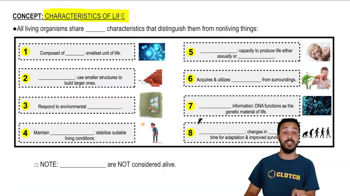
Living organisms share several key characteristics, including the ability to reproduce, utilize energy, respond to environmental stimuli, and maintain homeostasis. These traits help distinguish living entities from non-living matter. Understanding these characteristics is essential for identifying what constitutes life.
Recommended video:
Guided course
09:26
Characteristics of Life

Reproduction

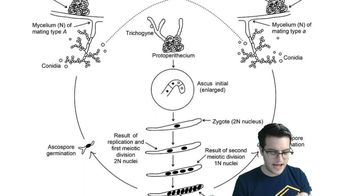
Reproduction is a fundamental property of living organisms, allowing them to produce offspring and ensure the continuation of their species. This can occur through sexual or asexual means. However, not all organisms reproduce at all stages of their life cycle, making it a critical concept for evaluating the properties of life.
Recommended video:
Guided course
03:12
Fungi Reproduction - 3

Cellular Organization

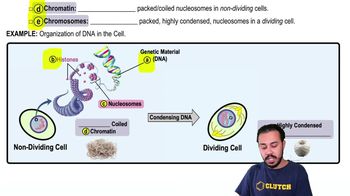
All living organisms are composed of cells, which are the basic units of life. While some organisms, like bacteria, are unicellular, others are multicellular, consisting of many cells that work together. The distinction between unicellular and multicellular organisms is important for understanding biological diversity and the complexity of life forms.
Recommended video:
Guided course
06:52
Organization of DNA in the Cell