
Textbook Question
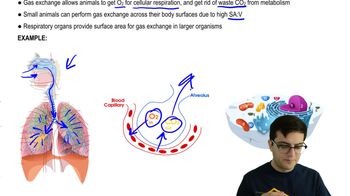
When you inhale, the diaphragm
a. Relaxes and moves upward.
b. Relaxes and moves downward.
c. Contracts and moves upward.
d. Contracts and moves downward.
882
views



 Verified step by step guidance
 05:55
05:55
 07:47 05:55
When you inhale, the diaphragm
a. Relaxes and moves upward.
b. Relaxes and moves downward.
c. Contracts and moves upward.
d. Contracts and moves downward.
In which of the following organisms does oxygen diffuse directly across a respiratory surface to cells, without being carried by the blood?
a. A grasshopper
b. A whale
c. An earthworm
d. A mouse
What is the function of the cilia in the trachea and bronchi?
a. To sweep air into and out of the lungs
b. To increase the surface area for gas exchange
c. To dislodge food that may have slipped past the epiglottis
d. To sweep mucus with trapped particles up and out of the respiratory tract
What is the primary feedback used by the brain to control breathing?
a. Heart rate
b. Partial pressure of O2
c. Blood pH, which indicates O2 level
d. Blood pH, which indicates CO2 level
Trace the path of an oxygen molecule in its journey from the air to a muscle cell in your arm, naming all the structures involved along the way.