
Pearson+ LogoPearson+ Logo
Ch. 13 How Populations Evolve
Taylor - Campbell Biology: Concepts & Connections 10th Edition
Taylor, Simon, Dickey, Hogan10th EditionCampbell Biology: Concepts & ConnectionsISBN: 9780136538783Not the one you use?Change textbook
Chapter 13, Problem 16

Advocates of 'scientific creationism' and 'intelligent design' lobby school districts for such things as a ban on teaching evolution, equal time in science classes to teach alternative versions of the origin and history of life, or disclaimers in textbooks stating that evolution is 'just a theory.' They argue that it is only fair to let students evaluate both evolution and the idea that all species were created by God as the Bible relates or that, because organisms are so complex and well adapted, they must have been created by an intelligent designer. Do you think that alternative views of evolution should be taught in science courses? Why or why not?

Verified step by step guidance
1
Understand the definition of science: Science is a systematic enterprise that builds and organizes knowledge in the form of testable explanations and predictions about the universe. It relies on empirical evidence and the scientific method.
Recognize the basis of the theory of evolution: Evolution is a well-supported scientific theory developed through extensive research and empirical data, including genetics, fossil records, and observational studies of biological processes.
Evaluate the nature of 'scientific creationism' and 'intelligent design': These concepts are based on religious beliefs rather than empirical evidence and do not adhere to the scientific method, which is crucial for theories taught in science classes.
Consider the purpose of science education: Science education aims to teach students how to use the scientific method to understand natural phenomena. Introducing non-scientific theories in science classes can confuse the distinction between science and belief.
Reflect on the implications for educational standards: Teaching non-scientific theories in science classes could undermine the integrity of science education, leading to students who are less prepared to critically evaluate scientific information.

Verified video answer for a similar problem:

This video solution was recommended by our tutors as helpful for the problem above.
Video duration:
3m
Was this helpful?

Key Concepts

Here are the essential concepts you must grasp in order to answer the question correctly.

Evolutionary Theory

Evolutionary theory explains the process by which species change over time through mechanisms such as natural selection, genetic drift, and mutation. It is supported by extensive scientific evidence from various fields, including genetics, paleontology, and comparative anatomy. Understanding this theory is crucial for evaluating claims about the origins of life and the diversity of species.
Recommended video:
02:45
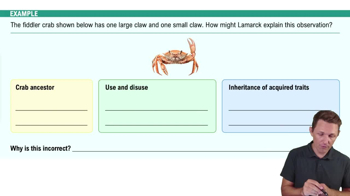
History of Evolutionary Theory Example 1

Scientific Method

The scientific method is a systematic approach to inquiry that involves observation, hypothesis formulation, experimentation, and analysis. It emphasizes empirical evidence and reproducibility, distinguishing scientific claims from those based on belief or ideology. This method is fundamental in assessing the validity of theories like evolution compared to alternative explanations.
Recommended video:
Guided course
06:29
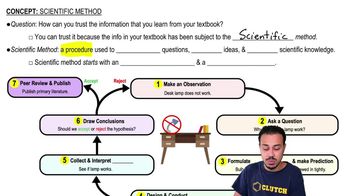
Scientific Method

Intelligent Design vs. Creationism

Intelligent design and creationism are perspectives that argue for the involvement of a higher power in the creation of life, often challenging evolutionary theory. While creationism is rooted in religious texts, intelligent design seeks to present itself as a scientific alternative, though it lacks empirical support. Understanding these concepts is essential for discussing the appropriateness of their inclusion in science education.
Recommended video:
Guided course
02:50
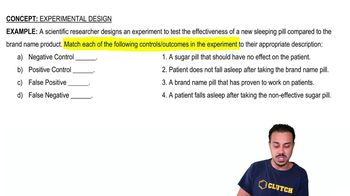
Experimental Design Example 1