Pearson+ LogoPearson+ Logo
Ch. 3 The Molecules of Cells
Taylor - Campbell Biology: Concepts & Connections 10th Edition
Taylor, Simon, Dickey, Hogan10th EditionCampbell Biology: Concepts & ConnectionsISBN: 9780136538783Not the one you use?Change textbook
Chapter 3, Problem 4

Cows can derive nutrients from cellulose because
a. They produce enzymes that recognize the shape of the glucose-glucose bonds and hydrolyze them.
b. They re-chew their cud to break down cellulose fibers.
c. Their digestive tract contains microorganisms that can hydrolyze the bonds of cellulose.
d. They convert cellulose to starch and can digest starch.

Verified step by step guidance
1
Understand the structure of cellulose: Cellulose is a polysaccharide composed of glucose molecules linked by β-1,4-glycosidic bonds. These bonds are difficult for most animals to break down because they lack the necessary enzymes.
Recognize that cows are ruminants: Ruminants have a specialized digestive system that includes a multi-chambered stomach, which allows them to process tough plant materials like cellulose.
Learn about symbiotic microorganisms: Cows rely on microorganisms (bacteria, fungi, and protozoa) in their rumen to produce enzymes such as cellulase, which can hydrolyze the β-1,4-glycosidic bonds in cellulose.
Understand the process of cud chewing: Cows regurgitate partially digested food (cud) and re-chew it to mechanically break down cellulose fibers further, aiding in digestion.
Eliminate incorrect options: Evaluate each answer choice based on the biological process. For example, cows do not produce enzymes to hydrolyze cellulose themselves, nor do they convert cellulose to starch. The correct answer involves the role of microorganisms in their digestive tract.

Verified video answer for a similar problem:

This video solution was recommended by our tutors as helpful for the problem above.
Video duration:
1m
Was this helpful?

Key Concepts

Here are the essential concepts you must grasp in order to answer the question correctly.

Cellulose Digestion

Cellulose is a complex carbohydrate made up of glucose units linked by β-1,4-glycosidic bonds, which are difficult for many animals to digest. Cows, as ruminants, have specialized digestive systems that allow them to break down cellulose through fermentation, primarily aided by microorganisms in their rumen.
Recommended video:
Guided course
05:11
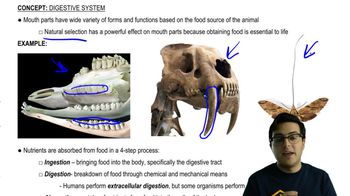
Digestion and Digestive Tracts

Rumen Microbiota

The rumen is the first chamber of a cow's stomach, hosting a diverse community of microorganisms, including bacteria, protozoa, and fungi. These microbes produce enzymes that can hydrolyze cellulose, breaking it down into simpler sugars that the cow can then absorb and utilize for energy.
Recommended video:
Guided course
03:25
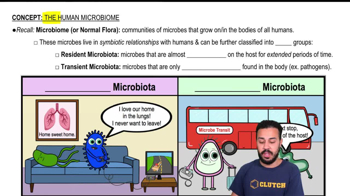
The Human Microbiome

Cud Chewing

Cows practice a behavior known as rumination, where they regurgitate and re-chew their food, known as cud. This process mechanically breaks down cellulose fibers further, increasing the surface area for microbial action and enhancing the efficiency of digestion in the rumen.
Recommended video: