Pearson+ LogoPearson+ Logo
Ch. 5 The Working Cell
Taylor - Campbell Biology: Concepts & Connections 10th Edition
Taylor, Simon, Dickey, Hogan10th EditionCampbell Biology: Concepts & ConnectionsISBN: 9780136538783Not the one you use?Change textbook
Chapter 5, Problem 13

Cells lining kidney tubules function in the reabsorption of water from urine. In response to chemical signals, they reversibly insert additional aquaporins into their plasma membranes. In which of these situations would your tubule cells have the most aquaporins: after a long run on a hot day, right after a large meal, or after drinking a large bottle of water? Explain.

Verified step by step guidance
1
Understand the role of aquaporins: Aquaporins are specialized membrane proteins that facilitate the movement of water across cell membranes. Their presence in kidney tubule cells increases water reabsorption from urine back into the bloodstream.
Identify the physiological conditions: After a long run on a hot day, the body loses water through sweat, leading to dehydration. After a large meal, digestion is the primary focus, and water balance may not be as critical. After drinking a large bottle of water, the body has excess water and needs to excrete it, reducing the need for aquaporins.
Relate aquaporin insertion to dehydration: When the body is dehydrated, such as after a long run on a hot day, chemical signals like antidiuretic hormone (ADH) are released. ADH triggers the insertion of aquaporins into the plasma membranes of kidney tubule cells to maximize water reabsorption.
Consider the other scenarios: After drinking a large bottle of water, the body has sufficient water and does not need to reabsorb as much, so fewer aquaporins would be inserted. After a large meal, water balance is not as urgent, and aquaporin levels would likely remain at baseline.
Conclude the situation with the most aquaporins: The tubule cells would have the most aquaporins after a long run on a hot day because the body is dehydrated and needs to conserve water by reabsorbing as much as possible from the urine.

Verified video answer for a similar problem:

This video solution was recommended by our tutors as helpful for the problem above.
Video duration:
3m
Was this helpful?

Key Concepts

Here are the essential concepts you must grasp in order to answer the question correctly.

Aquaporins

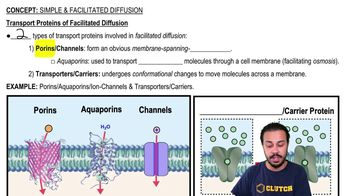
Aquaporins are specialized membrane proteins that facilitate the transport of water across cell membranes. They play a crucial role in regulating water balance in various tissues, including the kidneys. When the body needs to conserve water, such as during dehydration, more aquaporins are inserted into the membranes of kidney tubule cells to enhance water reabsorption from urine.
Recommended video:
Guided course
04:49
Transport Proteins of Facilitated Diffusion

Kidney Function and Water Reabsorption

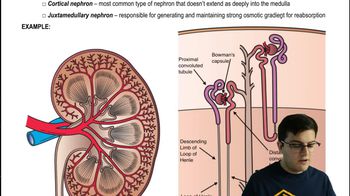
The kidneys filter blood to produce urine, and a significant part of this process involves reabsorbing water back into the bloodstream. This reabsorption occurs primarily in the nephron's tubules, where the presence of aquaporins can significantly increase water reabsorption efficiency. The body's hydration status influences how many aquaporins are present, adjusting to maintain homeostasis.
Recommended video:
Guided course
02:59
Kidney and Nephron

Physiological Responses to Hydration Status

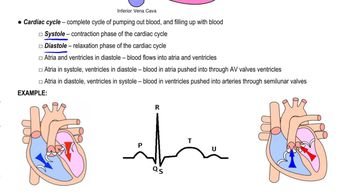
The body's physiological responses to hydration status dictate how kidney tubule cells manage water reabsorption. After intense exercise in hot conditions, the body is likely dehydrated, prompting the release of hormones like vasopressin, which increases aquaporin insertion. Conversely, after consuming a large amount of water, the body will reduce aquaporin levels to excrete the excess fluid, demonstrating a dynamic response to hydration needs.
Recommended video:
Guided course
05:13
Heart Physiology
Related Practice
Textbook Question
Relate the laws of thermodynamics to living organisms.
1783
views
Textbook Question

How do the components and structure of cell membranes relate to the functions of membranes?

1564
views
Textbook Question
Sometimes inhibitors can be harmful to a cell; often they are beneficial. Explain.
1923
views
Textbook Question

Mercury is known to inhibit the permeability of water channels. To help establish that the protein isolated by Agre's group was a water channel, the researchers incubated groups of RNA-injected oocytes (which thus made aquaporin proteins) in four different solutions: plain buffer, low concentration and high concentration of a mercury chloride (HgCl₂) solution, and low concentration of a mercury solution followed by an agent (ME) known to reverse the effects of mercury. The water permeability of the cells was determined by the rate of their osmotic swelling. Interpret the results of this experiment, which are presented in the graph below. Control oocytes not injected with aquaporin RNA were also incubated with buffer and the two concentrations of mercury. Predict what the results of these treatments would be.

<IMAGE>

1548
views
Textbook Question

A biologist performed two series of experiments on lactase, the enzyme that hydrolyzes lactose to glucose and galactose. First, she made up 10% lactose solutions containing different concentrations of enzyme and measured the rate at which galactose was produced (grams of galactose per minute). Results of these experiments are shown in Table A below. In the second series of experiments (Table B), she prepared 2% enzyme solutions containing different concentrations of lactose and again measured the rate of galactose production.

Graph and explain the relationship between the reaction rate and the enzyme concentration.

<IMAGE>

1318
views
Textbook Question

A biologist performed two series of experiments on lactase, the enzyme that hydrolyzes lactose to glucose and galactose. First, she made up 10% lactose solutions containing different concentrations of enzyme and measured the rate at which galactose was produced (grams of galactose per minute). Results of these experiments are shown in Table A below. In the second series of experiments (Table B), she prepared 2% enzyme solutions containing different concentrations of lactose and again measured the rate of galactose production.

Graph and explain the relationship between the reaction rate and the substrate concentration. How and why did the results of the two experiments differ?.

<IMAGE>

1967
views