Ch. R - Review of Basic Concepts
Lial - College Algebra 13th Edition
Lial13th EditionCollege AlgebraISBN: 9780136881063Not the one you use?Change textbook
Chapter 1, Problem 39

Find each sum or difference. -6 - 5

Verified step by step guidance
1
Identify the operation: The problem asks for the difference between -6 and 5, which means we need to calculate -6 - 5.
Rewrite the subtraction as adding a negative: Recall that subtracting a number is the same as adding its opposite, so -6 - 5 can be written as -6 + (-5).
Add the two negative numbers: When adding two negative numbers, you add their absolute values and keep the negative sign. So, calculate the sum of 6 and 5.
Combine the values: Since both numbers are negative, the result will be negative, so write the sum with a negative sign.
Express the final sum as the answer to the problem.

Verified video answer for a similar problem:

This video solution was recommended by our tutors as helpful for the problem above.
Video duration:
2m
Was this helpful?

Key Concepts

Here are the essential concepts you must grasp in order to answer the question correctly.

Integer Addition and Subtraction

Integer addition and subtraction involve combining or removing values on the number line. When subtracting a positive number, you move left on the number line, decreasing the value. Understanding how to add and subtract negative and positive integers is essential for solving problems like -6 - 5.
Recommended video:
03:18
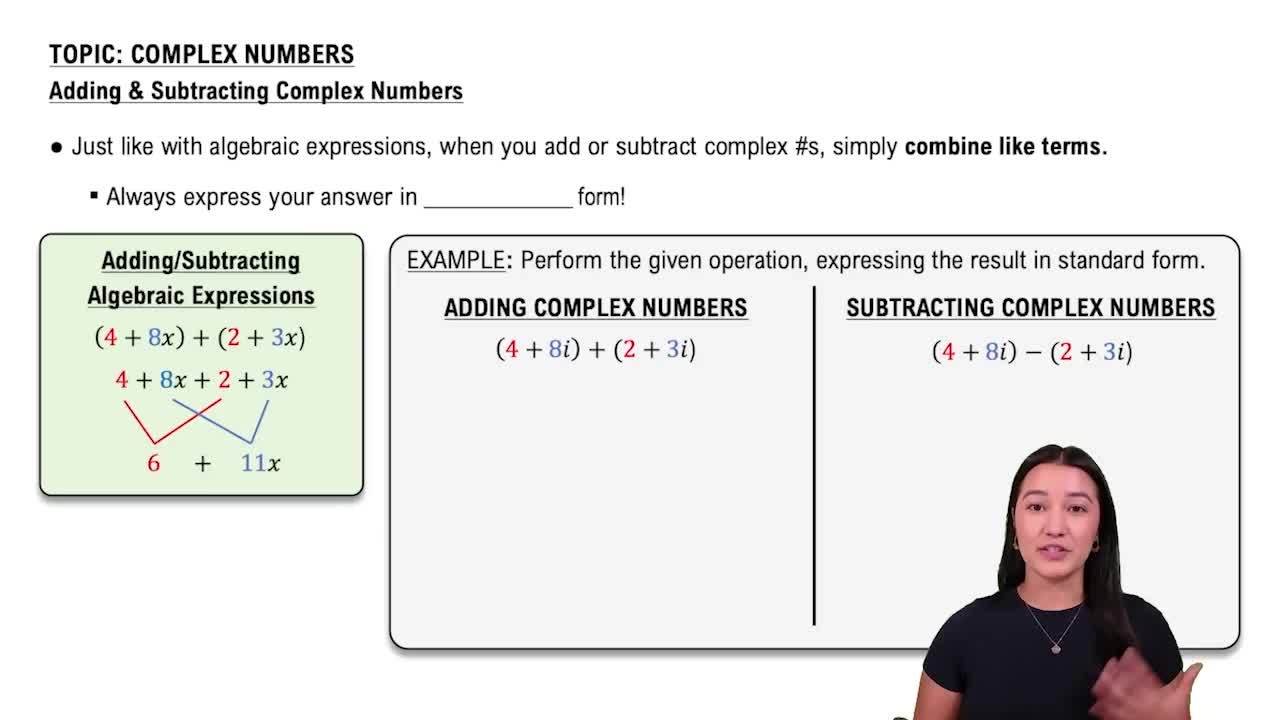
Adding and Subtracting Complex Numbers

Number Line Visualization

The number line is a visual tool that helps represent integers and their operations. Moving left indicates subtraction or adding negative numbers, while moving right indicates addition. Visualizing -6 - 5 on the number line shows starting at -6 and moving 5 units left to reach the answer.
Recommended video:
Guided course
06:49
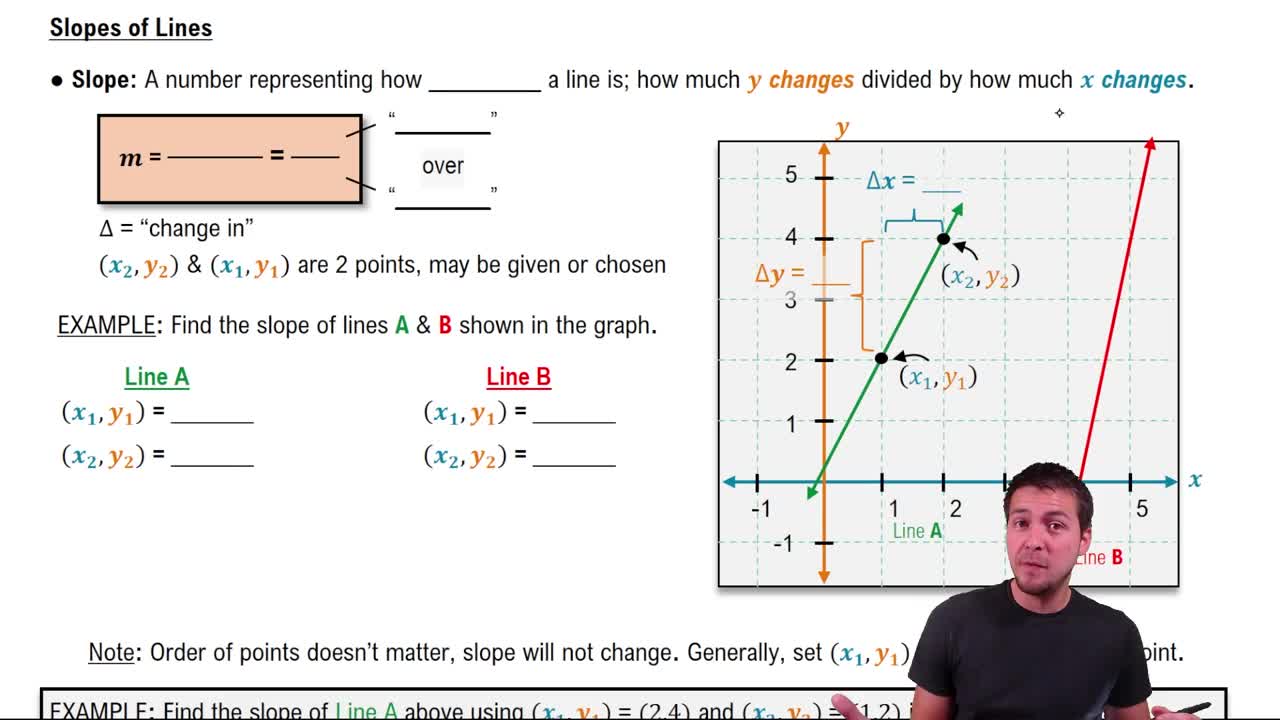
The Slope of a Line

Combining Negative Numbers

When subtracting a positive number from a negative number, the result becomes more negative. This is because you are effectively adding the absolute values but keeping the negative sign. For example, -6 - 5 equals -11, as you move further into the negative direction.
Recommended video:
05:02
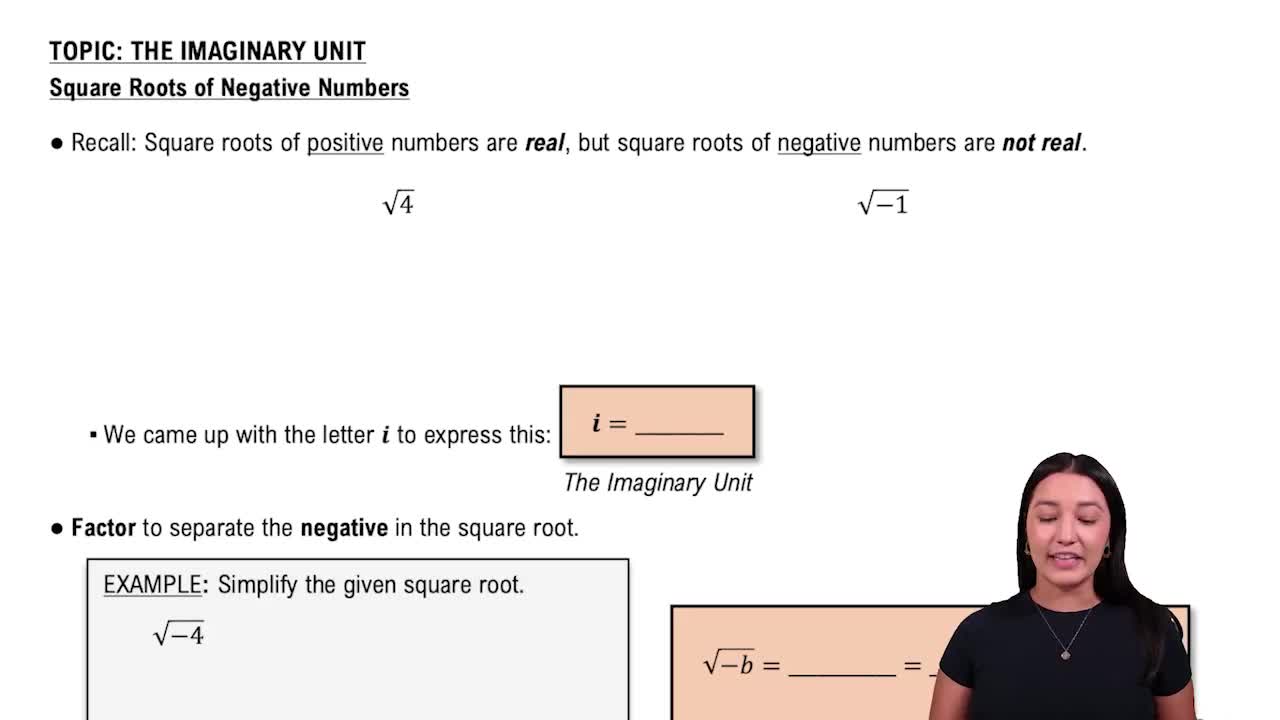
Square Roots of Negative Numbers