Table of contents
- 1. Introduzione alla Contabilità
- 2. Analisi delle transazioni
- 3. Concetti di contabilità d'accaduto
- Accrual Accounting vs. Cash Basis Accounting
- Revenue Recognition and Expense Recognition
- Introduction to Adjusting Journal Entries and Prepaid Expenses
- Adjusting Entries: Supplies
- Adjusting Entries: Unearned Revenue
- Adjusting Entries: Accrued Expenses
- Adjusting Entries: Accrued Revenues
- Adjusting Entries: Depreciation
- Summary of Adjusting Entries
- Unadjusted vs Adjusted Trial Balance
- Closing Entries
- Post-Closing Trial Balance
- 4. Operazioni di merchandising
- Service Company vs. Merchandising Company
- Net Sales
- Cost of Goods Sold - Perpetual Inventory vs. Periodic Inventory
- Perpetual Inventory - Purchases
- Perpetual Inventory - Purchase Discounts
- Perpetual Inventory - Purchasing Summary
- Periodic Inventory - Purchases
- Periodic Inventory - Purchase Discounts
- Periodic Inventory - Purchasing Summary
- Single-step Income Statement
- 5. Inventario
- Merchandising Company vs. Manufacturing Company
- Physical Inventory Count, Ownership of Goods, and Consigned Goods
- Specific Identification
- Periodic Inventory - FIFO, LIFO, and Average Cost
- Perpetual Inventory - FIFO, LIFO, and Average Cost
- Financial Statement Effects of Inventory Costing Methods
- Lower of Cost or Market
- 6. Controlli interni e rendicontazione della cassa
- 7. Ricevuti e investimenti
- Types of Receivables
- Net Accounts Receivable: Direct Write-off Method
- Net Accounts Receivable: Allowance for Doubtful Accounts
- Net Accounts Receivable: Percentage of Sales Method
- Net Accounts Receivable: Aging of Receivables Method
- Notes Receivable
- Introduction to Investments in Securities
- Trading Securities
- Available-for-Sale (AFS) Securities
- Held-to-Maturity (HTM) Securities
- Equity Method
- 8. Beni di lunga durata
- Initial Cost of Long Lived Assets
- Basket (Lump-sum) Purchases
- Ordinary Repairs vs. Capital Improvements
- Depreciation: Straight Line
- Depreciation: Declining Balance
- Depreciation: Units-of-Activity
- Depreciation for Partial Years
- Retirement of Plant Assets (No Proceeds)
- Sale of Plant Assets
- Change in Estimate: Depreciation
- Natural Resources and Depletion
- Asset Impairments
- Exchange for Similar Assets
- 9. Passività correnti
- 10. Valore temporale del denaro
- 11. Passività a lungo termine
- 12. Patrimonio netto degli azionisti
- 13. Bilancio dei flussi di cassa
- 14. Analisi del bilancio
- Horizontal Analysis
- Vertical Analysis
- Common-sized Statements
- Trend Percentages
- Discontinued Operations and Extraordinary Items
- Introduction to Ratios
- Ratios: Earnings Per Share (EPS)
- Ratios: Working Capital and the Current Ratio
- Ratios: Quick (Acid Test) Ratio
- Ratios: Gross Profit Rate
- Ratios: Profit Margin
- Ratios: Quality of Earnings Ratio
- Ratios: Inventory Turnover
- Ratios: Average Days in Inventory
- Ratios: Accounts Receivable (AR) Turnover
- Ratios: Average Collection Period (Days Sales Outstanding)
- Ratios: Return on Assets (ROA)
- Ratios: Total Asset Turnover
- Ratios: Fixed Asset Turnover
- Ratios: Profit Margin x Asset Turnover = Return On Assets
- Ratios: Accounts Payable Turnover
- Ratios: Days Payable Outstanding (DPO)
- Ratios: Times Interest Earned (TIE)
- Ratios: Debt to Asset Ratio
- Ratios: Debt to Equity Ratio
- Ratios: Payout Ratio
- Ratios: Dividend Yield Ratio
- Ratios: Return on Equity (ROE)
- Ratios: DuPont Model for Return on Equity (ROE)
- Ratios: Free Cash Flow
- Ratios: Price-Earnings Ratio (PE Ratio)
- Ratios: Book Value per Share of Common Stock
- Ratios: Cash to Monthly Cash Expenses
- Ratios: Cash Return on Assets
- Ratios: Economic Return from Investing
- Ratios: Capital Acquisition Ratio
- 15. GAAP vs IFRS
- GAAP vs. IFRS: Recording Differences
- GAAP vs. IFRS: Adjusting Entries
- GAAP vs. IFRS: Merchandising
- GAAP vs. IFRS: Inventory
- GAAP vs. IFRS: Fraud, Internal Controls, and Cash
- GAAP vs. IFRS: Receivables
- GAAP vs. IFRS: Long Lived Assets
- GAAP vs. IFRS: Liabilities
- GAAP vs. IFRS: Stockholders' Equity
- GAAP vs. IFRS: Statement of Cash Flows
- GAAP vs. IFRS: Analysis and Income Statement Presentation
8. Beni di lunga durata
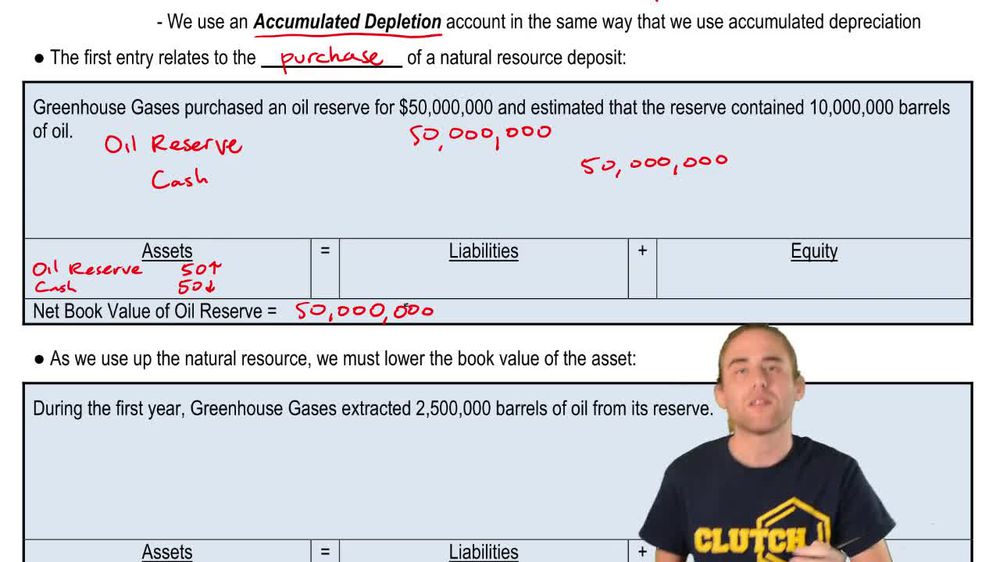
Natural Resources and Depletion
8. Beni di lunga durata
Natural Resources and Depletion
 11:37


Practice this topic
- Multiple Choice
Colorado Mining Company purchased a 300,000-ton mineral deposit for a contract price of \$594,000. Related to the purchase, CMC paid a \$4,000 licensing fee with the State of Colorado and paid \$62,000 for a geological survey of the mine. The company expects the mineral deposit to have no residual value. During the first year of production, CMC extracted and sold 60,000 tons of ore. What is the net book value of the mineral deposit at the end of the first year?
444views - Multiple ChoiceFor natural resources, the depletion base is:280views
- Multiple ChoiceThe accumulated depletion of a natural resource is reported on the:264views