Skip to main content
GOB Chemistry
My Course
Learn
Exam Prep
AI Tutor
Study Guides
Textbook Solutions
Flashcards
Explore
Try the app
My Course
Learn
Exam Prep
AI Tutor
Study Guides
Textbook Solutions
Flashcards
Explore
Try the app
Back
Limiting Reagent definitions
You can tap to flip the card.
Limiting Reagent
You can tap to flip the card.
👆
Limiting Reagent
Reactant fully used up in a reaction, setting the maximum possible amount of product formed.
Track progress
Control buttons has been changed to "navigation" mode.
1/14
Related flashcards
Related practice
Recommended videos
Limiting Reagent quiz
Limiting Reagent
15 Terms
Limiting Reagent
6. Chemical Reactions & Quantities
5 problems
Topic
Jules
Percent Yield
6. Chemical Reactions & Quantities
4 problems
Topic
Jules
6. Chemical Reactions & Quantities - Part 1 of 2
6 topics
9 problems
Chapter
Jules
6. Chemical Reactions & Quantities - Part 2 of 2
3 topics
8 problems
Chapter
Jules
Guided course
01:30
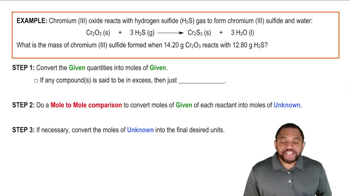
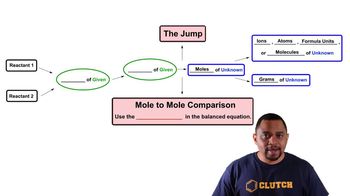
Limiting Reagent
11961
views
100
rank
Guided course
6:38
Limiting Reagent Example
192
views
2
rank
Guided course
01:34
Limiting Reagent
10398
views
88
rank
Terms in this set (14)
Hide definitions
Limiting Reagent
Reactant fully used up in a reaction, setting the maximum possible amount of product formed.
Excess Reagent
Reactant remaining after a reaction finishes, present in greater quantity than needed.
Theoretical Yield
Maximum amount of product possible, calculated from the limiting reagent under ideal conditions.
Stoichiometry
Calculation method for determining quantities of reactants and products in chemical reactions.
Balanced Equation
Chemical equation with equal numbers of each atom on both sides, used for stoichiometric calculations.
Coefficient
Number in a chemical equation indicating the ratio of moles for each substance involved.
Mole
Unit representing 6.022 x 10²³ particles, used to count atoms, molecules, or formula units.
Grams of Given
Initial mass of a reactant provided for stoichiometric conversion to moles.
Moles of Unknown
Calculated amount of a product or reactant not initially given, found using stoichiometry.
Chemical Equation
Representation of a chemical reaction showing reactants and products with their respective amounts.
Product
Substance formed as a result of a chemical reaction, amount determined by limiting reagent.
Reactant
Starting substance in a chemical reaction, can be limiting or in excess.
Formula Unit
Smallest repeating unit of an ionic compound, used in stoichiometric calculations.
Yield
Amount of product obtained from a reaction, can refer to theoretical or actual values.
 BackBack
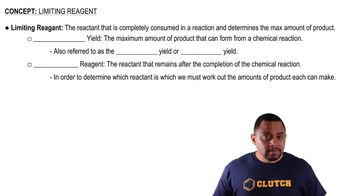
 01:30
01:30