Pearson+ LogoPearson+ Logo
Ch.6 Carbohydrates Life's Sweet Molecules
Frost - General, Organic and Biological Chemistry 4th Edition
Frost4th EditionGeneral, Organic and Biological ChemistryISBN: 9780134988696Not the one you use?Change textbook
Chapter 3, Problem 93

Trehalose is a naturally occurring disaccharide used in cosmetics because of its ability to retain moisture. The formal name of trehalose is glucose α, α(1→1) glucose. Draw the structure of trehalose. Is it a reducing or nonreducing sugar?

Verified step by step guidance
1
Understand the structure of trehalose: Trehalose is a disaccharide composed of two glucose molecules linked by an α, α (1→1) glycosidic bond. This means the anomeric carbons of both glucose units are involved in the bond.
Draw the structure of trehalose: Start by sketching two glucose molecules. Identify the anomeric carbon (carbon 1) in each glucose unit, and connect them via an α, α (1→1) glycosidic bond. Ensure both glucose units are in their cyclic (pyranose) form.
Determine if trehalose is a reducing or nonreducing sugar: A sugar is reducing if it has a free anomeric carbon that can open to form an aldehyde group. Since both anomeric carbons in trehalose are involved in the glycosidic bond, neither is free.
Conclude trehalose's reducing property: Based on the structure, trehalose is a nonreducing sugar because it lacks a free anomeric carbon.
Review the significance: Trehalose's nonreducing nature contributes to its stability and ability to retain moisture, making it useful in cosmetics and other applications.

Verified video answer for a similar problem:

This video solution was recommended by our tutors as helpful for the problem above.
Video duration:
9m
Was this helpful?

Key Concepts

Here are the essential concepts you must grasp in order to answer the question correctly.

Trehalose Structure

Trehalose is a disaccharide composed of two glucose molecules linked by an α,α (1→1) glycosidic bond. This unique linkage means that both anomeric carbons of the glucose units are involved in the bond, resulting in a specific three-dimensional structure that influences its properties, including its ability to retain moisture.
Recommended video:
Guided course
1:01
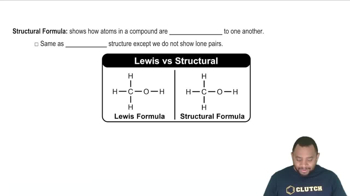
Structural Formula Concept 2

Reducing vs. Nonreducing Sugars

Reducing sugars are carbohydrates that can donate electrons to other molecules, typically due to the presence of a free anomeric carbon. In contrast, nonreducing sugars, like trehalose, have both anomeric carbons involved in glycosidic bonds, preventing them from acting as reducing agents. This characteristic is crucial for understanding their chemical behavior and applications.
Recommended video:
Guided course
1:03
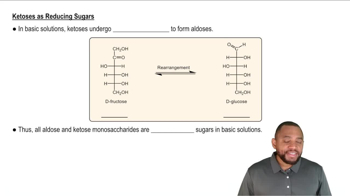
Ketoses as Reducing Sugars Concept 2

Moisture Retention in Cosmetics

Trehalose is valued in cosmetics for its hygroscopic properties, meaning it can attract and hold water molecules. This ability helps to maintain skin hydration and improve the texture of cosmetic products. Understanding the role of trehalose in moisture retention is essential for formulating effective skincare solutions.