Pearson+ LogoPearson+ Logo
Ch.19 Enzymes and Vitamins
McMurry - Fundamentals of GOB 8th Edition
McMurry8th EditionFundamentals of GOBISBN: 9780134015187Not the one you use?Change textbook
Chapter 19, Problem 87

Why are irreversible enzyme inhibitors referred to as poisons?

Verified step by step guidance
1
Irreversible enzyme inhibitors bind permanently to the active site of an enzyme, often forming covalent bonds, which prevents the enzyme from performing its catalytic function.
Enzymes are crucial for facilitating biochemical reactions in the body, and their inhibition can disrupt essential metabolic pathways.
When an enzyme is permanently inhibited, the body cannot easily replace it, leading to a buildup of substrates or a lack of necessary products, which can be toxic to cells and tissues.
Many irreversible inhibitors are toxic because they target enzymes critical for survival, such as those involved in energy production or neurotransmitter regulation.
This disruption of normal biochemical processes is why irreversible enzyme inhibitors are often referred to as poisons, as they can cause severe harm or even death depending on the enzyme they target.

Verified video answer for a similar problem:

This video solution was recommended by our tutors as helpful for the problem above.
Video duration:
3m
Was this helpful?

Key Concepts

Here are the essential concepts you must grasp in order to answer the question correctly.

Irreversible Enzyme Inhibition

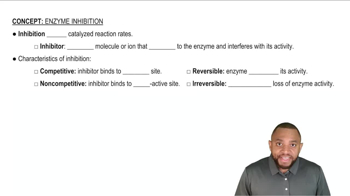
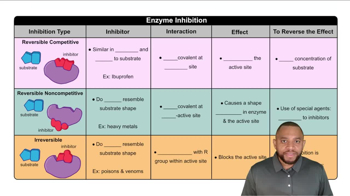
Irreversible enzyme inhibitors bind permanently to an enzyme, often through covalent bonds, rendering the enzyme inactive. This type of inhibition prevents the enzyme from catalyzing its reaction, which can lead to a complete loss of function. Unlike reversible inhibitors, which can dissociate from the enzyme, irreversible inhibitors create lasting changes that can significantly affect metabolic pathways.
Recommended video:
Guided course
1:19
Enzyme Inhibition Concept 1

Enzyme Function and Metabolism

Enzymes are biological catalysts that accelerate chemical reactions in living organisms, playing a crucial role in metabolism. They facilitate various biochemical processes, including digestion, energy production, and biosynthesis. When enzymes are inhibited, especially irreversibly, the metabolic pathways they regulate can be disrupted, leading to detrimental effects on cellular function and overall health.
Recommended video:
Guided course
02:16
Logarithmic Functions

Toxicology and Poisons

In toxicology, a poison is any substance that can cause harm or death to an organism when introduced in sufficient quantities. Irreversible enzyme inhibitors are often classified as poisons because they can lead to severe physiological consequences by permanently disabling essential enzymes. This can result in metabolic failure, organ dysfunction, or even death, depending on the enzyme affected and the organism's reliance on its function.
Recommended video:
Guided course
3:26
Enzyme Inhibition Concept 2